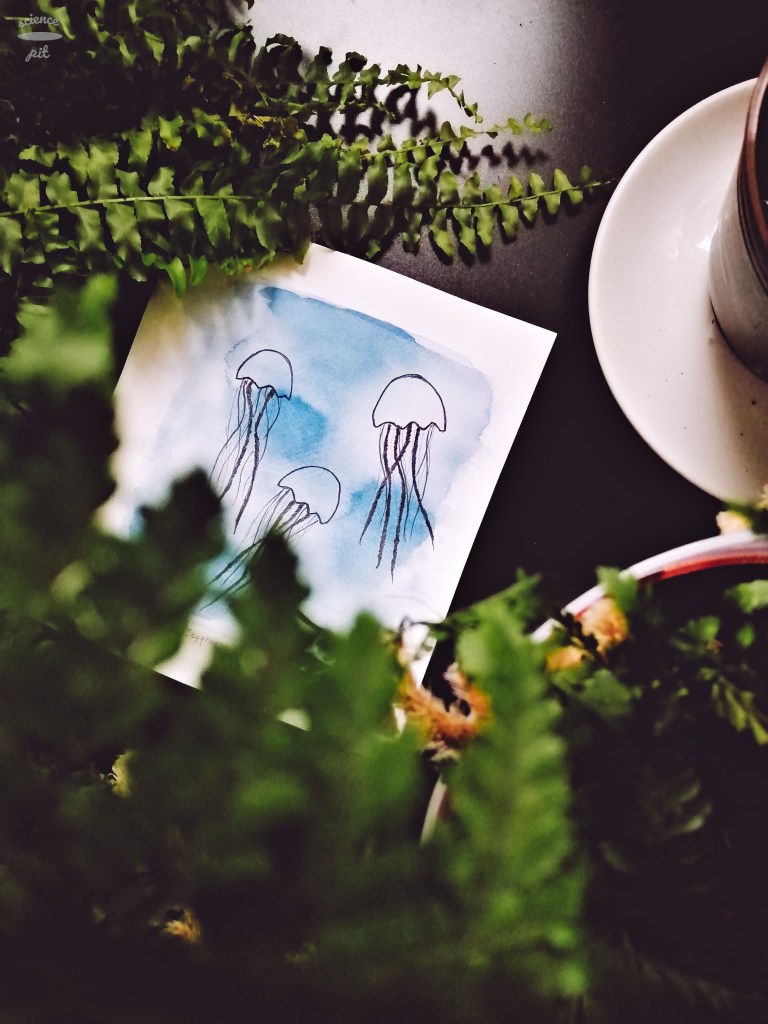
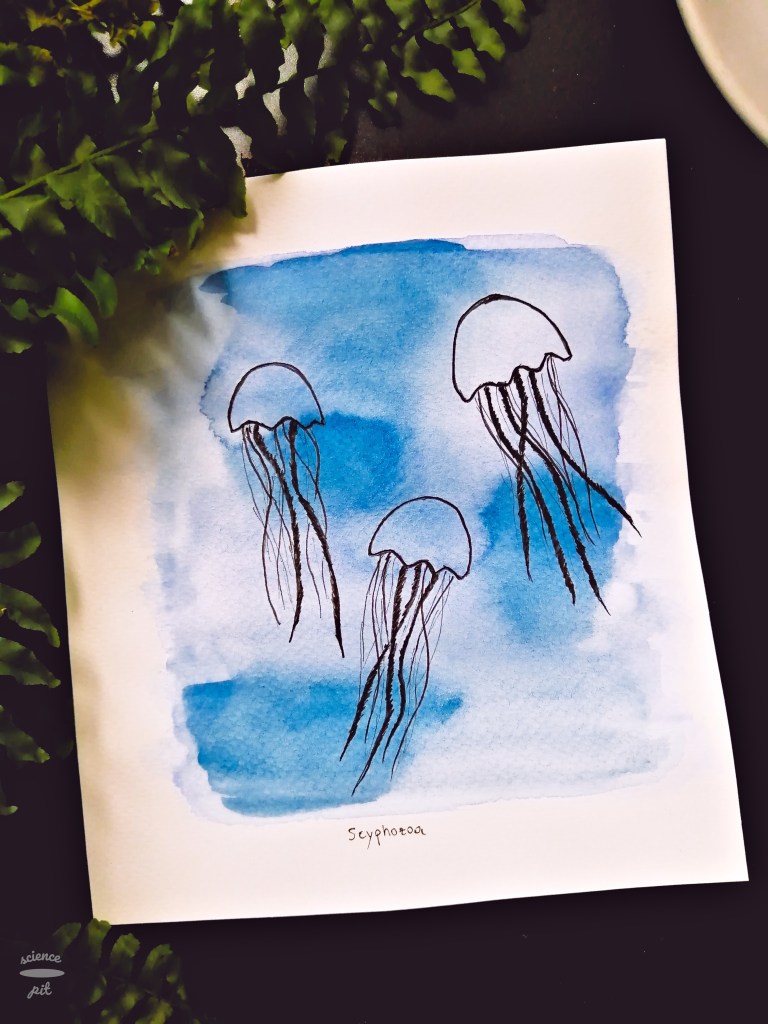
Scyphozoa (true jellyfish) are much more interesting (in a neurobiological way) than previously described corals. One major difference is that Scyphozoa are pelagic animals, which means they are not fixed to the ground. They also have two diffuse nerve nets (subepidermal and subgastrodermal) that consist of bipolar and multipolar neurons – the impulse conduction has been measured at 0,15 m/s. Both nets coordinate the movements of an animal towards the food. Some scientists, however, differentiate one diffuse and one motor nerve net. The motor net is in charge of the activation of muscle contractions after receiving signals from the so-called pacemaker organs (which are in charge of the swimming rhythm). The diffuse net, in this case, is in charge of marginal tentacle contraction and it is also believed it communicates sensory information to jellyfish musculature. Neurons of the motor nerve net are connected by chemical synapses, while neurons of diffuse nerve net are connected by peptidergic synapses that were noted in Anthozoa as well.
Sycphozoa also have much more developed sensory organs than any of the animals previously mentioned. These sensory structures are called rhopalia and they are located on the edges of the jellyfish bell – there are usually four of them (or a number that’s a multiple of four). Rhopalia contain multiple sensory receptors – statocyst (balance receptor), ocelli (light sensitivity), a mechanoreceptor, a chemoreceptor, and aforementioned pacemaker neurons.
I would also like to note here that some authors (I’m referring here to the article “Do jellyfish have central nervous systems?” by R. A. Satterlie) believe this kind of nerve net explanation is rather simplified and that there exist some evidence suggesting that jellyfish have a centralized nervous system, mainly that rophalia are in fact rudimentary ganglia and could be regarded as integrative centers. However, any communications between rhopalia themselves exist only through the nerve nets.
A nerve net is a type of nervous system that consists of many neurons but there is no brain or cephalization. Nerve nets are found in animals with radial symmetry (Cnidaria) and biradial symmetry (Ctenophora). Despite being called a net, there sometimes exist some groupings of neural cells in some Cnidaria classes, which I will write more about during the next couple of weeks. Cnidaria are specific due to their specialized organelles, cnidocytes, which they utilize to hunt for food or use for securing itself to a surface. Some cnidocytes contain toxins that can paralyze their prey (the burning sensation you may have felt when touching a sea anemone 😉). As a rule, Cnidaria have two diffuse nerve nets, one in the epidermal layer and a second one in the gastrodermal layer. In between these two layers is the mesoglea, a layer that functions as sort of a skeleton. The epidermal net consists of bipolar and multipolar nerve cells, while the gastrodermal net is made up of only multipolar cells.
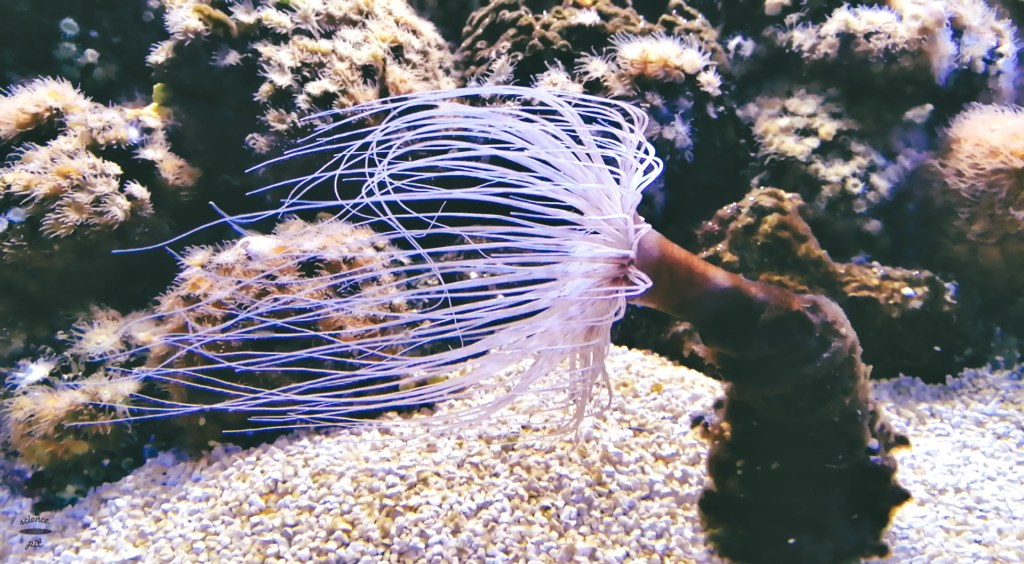
Cerianthus membranaecus (known as cylinder anemone or coloured tube anemone)
Cnidarian nerve systems are fascinating but also quite unexplored. What is known is that nerve cells consist of two types of neurons, sensory neurons that respond to stimuli and motor neurons which ultimately trigger a response. Chemical synapses exist and provide the communication between the neurons. Hormones have also been reported in some cnidarians (steroids, neuropeptides) but it is still not known how exactly these signalling molecules work.
***
In the next couple of weeks, I will write a post about every cnidarian class and also ctenophores, focusing on their nervous and sensory systems. If you have any questions or would like me to focus on something, please let me know!
Blood Work: A Tale of Medicine and Murder in the Scientific Revolution by Holly Tucker is a book that I first read almost 10 years ago. I got it as a gift from a dear friend, for my birthday during the time I was a student at School of Medicine (as you can guess, I decided to start anew and switch to Biology). However, this book has always stayed with me, not only because it was the first book of this genre I’ve read – I loved it because I thought it was the perfect mix of history, medicine, and macabre.
Blood Work follows a fascinating tale of the history of human transfusion, something what in today’s world we almost take for granted. Back in high school, we learned all about Rh factor and blood types (and how there is a possibility of A and B parent having an O or AB child) and voluntary blood donations are common occurrence in my country. Despite all this, I never wondered when did the actual blood transfusion procedures start and how did physicians know whose blood to use.
In the book, we follow Jean-Baptiste Denis, a 17th century French physician who administrated first documented transfusion. Since this transfusion included using sheep’s blood, it was called a xenotransfusion, which is a term that describes blood transfusion from one species to another. This experiment was successful, probably due to small amount of transfused blood and, I dare say, luck, since at the time, blood groups and agglutination were not known facts. Denis’ last transfusion experiment is, however, the one we learn about in a detail – after trying to treat an illness of psychiatric nature, and transferring a large amount of calf blood, his patient dies, and he is accused of murder. Denis was ultimately acquitted (with a true crime worthy twist in the case), but all further transfusions were banned, first by French government, then by English and even the Pope.
Blood Work doesn’t focus solely on this event – the writer masterfully describes political events of the time, both in France (rivalry with another physician, Henri-Martin de la Martinière, tensions in French Academy of Sciences founded by Louis XIV) and abroad (a competition between French and English Academies), as well as the religious ones (“playing God”, fear that this kind of transfusion could produce some sort of half-human half-animal creature). Furthermore, as Neil Blumberg wrote in his review for Journal of Clinical Investigations, these kinds of experiments were primary conducted due to the belief that transfusion could treat, or even cure, mental illness, sometimes we now know is not possible.
Lastly, it doesn’t actually matter if you have health and/or science background to find this book interesting, as long as your’re interested in history and historical non-fiction. Blood Work offers a captivating look on the beginnings of one of the most important medical procedures in the world and does it so vividly you almost feel like you’re transported to Paris, in the middle of the scientific revolution.
***
I would very much liked to hear your opinion – did you read this book, and if yes, did you like it as much as I did? Do you have similar book recommendations? Please let me know in the comments 🙂
For the next couple of weeks, I would like to write a bit about the evolution of the nervous system, from early nerve cells to the human nervous system and brain evolution. Alongside nervous I will also focus, to a lesser extent, on sensory systems. These posts will be published on my Instagram account, but I decided to publish them on the blog as well.
Mostly, these posts will be about various animals and the nerve systems they have – nerve nets, nerve cords, complete systems. The main process behind this is called cephalization, and it starts with the groupings of nerve cells and ganglia at one end of the body. After some (long) time, this process led to us having a head with sensory organs and a brain inside it.
But when did all of it start? It is kind of hard to say, for even single-celled organisms, such as bacteria, have voltage-gated channels and genes that support the theory of possible synaptic transmission. These channels are potassium (the oldest), calcium, and, rarely, sodium channels as well. Action potentials have been detected in some algae and diatoms, although their function is mostly unclear. In Chlamydomonas (unicellular green algae) on the other hand, potentials were detected in flagellums, which clearly suggest they play the part in the movement of the algae. Action potentials were also recorded in the cilia of some protists, such as Parmecium.
Of course, the exact evolutionary processes are unknown, and there is a possibility that these organisms acquired the mentioned features later than scientists now assume. It is also possible that some more evolved organisms, such as sponges, subsequently lost some of the features discussed here (more about this in the next week’s post).
This week, I would like to write about studying. My studying to be precise, and since I’m at the near of earning my Master’s degree, you would probably guess I know how to study. Well, wrong. Well, maybe a bit wrong. My studying, of literally anything, is greatly affected by my health – without getting into more detail, I have problems with concentration and sometimes memory, which is directly mirrored in my grades and ability to study. However, despite often feeling isolated and defeated, I try my hardest.
I was on my first year of Bachelor’s, when I realized things are not quite right. At first, I thought that it’s just stress and the fact I would rather study neuroscience then General Chemistry, so I casually started couple of courses on Coursera. To my shock and frustration, I soon realized that things are just not working out. Since then, I switched up and changed up my study styles numerous times; places where I study, times when I study, and how I study. One of the first things I did was try the famous pomodoro technique, but I modified it for longer intervals – I found that studying 45 -60 minutes with a break works better for me. This, of course, depends on the subject I’m studying. Have you tried this technique? What did you think about it?
Another thing that I always do, is having my headphones on – I simply focus better than when I have music blasting through normal speakers. Now, many people don’t recommend listening to music, or having a TV working in the background when studying, but to me, it has been proven to be most helpful. I usually like to put some Dick Wolf produced series in the background, no matter how many times I’ve already watched it, and start reading literature or writing notes. However, when I actively learn the material, I only like random noise, for which I use Noisli, a web site where you can make your own mixes of sounds (like fire, wind, thunder, train, rain…). This site saved me many times from my lack of attention. So, here are my top 5 tips for studying:
Writing things down
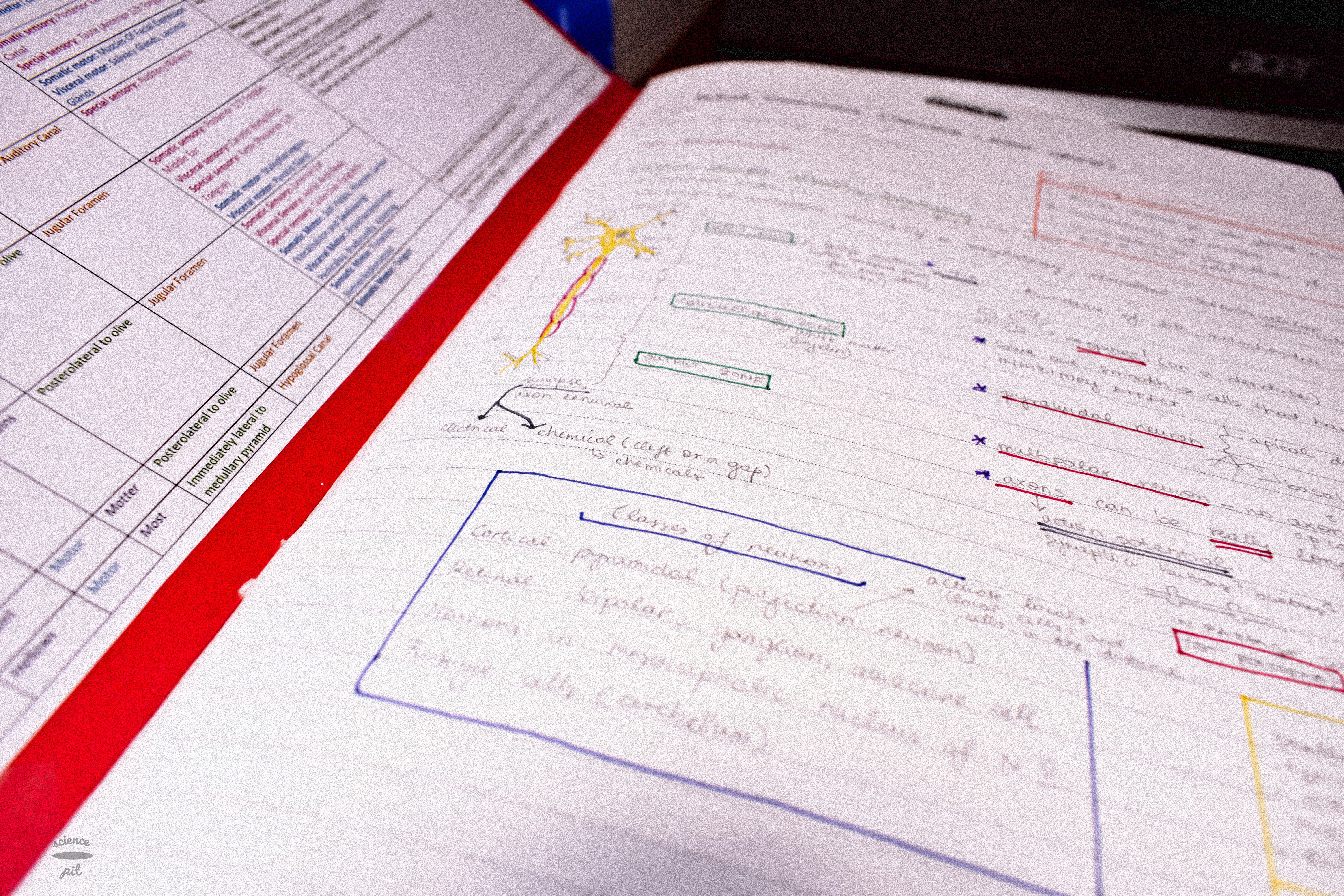
One of my high school teachers was a big fan of this method, claiming that if we write things down, we tend to remember them better. Whether is simply writing down main phrases & keywords, or making a mental maps, this type of studying and revising proved to be really helpful. Another thing I sometimes do is, instead of writing things down physically, is writing them on the PC, as shorten versions of book chapters, or upgraded versions of PowerPoint lectures (my professors love their PowerPoints). However, sometimes I don’t feel comfortable doing this when I have a large amount of material to study.
Mementos, short notes, and studying out loud
Instead of lengthily texts, I also like to write down phrases or draw illustrations on post-it notes; I use this as a revision method, where I shuffle them and explain the word or process out loud. I prefer this type of studying when I don’t have enough time, or have a lot of things to study. My trick is to use different colored papers for different subjects 🙂
Writing reminders or spelling out first letters for longer definitions and lists
I think this is an old trick, but I wanted to include it nevertheless. Instead of definitions and long lists, it’s a good idea to write down first letters or syllables, in order to remember them easier.
Watching videos
Watching YouTube videos has helped me more than once when struggling with the study materials. Sometimes I just don’t quite comprehend the wording (strictly technically speaking, English is my 3rd language) or I need a reminder of basics, without going through my dusty books from the first year. Videos are here to help and they often include very useful graphics that can help to visualize the material. My go-to channels are JJ Medicine, Crash Course, and Neuroscientifically Challenged. What are your favourite channels? 🙂
Explaining things to a friend/sibling/partner
This is very similar to the second point, studying out loud, but sometimes I require more practice. Studying groups are a good idea but sometimes, I just can’t make myself to get out of the apartment. In those cases, I try to explain the material to someone in my household (and who usually doesn’t listen to me, but that’s okay :)) – I try to do this by myself as well, when I’m preparing for an oral exam.
With time I realized that, before I even start studying, I always have a feeling like everything has to be perfect – I have to clean the room first, finish other assignments, eat lunch… My partner doesn’t. And that’s fine. We all study at different paces & places, and sometimes unforeseen circumstances can affect are studying and also grades. Many people struggle with illness, visible or otherwise, which can affect our performance – anxiety, headaches, insomnia… But the most important thing is to just keep going, give yourself enough breaks, and take care of your health. And since I’m publishing this in the midst of the pandemic, know that it’s perfectly okay if you don’t have any motivation or means to study right now! I know it’s easier said than done, but try not to stress too much and relax, if it’s possible.
I would also very much loved to hear about your studying tips & tricks – share them in the comments below! 🙂
*UPDATE: I was notified by a friend that, recently, Noisli put a daily limit for streaming. Also, I forgot to mention another useful app I use for studying, Forest – it functions in a way that you set a timer, and “grow” your virtual trees. I find it useful because the only way to leave the app is to stop the timer (and stop your tree from growing). It might sound trivial, but it helps me stay focused and not check my social media pages every other second.
Couple of weeks ago, as I was driving to classes, I saw a big billboard that showed couple of people and a word “FORTITUDE”. At first, I thought it was some kind of fantasy drama, but after looking it up, it turned out to be crime related TV show starring actors I like. And as a true crime buff who enjoys all crime related content, I decided to watch it. After all, if it stars Christopher Eccleston (the best Doctor Who) and Stanley Tucci, it must be great, right?
Well, not quite – there are parts of the series that I loved, especially ones regarding biology, despite some of them being naively incorrect. Other parts were not so well executed, but today I want to focus mainly on biology (obviously). Fortitude, the name of the show, is also a name of the imaginary town on an island in polar circle. As it is in small towns, they have a doctor, police force, one hotel, some houses, and many secrets. Oh, and research centre, of course!
In the first episode, we see a scene where hungry polar bear eats a person. Also, we are introduced to an ambitious post-doc whose research focuses on apex predators; he has a theory that due to environmental changes, predators change their behaviour and develop cannibalistic urges (yes, there was some talk about bear eating another bear). Also, they make a point of making fun of him because he researched that in Britain, where badgers are only the predators. I don’t know why was that supposed to be funny, because I’d rather encounter a wolf than a badger, but I decided to let that one slide. Another story-line follows two children, a boy and a girl, who find a mammoth tooth; this boy later develops mumps-like symptoms and frostbite on his feet (he wandered off); there is also a murder of The Ninth Doctor, and we are led to believe that the murderer was father of the girl who found the mammoth tooth. Why, you may ask? Because he didn’t want to surrender the thawed carcass but sell it to The Ninth. And due to global warming, the carcass has already started to thaw.
Now, that immediately rang a bell; old preserved animal, suspicious disease… Despite some lazy writing, I continued to watch the series, despite not being really satisfied with the direction of it; some of the characters were very well characterized, especially Richard Dormer’s Sheriff, but I generally dislike series where everyone is cheating on everyone with anyone – it feels as if writers think that’s the only way to induce tension and drama. Also, Sheriff’s obsession with one female character was a bit too much – this amount of stalking and re-reading her files is not normal and has no place in adult behaviour. And he’s kind off supposed to be a good guy in the end. I digress, because this post is about biology.
The aforementioned boy ends up first in the hospital, and then in the research centre where they are developing a method to treat frostbite. Not a lot has been said about this, so I can’t actually comment on it, apart from the fact that he’s being held sedated, in a tank, where it’s not exactly clear how they feed him (I haven’t noticed any openings for infusion pipes). Also, who’s caring for him in the research centre? Someone has to wash him and change him every day, but they made it a point that he’s not supposed to be woken up, due to frostbite pain. So, not exactly biology, but big mistake anyway.
Also, at one point, their only doctor is almost murdered (by her own daughter who developed symptoms similar to the boy and then died due to heart failure) and they have to preform a lumbar puncture on the boy. Again, why you may ask? Well, during the autopsy of murderous daughter, the post-doc and his veterinary boss discovered some molecules; some anti-bodies and IgE. And immediately they developed the theory that this was some different kind of disease that turns people into murderers. Which wouldn’t been such problems, apart that IgE’s are the common antibodies that could indicated allergy of some sort? And in their research lab, they don’t have electronic microscopes, which are used to see viruses? A mess. That’s the only word I can use to describe this plot jumps, a big headache-inducing mess. However, let’s go back to the lumbar puncture. Doctor, I presume general practitioner, is incapable of helping, since she’s basically on her death-bed. So a post-doc and his boss decide to do the lumbar puncture, because why not? (Hint: NO.) They do it perfectly, but before it, they ask the boy’s mother for permission, because lumbar puncture is painful. (Hint: It’s not! Headache that comes after is painful, but the puncture itself doesn’t actually hurt. Source: been there, done that.) Anyway, boy’s spinal fluid doesn’t show presence of whatever thing they were looking for, which de facto labels him a murderer of The Ninth Doctor (excuse me?), despite having positive anti-bodies in his blood, which indicated that he might have had that mysterious disease. My only comment is, no, it doesn’t work like that, and please everyone stop thinking that you understand immunology, especially when we have specialized doctors who spend their lives learning about our immune system.
Anyway, back to the mammoth carcass, and the rest of mammoths that are thawing on this island. I would just like to say that there are also some Russians involved in the whole story (they work in a mine), the Governor wants to make an ice hotel on a glacier (I’m not kidding – on. a. glacier.), and literally everyone has a secret and/or secret agenda.
Well, before mammoths, let’s talk about one thing they got right, and that’s IgE – it gives us immunity to various parasites. And as it turns out, the mammoths were infected, just not with a virus, but parasitic wasp. Basically, larvae survived in mammoths, and were now making humans their hosts – since they were as old as mammoths, the humans didn’t actually have some real defenses against them. This is also definitely confirmed after post-doc finds some live wasps in the doctor (he then sets the whole room on fire, in order not to get infected or allow the wasps to find new hosts – yes, he survives).
Ichneumonidae, also known as Darwin wasps, are indeed parasitic wasps with 25 000 described species. Honestly, I think they were a very good choice for the main bad guys in the series, and were quite well described. Basically, these wasps reproduce in a bit gruesome way – they lay their eggs into a living host, which is then eaten by newly-formed larvae. Apart from this family, there also exists another similar wasp, called Emerald cockroach wasp (Ampulex compressa). This wasp, of the family Ampulicidae, injects cockroaches with it’s eggs; the peculiarity is that the wasp also injects the cockroach with the toxin directly in thoracic and cerebral ganglia, which prevents cockroach to move, effectively turning it into a zombie. It was explained that this is what happened in the Fortitude as well, the wasp larvae have taken control of human bodies, and they turned on people closest to them, when they felt threatened.
Excuse me Sir, do you have time to help me search for cockroaches? (this is NOT an emerald wasp)
All in all, I wouldn’t call Fortitude’s first season exceptionally bad, but I wouldn’t exactly call it good. They had some excellent moments, and the mammoth-wasp story-line was, in my opinion, on point, but was often overshadowed by multiple story-lines that don’t necessary bring anything to the overall plot. If you want to watch something that doesn’t require a lot of thinking, and can overlook some of the obvious biological mistakes, I would recommend it. However, I think it’s time that filmmakers educate themselves, or ask for help, when tackling topics they don’t quite understand. (I read on Wikipedia that the writer did consult a parasitologist, which is probably why that part of the story functioned well; I don’t know why they didn’t do it for the other aspects of biology in the show.)
So, what do you think? Should we focus more on biology being correctly represented in popular media? Did you watch Fortitude – if yes, what did you think about it? Let me know in the comments below! 🙂
Hello everyone, and welcome to my new post! Yes, I’ve decided to try and write more often, and this time I will do a bit of self-promotion. As you may, or may not, know, I love watching movies – I think they are great past-time and I find them relaxing. Lately, I have had some troubles concentrating for more than an hour, but for now I would like to think that’s because I wasn’t choosing good movies to begin with. What does that have anything to do with neuroscience?
Well, apart from writing this blog, I also write and edit for Gyrus Journal. Gyrus is student journal of neuroscience, where we write review articles about different topics: basic neuroscience, neurology, neurosurgery, and psychiatry. I have written some articles, and if you stumble across them, don’t judge me too hard – they are meant to teach us how to search databases, cite, and write in English, since our mother-tongue is Croatian. I feel very fortunate to be a part of this journal, since it helped me a lot in understanding of many scientific terms in English language, primary language of science; it also helped me to learn how to communicate with my authors, as well as how to dissect a topic I’m supposed to write/edit about. Of course, we also have reviewers, wonderful professors and scientists from University of Zagreb, who do the last editing before publication. (I would just like to say that we didn’t have reviewers from the very beginning, hence why some of the earlier articles perhaps lack in quality.) Lately, we have been struggling a bit with latest editions, but started to publish articles online – you can access them all on the link above. You can also follow us on Facebook page as well as Twitter!
A cover photo of Gyrus Journal
In Gyrus Journal, you will also find shorter articles and movie&book reviews, where title of this post finally comes in play! So far, I have written five movie reviews, with three still waiting to be published. For my first one, I picked the obvious choice: Memento (2000) by Christopher Nolan. Apart from being one of my favourite movies in general, I think it truthfully portrays anterograde amnesia.
In addition to portraying Leonard’s fragile mental state that makes us question not only his current objectives, but also whether his recollections of past are reliable, or simply figments of his imagination and almost fatalistic wishes, Memento is different in comparison with other films of similar genre, simply because it truthfully portrays the slow agony of losing the principal neurobiological process – a human memory.
The second review I did was about movie that might not seem so obvious, but was quite intriguing: Side Effects (2013) starring Rooney Mara and Catherine Zeta-Jones. This movie also has a crime aspects but it deals with the psychiatric illness, for which we don’t know, until the very end, if it’s real or faked.
Although dealing with semi-real thesis, the question still remains how the movie influenced real world cases. Did it help with recognizing the ones feigning the illness, or just put extra strain on the patients dealing with the illness that is already under deep historical stigma? Regardless of being the rather entertaining thriller, we are left wondering whether the movie deepened the negative view of the various psychiatric illnesses in the general public.
Three, still unpublished, reviews are:
100 Minutes of Glory (in Croatian) – a biopic about famous Croatian painter Slava Raškaj, who was born deaf, suffered from depression, and lived her last days in Psychiatric hospital “Vrapče”. In Croatian, title of the movie is also a wordplay on Croatian word “slava”, her name; it’s literal translation to English is “glory”
A Different Brain – famed documentary by Loius Theroux; it follows four patients who suffered through some sort of traumatic brain injury and consequences it brings
Still Alice – movie that earned Julianne Moore an Academy Award for Best Actress, Still Alice is a touching but often times difficult story about a woman with early onset Alzheimer’s Disease
What about you? Do you like watching movies – which ones are your favourite? If you watched any of these, please tell me what you think! I would love to discuss movies with you & I’m really interested what you watch in your free time 🙂
Last Friday (8th of November) I was fortunate enough to hold a workshop (with Bruno) called “Little workshop of Bioinformatics” – the title is a bit wild, but we purposefully chose an “exotic” name in order to arouse curiosity.
This workshop, held in House of Velebit in Krasno, is actually a continuation of a two workshops we already held (one in a City Museum Samobor and another one at my old primary school) and which we designed to introduce school children of all ages to primary concepts of molecular biology & genetics. Of course, kids in 7th and 8th grade were already familiar with it.
We first designed the workshops, with the help of our mentor Dalibor Paar, associate professor at Department of Physics, Faculty of Science, and were nominated for Rector’s Awards in 2019.
Where is the informatics part, you ask? In the using of micro:bits, cute and small mini computers that are easily programmable in Python or JavaScript (we chose Python). Bruno wrote a very elegant code and I designed the rest of the workshop: ciphers to de-code, phenotypes, core of the workshop… In terms of design, my BFF Ivana generously lend her drawing skills and we were all set.
How the workshop works?
First, I introduce students to basic concepts of the molecular biology: what is DNA, what is a protein, and that DNA codes for proteins. This part, depending on the ages (and attention) of children can last up to 15 minutes, then the fun begins. Every kid gets a cipher, which consists of four or five lines, each of those consists of nine differently coloured arrows that can point in one of four directions: up, down, left or right. micro:bits have motion sensors that pick up in which directions they are pointed and display one of the four letters: A, C, T or G. We also coded for a second program, in which kids enter those letters (DNA bases) and they show three letters that represent a very short amino-acid sequence (in this example, a protein). When they are finished with this part, we give them another paper, where they are supposed to find what is encoded by their protein (blue or green eyes, blonde or red hair…).
For the workshop in Krasno, we switched things up a bit, and our “proteins” encoded for different characteristics of two different olm subspecies: a pink one and a black one. This might seem a bit complicated in theory, but in practice, children picked up everything really fast 🙂
Olms & micro:bits!
So, how many of you have heard of olms, or proteus? And how many of you knew there is a black subspecies? 🙂
Olms (Proteus anguinus) are amphibians (like frogs), they are completely aquatic and live in dinaric caves. Noted sightings include Italy, Slovenia, Croatia, and Bosnia and Herzegovina. They have elongated bodies, external branchiae, and no eyes. The black subspecies (Proteus anguinus parkelj) is, well, black, and has eyes. The other notable difference is that pink olm lives in colder waters (up to 11° C). Another interesting fact is its name in Croatian: “čovječja ribica”, which roughly translates to “human fish”.
As promised (to my two and a half readers and myself), I’m diligently writing another post, and this one combines my two greatest scientific loves – neuroscience and biospeleology!
Last weekend, I attended two very important conferences – 3rd Rijeka forum on neurodgenerative diseases – diagnosis and treatment in early stage of disease and 2nd Dinaric symposium on subterreanean Biology. There was one day overlap between the two, so I chose to spend my Friday in Rijeka, but more about that later on. Since this trip included a lot of walking and transport, for the simplicity I packed only the bare necessities, which included only one pair of booties (this comes in play later on).
The topic of neurodegenerative diseases is something I would really like to do all my future research in, and it’s also a subject of my master thesis (precisely, neurofibrillary tangles in rat brains). Also, there was no attending fee, which is pretty much amazing for the students. We (Bruno and me) arrived in Rijeka (from Zagreb) very early in the Thursday morning by bus and set to find the University campus where forum was taking place. This wasn’t my first time in Rijeka, so we didn’t have any problems with finding the venue. The forum consisted of plenary lectures held by renowned professors from all over the Europe (Sweden, Italy, Slovenia, England) and Croatia of course, and it was roughly divided into two parts, basic neuroscience and clinical research. As a biologist, I didn’t pay too much attention to clinical part, and instead was dutifully solving my programming homework. However, it was amazing to be there for both days, and just listening what was new in the world of neurodegenerative diseases. I didn’t find courage to ask questions (during the Q&A time, or even after), but I hope that one day I will. We didn’t “touristly” roam around Rijeka, but we stayed overnight in the most gorgeous apartment in the centre, I was seriously impressed!
On Friday, after lecture, I stayed in the venue for a little while (internet access!) and then we went to the train station. I love travelling by trains, and I try to do it as much as possible. Luckily, this train to Ljubljana (yes, Slovenia again!) also went through our next stop, Postojna. If that name rings a bell, that’s surely because of the Postojna Cave, one of the most famous caves open to tourists in the area. It is also special because there are many blind cave salamanders, which are part of the vivarium as well. Our plan was to visit this cave at Sunday, while Saturday was reserved for the Dinaric symposium. The symposium was held in Karst museum in Slovenia, and we caught the last plenary session and some posters. There was a short break (we went to the town centre to stock-pile some food) and then, the excursion!
It’s just me in a Croatian railroads train.
We were driven by car by our hosts, Teo and Ester (who we met during this summer – I will write about that in the next post!) to Rakov Škocjan. I would like to use this opportunity to say that Slovenia is really beautiful, full of intact nature and small roads. In Rakov Škocjan, we set for a quite a long walk to visit two natural bridges and caves near them. I had my shiny new camera with them, so I was taking as much photos and videos as possible, and honestly, I also used this as an excuse to stay behind, because I had a hard time keeping up with the rest of the group (I’m chronically out of shape). The trails itself is beautiful, a part of it also goes near the river Rak. Soon we came to the first natural bridge, which is completely made of stone. The only thing human hand built were protective barriers, so people don’t fall down. The story behind both bridges is that they used to be huge caves, but they collapsed, leaving only the bridges. Parts of the caves still remain, so most of the group went down to enjoy the cave and river that goes through it. I stayed behind, because I assumed it would take me too long to climb down and back up, and I didn’t want to hold back the whole group.
Little Natural Bridge of Rakov Škocjan
After the first bridge, we went back to the meeting point, which was the hotel where we had lunch. Next, the second bridge, which is 5-minute-long car ride away, and about 20 minutes by foot from there. Usually, the passage under this large natural bridge is almost completely under water, but we were lucky, as it was completely dry. We carefully walked in the river canyon, up the entrance of the second cave. Since Bruno and I didn’t bring any headlamps, one of the organizers kindly borrowed us spare helmets with the lamp on. Which lamp, you may ask? Scurion, the best of the best! I was so excited to wear it that I made Bruno take countless pictures of me!
Me, wearing a really awesome helmet!
Bruno in the cave
Then, we naturally went to explore the cave, which wasn’t as dry as the canyon. Sometimes, it was really hard to see how deep the water level is, and that’s how I ended up with a very wet right foot. Like, full on water in my boot, because the water level was just a bit too high then I anticipated. This didn’t stop me to try out my camera, and I was very satisfied with the photos, since they are a big step forward from the ones I took this summer (again, this will my next post!). The light from the Scurion was on occasion so strong, that some of the photos look almost burned, I couldn’t believe it.
A cave detail
A cave detail
Biospeleologists in a cave
Some folks went through the whole cave, but I wanted to go back the same way, to take more pictures of the bridge and cave entrance, since I didn’t have enough time to do it the first time we went through. Honestly, at moments, I felt like everything is a bit too fast, especially for someone who wanted to take a quick break and just enjoy the nature or take a few snaps for the photo album. The whole time however, I was thinking only how wet my sock is, and couldn’t wait to go back to our apartment and change. However, the group had other plans and first we went to the small café close to the big lake, which I honestly didn’t see. We did say to Teo that we would like to go back and would skip dinner (programming!), so he organized a transport back for us, which we were quite grateful for.
Big Natural Bridge of Rakov Škocjan
A view from under the Big Bridge
The next day, the big day! Postojna cave, or at least we thought so. After waking up, we realized we should walk two kilometers up to the cave, with both of our backpacks and I also had a bag full of photography equipment. There were some taxi companies, but no one answered, and we also didn’t have almost any cash, since I’m used to paying with a bank card. This was actually a problem in Postojna – apart from big chain stores, everything was to be paid in cash, and all ATM-s were located in the city centre. All of this, combined with our train schedule and my sill wet boot, contributed to us giving up on Postojna cave, and heading for a train station… Where we realized that the ticket office is closed, and we can’t pay with bank card in the train. So, Bruno quickly headed back to the centre, and came back with some pastries as well. Our way back went smoothly – first train to Ljubljana, trying out new burgers at McDonalds, and then train to Zagreb. During that time, we decided to come back to Postojna during the winter, and explore that cave, as well as going back to Rakov Škocjan on our own, setting our own pace and excursion plan. However, apart from finishing my homework assignment, the most important thing, excluding pretty photos, is the fact that I finally finished reading Dracula, the book I struggled with for almost two years, for the reasons I still don’t understand.
The cave near the Big Natural Bridge; a view from the inside.
For this week’s post, I have decided to write about NeuRi – Student Congress of Neuroscience. I write about this particular meeting because I have been part of it since 2015. However, I believe any kind of involvement with this kind of events is extremely important to students, and I would like to encourage all my friends and colleagues who might read this piece to get involved!
Day 1 of NeuRi 2019 – many happy reunions; Petar&me, we presented together in 2017!
NeuRi is a congress aimed at students who have interest in neuroscience; neurobiology, neuropharmacology, molecular neuroscience, neurology, neurosurgery, neuroinformatics, psychiatry, neurolinguistics… For nine years, it has been held in Rijeka, a city in the middle of Kvarner. It also includes an excursion to island Rab and visit to Psychiatric Hospital Rab. At NeuRi, students have an opportunity to present their work, form new friendships, and participate in the biggest gathering of young neuroscientists in the region. The congress lasts for three days; it consists of plenary lectures and workshops held by professors in their respective fields (from neurology to psychiatry and neurobiology), and oral and poster presentations by students. Student presentations include scientific investigations, case reports, and reviews. And there is a lot of free food 😊
Organisation of such event starts one year before, with writing projects for grants, brainstorming, inviting plenary lecturers, and of course, registration for passive and active participation, which is my job. I personally process and answer to all registrations and organize them in special tables, which are later used for logistics and accreditations. This might not seem like a demanding work, but at times, there are more than 80 registered participants in one day, and I have to process all of them. Which, again, might not be so demanding, if people could remember to input their contact details correctly 😉
Day 2 of NeuRi 2019 – on a ferry to island Rab!
Apart from being part of Organising Committee, I was also an active presenter for the last four years, because I believe this is a unique opportunity to practice my presenting and gain input from my peers. First year, I submitted a review about different mechanisms of neurotoxins; in 2017, together with my colleague from Zagreb School of Medicine, we talked about levels of N-cadherin expression in human meningioma; last year I had a review presentation about possible role beta-Methylamino-L-alanine (BMAA) plays in neurodegenerative diseases, and this year, I, together with my lab partner from Department of Biology, presented about various bioinformatics tools used to manipulate proteins in silico. As an example, we investigated tau, showed how to find the gene in NCBI database, how to choose the right protein file from Protein Data Base, and how to run that same file through multiple simulations. In the end we compared healthy tau protein with mutated version and also got the audience award for the best presentation!
Day 3 of NeuRi 2019 – we are presenting!
I’m interested about your experiences with student science manifestations? Do you like to go to a congress or a symposium? How did you prepare for your first active presentation? 😊 Let me know in the comments!





 science-pit.blog