Many of you, especially if you follow me on social media, are aware of my long devotion to Duolingo and its streak. I’ve been using it as a refresher for vocabulary, a guide on how to write certain letters outside of the Latin alphabet, and I’ve also attempted to use it to learn a new language, in this case Norwegian Bokmål. At one point, I was relying on the annoying green bird so much that I even bought a premium for two years, before completely abandoning the platform.
Too cool for school, or whatever the youth is saying today
I like the idea of Duolingo, just as I like the idea of any other free, educational platform that is well-researched and well-supported. I think Spanish was the first language I tried to learn on Duolingo, a good decade ago, when, in addition to tasks, you also had written grammar lessons you could read. It was a promising platform with a quirky mascot, not plagued by too many ads and shrouded in a carefree sentiment of learning the language easily and differently.
I stayed loyal to Duolingo through multiple changes and additions, some for better, some for worse, until I started to notice that, as a complement to a language whose basics I was already familiar with, it functioned great. But as a platform to set you up with a new language, for me, it was failing, and it was failing hard.
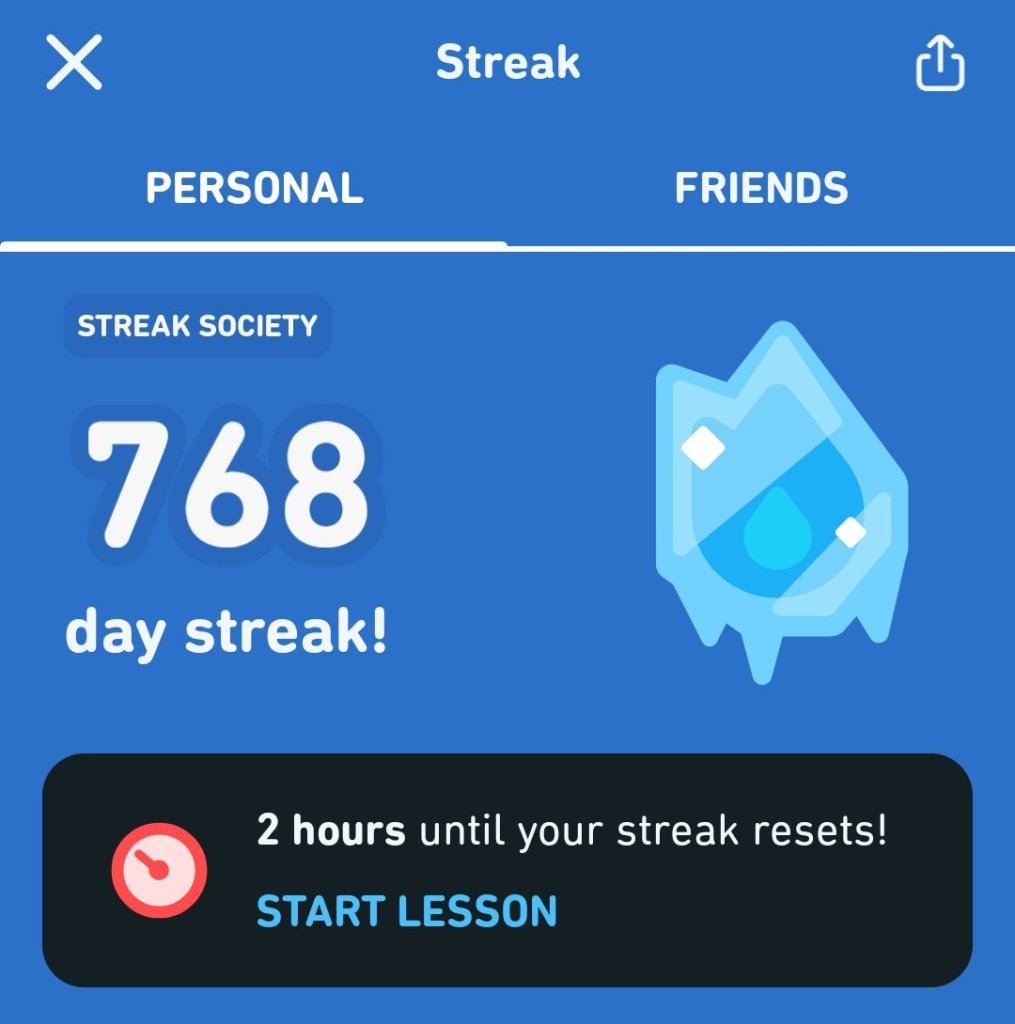
My streak on the day when I deleted the Duolingo app from my phone
Initially, I thought that if I put more time into it, it would work out, but in the end, I had to admit my defeat. When I was still toying with the thought of abandoning the platform completely, news came out about Duolingo’s move to replace many of the manual, human content creation with AI.
“One of the best decisions we made recently was replacing a slow, manual content creation process with one powered by AI,” co-founder and CEO Luis von Ahn said in the letter, shared on LinkedIn. “We’d rather move with urgency and take occasional small hits on quality than move slowly and miss the moment.”
Words cannot describe how much I hate every aspect of this, and although I wasn’t quite surprised (we live in the “golden” age of AI, after all), I was disappointed enough to abandon the platform and redirect my focus to other self-learning resources, which, luckily for me, are abundant on the World Wide Web.
I found specialised courses for all the languages I strive to learn, and now focus more on smaller creators as well, both on social media and YouTube. I try to think back when I was initially learning English, what was most helpful to me, and it always comes back to writing on my own and becoming obsessed with film culture. In the end, it also boils down to my time as well, as I prefer to do everything at my own pace, not on the beating drum of an overgrown green monster.
If Duolingo works for you, I applaud you, but I judge you just a smidge as well (I am from Balkan, after all, it’s my cultural heritage). And if you found other platforms that align more with the sentiments I expressed here, please let me know which ones you are using and how they are working out for you.
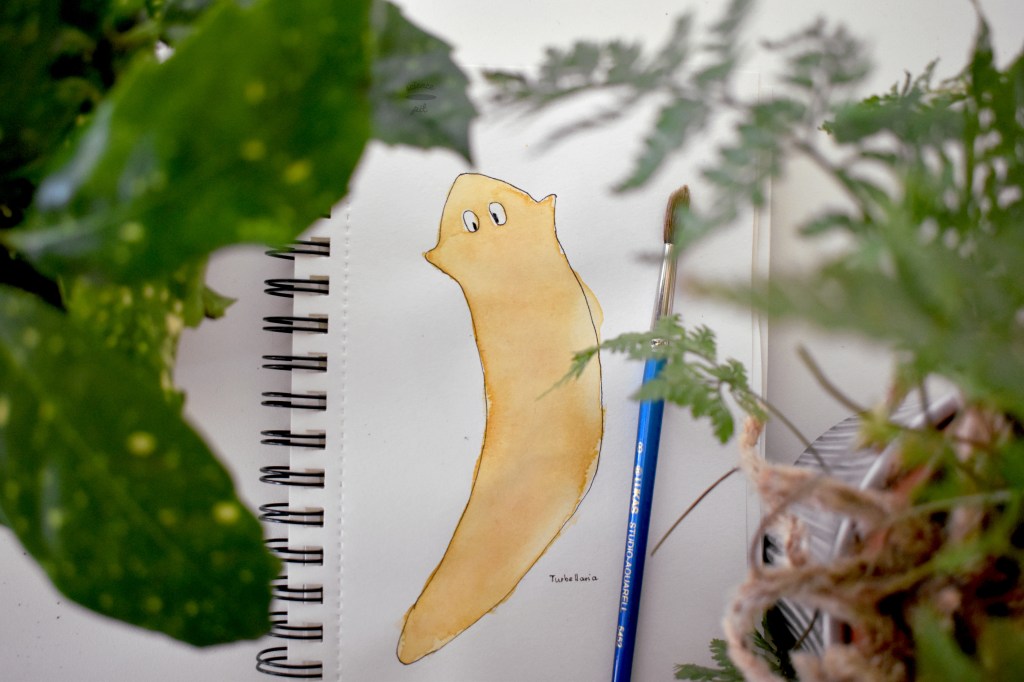
Phylum Platyhelminthes, also known as flatworms, consists of four distinct classes: Turbellaria, Monogenea, Trematoda (flukes), and Cestoda (tapeworms).
Today, I want to write more about Turbellarian nervous system, which is more advanced than the one found in Ctenophora or Cnidaria. Turbellaria are small animals (up to 20 mm in size, although there is one species that can be more than half a meter long, imagine that touching your foot) found in water and wet habitats. Turbellaria have a brain, both sensory and motor neurons, and a series of sensory receptors. Although bilateral animals, not all Turbellaria have a bilateral nervous system, with some of them still having a radial system characteristic for cnidarians.
The turbellarian nervous system, made of uni-, bi-, and multi-polar neurons, can be epidermal, sub-epidermal, and sub-muscular. However, only less advanced species have the epidermal nervous system, while all the others have both subepidermal and submuscular.
When discussing the radial nervous system, it is important to mention cerebral ganglion and three pairs of nerve cords (dorsal, lateral, and ventral). These cords are connected by annular commissures. In the bilateral system, on the other hand, we have a primitive brain made of several ganglia and only two ventro-lateral cords, mutually connected by transverse commissures. There are also sensory nerves, which extend forward from the brain.
Turbellaria have a whole myriad of sensory receptors: mechano-, chemo-, photo-, and balance receptors. Mechanoreceptors can be divided into two groups, thigmoreceptors and rheoreceptors. Both of these can be found on the whole area of Turbellaria body, and both contain cilia in order to sense outside stimulus. The difference between the two is that thigmoreceptors are specialized for touch, while rheoreceptors process water flow stimuli. Chemoreceptors are located in special grooves on the head, and serve to locate food or a mate. Photoreceptors are located in ocelli (ocelli are analogue of eyes) and although they usually have only a pair on the head, some species have couple of pairs or even many ocelli on the edge of their bodies. Statocysts serve as balance organs, although only some species have them. Statocysts are chambers filled with a fluid and also contain one statolith. It is actually unknown how statocysts receive stimuli.
Schmidtea mediterranea, an adorable flatworm of Tricladida class is one of the modal organisms in genetic and molecular research, because it has diploid genome and asexual and sexual strain. These characteristics make S. mediterranea a very popular choice among the scientists, especially since the discovery of its apparent immortality. Due to an abundancy of stem cells, almost any amputated part of this flatworm can regenerate into a full organism in a span of just several days. Yes, this little organism is literally Deadpooling its way through life!
Of course, the explanation behind this mechanism is all but simple; it seems that this regeneration ability depends much on the activity of an enzyme called telomerase, and not even this works the same in asexual and sexual strains of S. mediterranea. There are also many genes involved, but since some of the genes have orthologs in human, scientists are now trying to discover if they could somehow stop aging in our species.
So, what do you think about these small creatures? Do you like them, or do they frighten you a little bit?
Unfortunately, I couldn’t find many resources online regarding their general nervous system, so most of the information is sourced from one book, which is available only in Croatian. More research is needed regarding these creatures, and some are underway, especially regarding their astonishing regenerative capabilities.
Literature & more information: Habdija et al: Protista-Protozoa, Metazoa-Invertebrata, Alfa, 2011, Zagreb Moraczewski, Czubaj & Bgkowska Organization and Ultrastructure of the Nervous System in Catenulida (Turbellaria) Zoomorphologie 87, 87-95 (1977) Tan et al: Telomere maintenance and telomerase activity are differentially regulated in asexual and sexual worms PNAS vol. 109, no. 11, 4209–4214 (2012) Handberg-Thorsager, Fernandez & Salo Stem cells and regeneration in planarians Frontiers in Bioscience 13, 6374-6394 (2008)
Hello everyone, and, after a longer break, welcome back to my blog! As the title itself suggests, I was a part of another BIUS field trip, which was again located at the Žumberak Mountains. For the adventures from the previous year, click here and here.
Quick reminder: BIUSis an association that gathers many Biology students from our department and focuses mainly on field trips, excursions, and expert lectures, all in order to complement and expand our Biology-related knowledge about certain topics. BIUS is also a publisher behind In Vivo Magazine, for which I served as editor-in-chief and I am now an adviser.
Initially, I planned to write this post as soon as I came back, back in May, but I felt rather overwhelmed by everything in my life, especially health wise. I decided to postpone all of my posts, both on this blog and social media, because I just didn’t have enough energy to dedicate myself to creating content in a way I thought I should.
If you read my previous posts about Žumberak, you already know that, despite wanting to spend my life working in a lab, I also like to explore nature. During the last field trip, I was part of the Crustacean group, and this year, I was part of a Butterfly group, although I don’t know that much about either of these topics. However, one of my main reasons to go to excursions is to learn and experience new things, connect with other people, and make great memories. And I must say, I had wonderful four days. I would also like to thank to two other members of our group, Filip and Ivan, for selflessly sharing their knowledge with me and having patience to answer all my questions!
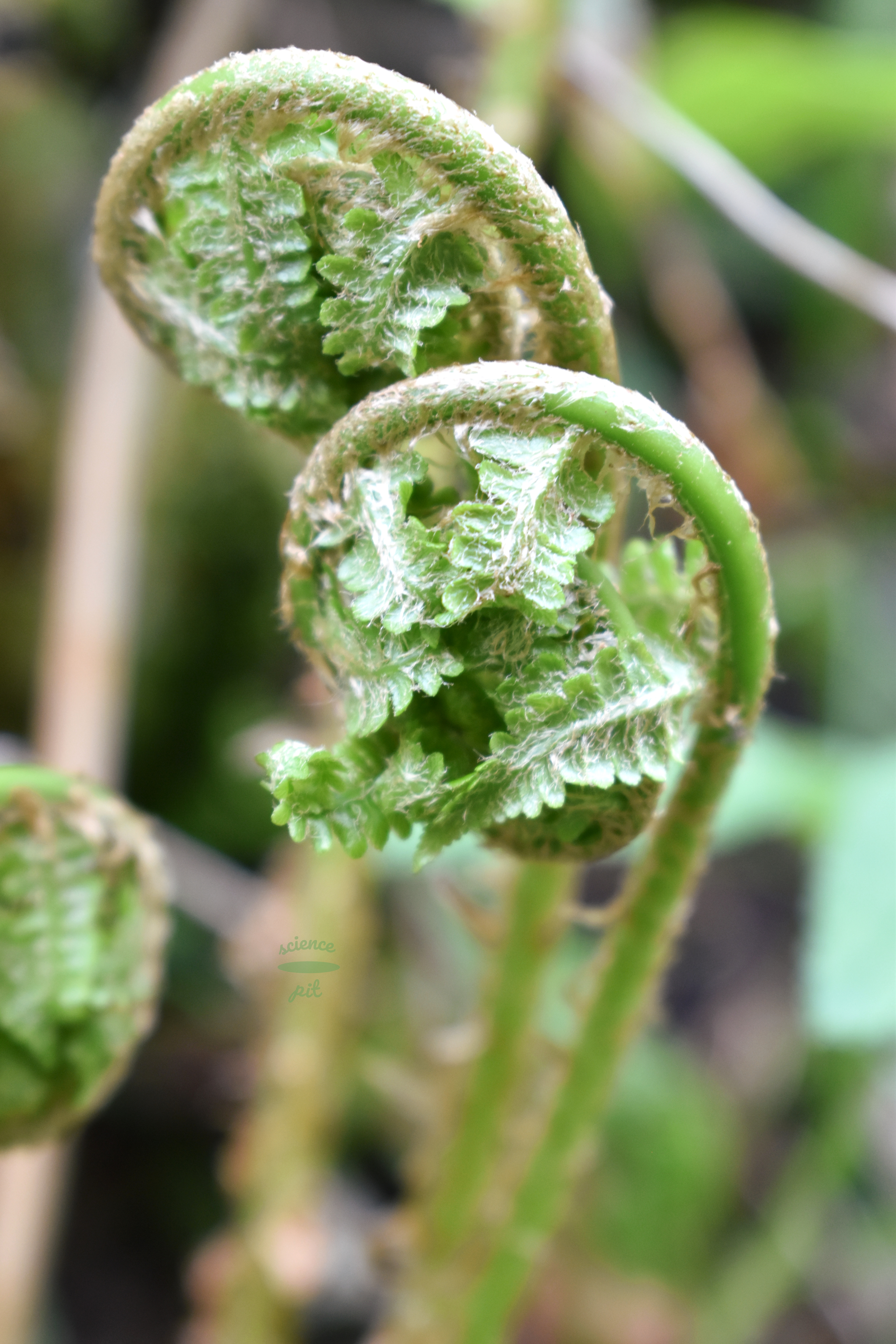
Frist photo: Asplenium scolopendrium (hart’s-tongue fern) sprouts. Forests were full of these and, honestly, I was feeling like I was a character in a fantasy novel, surrounded by magical plants.
Second photo: A bee and a wild orchid. I must admit that I'm very proud of this photo 🙂
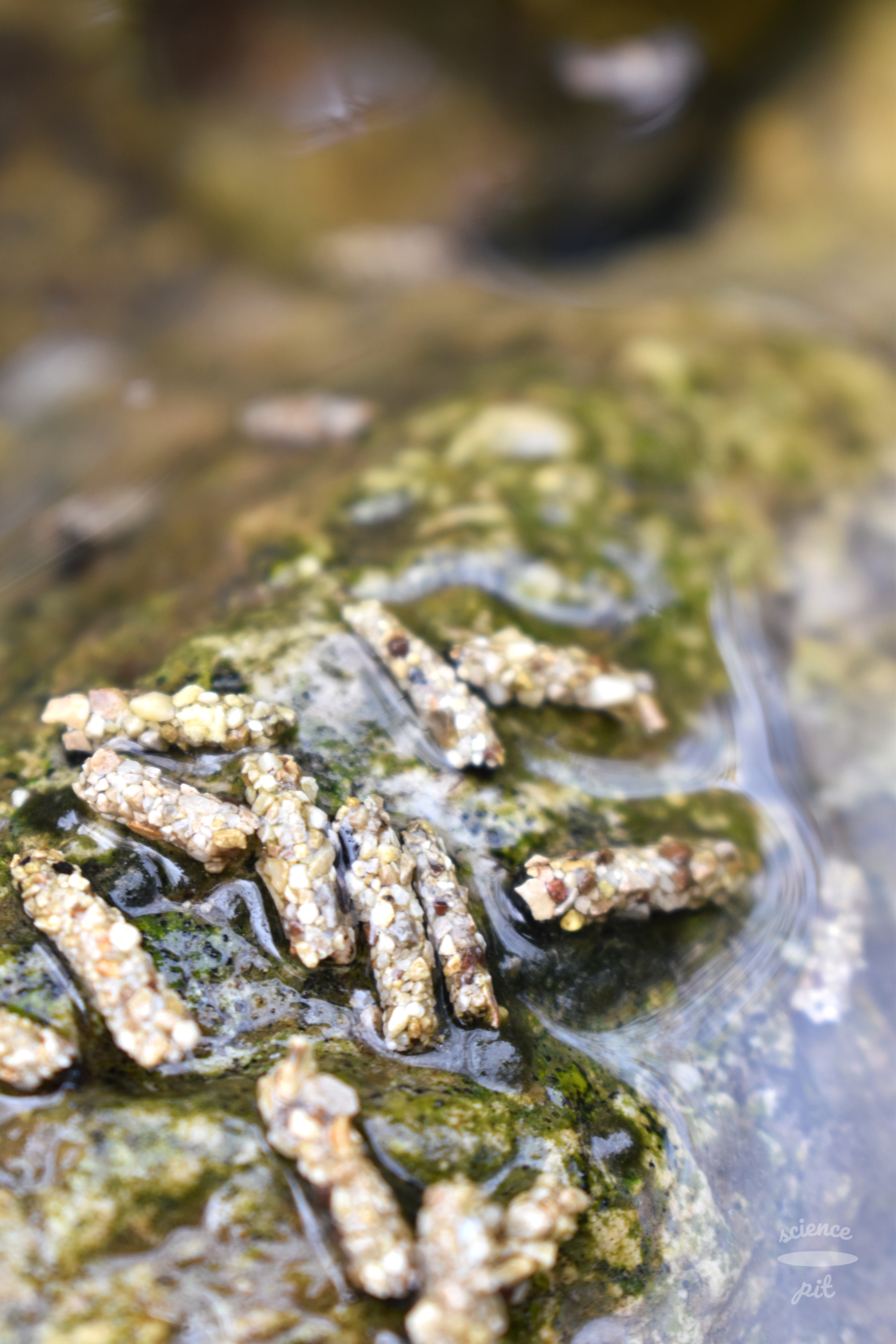
Third photo: Caddisflies! Every stream was full of the caddisfly larvae; you might think these are just some silly rocks, but those are actually insects of the order Trichoptera, who make these protective cases in their larval stage.
I arrived at Sunday, just a little bit before noon, and immediately joined my group; they were strolling down the road, mostly checking environment and inspecting passing butterflies. My main task was taking photos, especially if anyone caught a butterfly. The Butterfly group itself was only recently revived, after Filip showed amazing initiative and interest in butterflies, so we were all actually new to the group, trying our best to wave our little nets. Our main tasks were:
confirm the already recorded species of day butterflies
investigate and record species of night butterflies, which are not very well known in this area
I should immediately note that, despite being successful at both tasks, we noticed an alarmingly small number of butterflies and insects in general, especially for that time of the year. I am honestly not sure what is to blame; we had a weird winter that jumped right into high summer temperatures and our country is, sadly, generally not very preoccupied with the protection of nature, species, and habitats. There were also fun moments, with Ivan very decidedly running after every butterfly in sight. Also, the Botany group brought us a little caterpillar for determination, which Filip then successfully nurtured to the butterfly stage, in order to determine the species.
Iphiclides podalirius (scarce swallowtail)
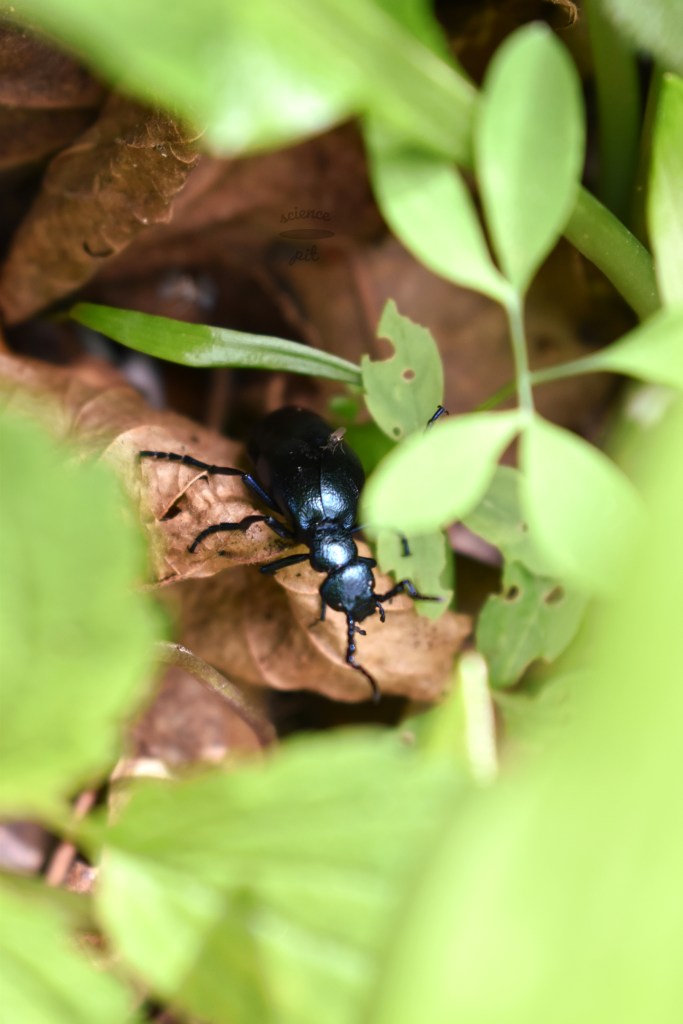
After returning to the camp that same day, I investigated an area around it, with my friend Paula, who used to be a leader of a Beetles group (and is now leading Marine Biology). She was, naturally, much better than me in spotting hidden insects and even caught some water newts after we stumbled upon a puddle. It was such a fun and interesting day, and my only regret was forgetting my straw-hat at home, because the sun was really too strong for my taste.
(Photo: Meloe sp, probably violaceus)
My next day was, however, my favourite experience of the whole trip, because I joined the Biospeleology group and went caving! The last time I visited a cave before this was in 2019, and I must admit, I missed it so much; that specific smell of the cave air, wearing three layers of clothes, fixing my helmet all the time, and walking through impassable terrain. Wait, scratch that last one, I never miss walking on the extremely narrow mud path through the forest, holding onto branches we are passing on the way, barely catching my breath, trying to finally reach the cave entrance. Luckily, everyone in the group was completely understanding and wasn’t imposing any type of time restrictions. Three of us were students, but we also had an expert mentor, who was so kind, patiently answering our questions.
First photo: Mia & Martina looking for spiders
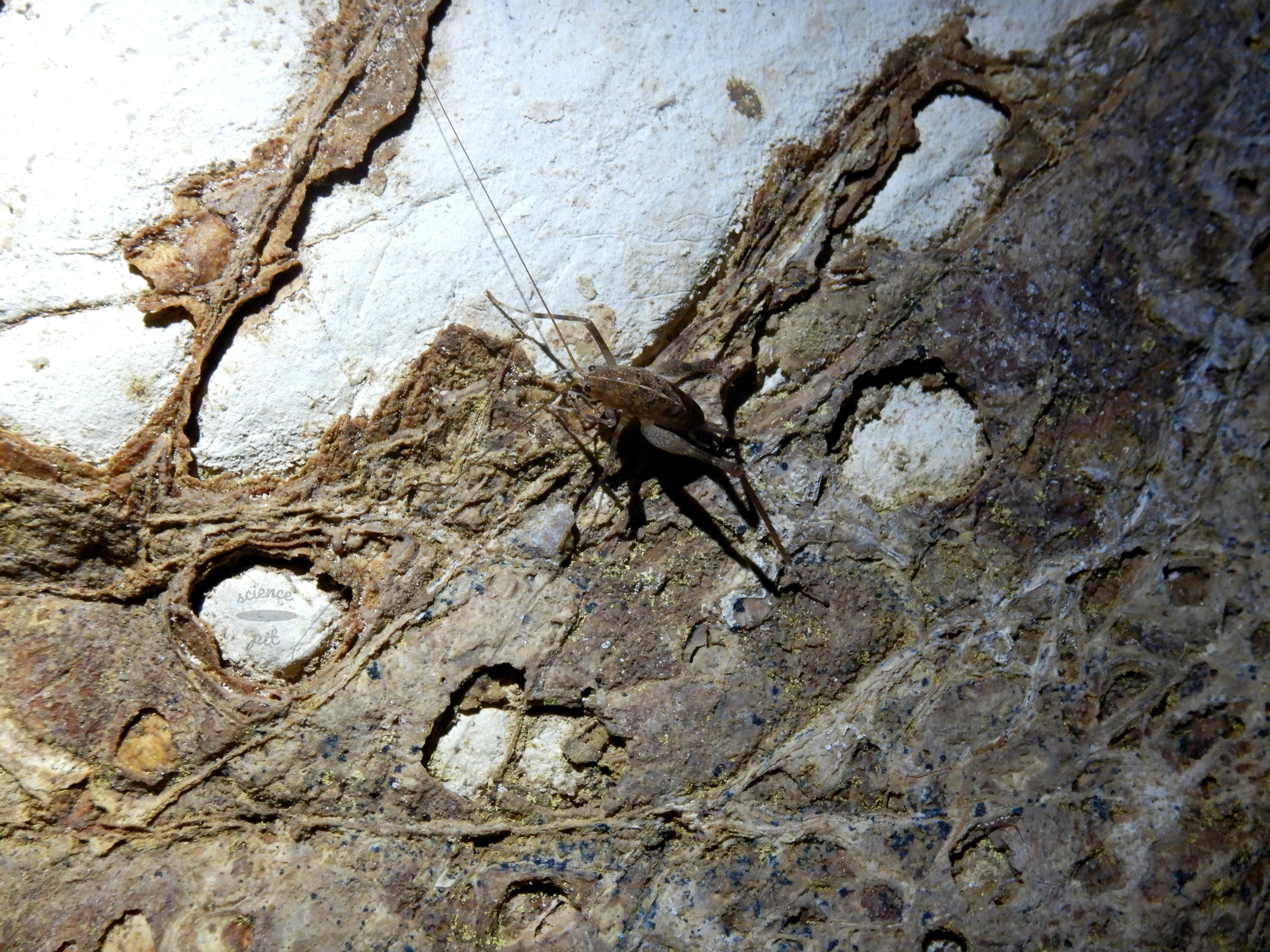
Second photo: Grasshopper sp.
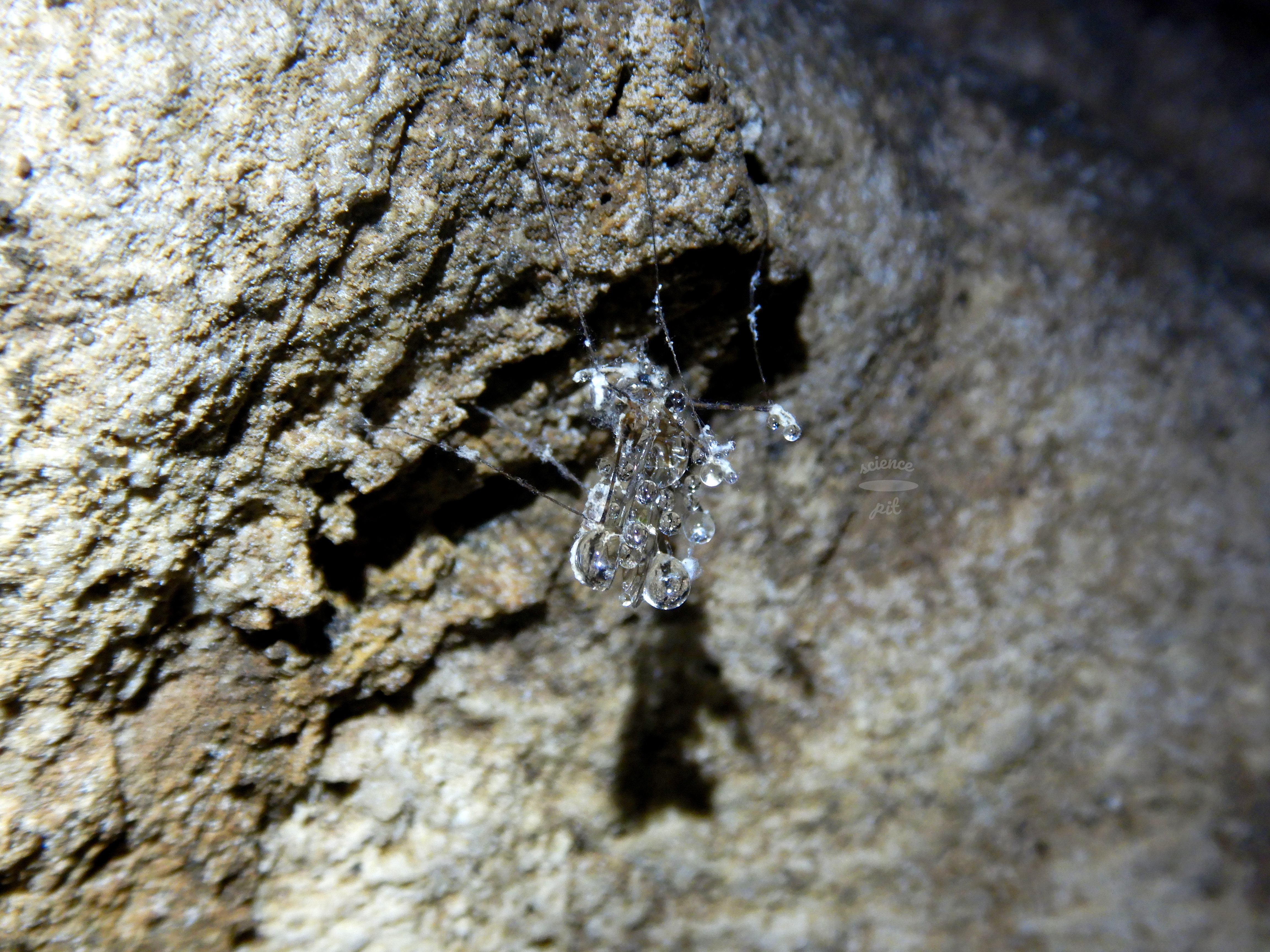
Third photo: A flying insect, perhaps a mosquito, starting to get... Calcified? Mineralized? I'm honestly not sure what is the right word to use here.
The cave in question is called Zidane pećine (roughly translated as Masonry caves), and it’s a cave you can access without the ropes (helmets and speleo overalls are a must). The main task of the group was to collect various insects and bugs that might live in the cave, mainly spiders. Now, the focus was on the creatures that might permanently live in the cave, and not on the ones that only sometimes enter the cave in search for a hiding place. I was, unsurprisingly, mostly taking photos: of my colleagues, cave walls, and various animals inside, which include creepy grasshoppers (not their scientific name) and bats. The cave is also apparently an archaeological site, although I can’t find any verifiable information about that, apart from one mention in a blog post which states that archaeological find dates back to the 16th century and Ottoman attacks. What locals did tell us it that the cave used to be a hiding place during the wars.
A part of the wall inside the cave
Tuesday was a bit more challenging for me; our lovely group leader Filip decided we should check out a big meadow at a higher elevation, which doesn’t sound too bad, except the sun was plaguing me badly. However, we were hopeful we might find an interesting butterfly, but barely found any butterflies at all. As it turns out, it was simply too cold for them at that particular place. We spent the rest of the day mostly hanging around the camp, until evening, when it was time for the night hunt. And yes, it was as cool as it sounds. Around 10pm, a huge group of us gathered a bit further from the camp, in order to observe, and in some instances catch, bugs that are active during the night. To accomplish this, Mladen, mentor of the Beetles group, put up two pyramids, which are made of a metal construction with a simple fabric thrown over it, and a UV light in the middle of it. (Mladen also politely measured a safe distances for me, in order not to be harmed by the UV light, although I have to admit, I purposely got quite close couple of times, in order to take pictures). One of the pyramids was erected next to the road, and another couple of hundreds meters away, near the bank of a stream. It was really fun going back and forth, and taking pictures of all the insects and spiders we found on the road. This experience was also very educational for me, not only because this was my first night hunt, but also because I was surrounded by experts who gladly shared their vast knowledge about beetles, spiders, moths, caddisflies, and mosquitoes.
A beautiful night butterfly
My last day was Wednesday, and as a group, we honestly didn’t have much to do, due to changeable weather and very strong winds. We visited a bio-park nearby, where we saw llamas and walked next to donkeys and donkey-hybrids. It was overall a fun ordeal and we didn’t understand why are we the only visitors there. After a quick search on our phones, we realized that the park was a part of a small ecological scandal last year, so we left. The second part of the day was spent with the Crustacean group; together, we visited a beautiful creek, which was much bigger than I expected. Members of the Crustacean group were setting up traps, similar to the ones I was writing about last year, while the rest of us just walked around, amazed by the nature around us.
Here, I was trying to take photos of newts and tadpoles
As I was driving home that evening, I couldn’t help but smile reminiscing about the packed experience I just had, which included not only visits to the breathtaking places, but also learning more about the tiny world around me, taking numerous photos and videos, and meeting new people.
Here you can find social media of some of the members of the Butterfly group, as well as the link to official Instagram profile of the group. I am also sharing a social media link to Paula’s Instagram, who already shared impressive photos and videos on her profile.
Pozdrav svima i dobro došli na moj blog. Ovo je zapravo prva objava koju pišem na hrvatskom jeziku, a razlog tomu je moj mali, studentski projekt koji je fokusiran na zaštićene vrste grada Zagreba i okolice. Iako su moji primarni interesi neuroznanost i molekularna biologija, smatram da je zaštita okoliša i bioraznolikosti iznimno važna, jednako kao i borba protiv klimatskih promjena, pravilno razvrstavanje otpada te prelazak na samo-obnovljive izvore energije.
Ni sama nisam sigurna kada je ideja za ovakav projekt niknula u mom umu, ali u ožujku 2020. godine, otvaranjem natječaja Studentskog Zbora Sveučilišta u Zagrebu, već sam imala konkretnu ideju kakav projekt bih htjela provesti i na koji način. Mali, studentski projekt koji bi educirao širu javnost, poglavito djecu osnovnoškolske uzrasti, o zaštićenim vrstama koje se nalaze u svijetu oko njih.
Na prvu, ovo se možda čini kao relativno dosadan projekt: malo letaka, malo otvorenih predavanja, o nekim nebitnim životinjama koje žive po šumama i rupama oko Zagreba.
Ipak, zaštićene vrste koje obitavaju u Zagrebu i okolici nisu samo životinje, već i biljke, gljive i lišajevi. I važnije, mnoge životinje koje se nalaze na listi zaštićenih životinja nisu opskurne, već bića koja srećemo toliko često, u prirodi i medijima, da možda ne bismo ni pomislili da su ugrožene i zaštićene. S nekoliko prijatelja sam raspravljala o ideji, i nakon njihovog ohrabrenja, prijavila projekt. Pandemija koronavirusa i bolesti COVID-19 me spriječila u izvođenju projekta kako sam ga inicijalno zamislila, s obzirom da se predavanja otvorenog tipa nisu mogla odvijati, pa sam taj dio projekta prebacila na snimanje edukativnog video uratka, koji je objavljen na stranicama Udruge BIUS, udruge koja je partner projekta. Iva Čupić, poznatija na Instagramu pod imenom Samsa Critters, je ilustrirala projekt svojim sjajnim crtežima, koje možete vidjeti i u letku i videu, a umjetnica Ivana Geček je obradila grafičku pripremu za tisak.
U ovom video uratku, saznajte točnu definiciju strogo zaštićenih vrsta te ukratko u određenim vrstama životinja koje se često pojavljuju na području grada Zagreba i okolice, kao i načine na koje se možete dalje informirati o zaštićenim vrstama.
Ovaj projekt nije ni velik ni poseban, ali nadam se da će educirati barem nekoliko ljudi o posebnosti biljnog i životinjskog svijeta oko njih; ako samo jedno dijete, tijekom šetnje po Medvednici, Jarunu, Savici, Bundeku ili Maksimiru, samo jedno dijete vidi malenog crvendaća i shvati da je upravo ta vrsta zaštićena, ugrožena i posebna, i da je na nama da tu vrstu zaštitimo od izumiranja, smatrat ću da je moj projekt ispunio svoj cilj o edukaciji i proširenju kolektivne svijesti o prirodnom bogastvu kojim smo okruženi.
Ctenophora, commonly known as comb jellies, are a rather perplexing phylum of beautiful pelagic creatures. Their evolutionary position has been debated for many years as is the origin of their nervous system (some scientists believe they are older than sponges and that sponges lost their nervous system, while others advocate the theory about the nervous system forming independently twice, once in cnidarians and once in ctenophores). Ctenophora have two nerve nets: subepidermal and less organized subgastrodermal, which recent research identifies as a mesogleal nerve net. Nerve cells from this layer communicate with muscles by synapses and affect the locomotion of the body. The subepidermal net is denser around the mouth, the pharynx, and under the comb rows (comb rows are strips that run the length of the ctenophore body and contain cilia called “ctenes”). Ctenophore neurons can be iso- and multipolar.
They have sensory cells on the whole surface of the body and those correspond to vibrations and thermal and chemical stimuli: more receptors are located around the mouth and pharynx. Ctenophora also have an apical and aboral sensory organ. Such sensory organ consists of a statocyst, a sensor that contains a statolith that balances on four groups of long cilia connected to the comb rows. These organs help the orientation of the ctenophore body. What’s extremely interesting is that ctenophores use different chemical signalling system than the ones described in the previous posts, mainly because these animals simply lack the neurotransmitters (and genes), such as serotonin, dopamine, noradrenaline, and acetylcholine; glutamate is the only neurotransmitter currently known to be present.
I gathered all this information from different resources, and some are sometimes contradictory or are generalizing conclusions about the whole phylum from the data of only one ctenophora species. This is the best overview I could manage, to show both the similarities and the differences of the ctenophora nervous system, when compared to the Cnidarian system. These lovely animals are not very well researched and I’m sure many wonderful breakthroughs about their anatomy, physiology, and their place in the evolutionary tree are to come.
Hi everyone, and welcome to my first post of 2021! I hope you had a nice time over the holidays and that your year started well, both personally and professionally. For my first post of the year, I decided to write about my personal experience; how it helped me, and what I learned from it.
If you follow me on social media, then you probably know most of my path in education, but for the new readers, I’m going to write a short recap: I have a Bachelor of Science in Biology and I’m currently finishing Master of Science in Molecular Biology. In my country, a Master’s degree is needed for almost any kind of employment and is a condition for applying for a Ph.D. However, only some classes are obligatory once you reach the Master’s, and in the second year, you only need to hit a certain number of ECTS; you can choose any of the classes as you please. You can choose classes that are completely unrelated to each other or a complete “module” or a couple of classes that are dedicated to a certain topic; I chose Computational Biology.
I was always interested in coding, and coding in Biology sounded like such a good idea at the time. I already took another course, titled “Bioinformatics”, where I initially fell in love with this type of work. It was a very different class, as there wasn’t that much factual studying, but rather we had a problem that we had to solve using various online tools. This class was something new and challenging. Choosing that module seemed like a normal continuation of my interests; another very important reason was also that classes weren’t held every day and also weren’t compulsory. Now, I naturally tried to attend as much as possible, but with my illness and doctor’s appointments, not worrying about doctor’s notes and attendance quotas was a bonus.
My violin plots bring all the people to the yard
There are five classes in the Computational Biology module and I chose four of them: Algorithms and Programming, Computational Genomics, Machine Learning and Statistics, and Mathematical Foundations of Computational Biology. Structural Computational Biophysics, the fifth one, honestly didn’t sound as appealing. Most of those classes were held in blocks (only Algorithms for a couple of weeks, then Statistics, then Genomics), with Mathematics being the only one we had every week for the duration of the whole semester. Very quickly, I realised this may not be it for me; my colleagues got a hang of things quicker than me, and I felt that I’m lacking quite a lot of the prior knowledge, things I should have learned in high school, but my high school course back then didn’t focus on that. There were also memory issues, probably due to rapid changes in the medication I was taking, which was taking a priority above everything else.
The whole module is not perfect (for example, I learned quite a lot of Statistics, but not much about Machine Learning), however, I think it’s quite rewarding, especially since it’s the only opportunity we have to even check out a dry lab. It requires a lot of dedication and a lot of free time; at least now I have a reasonable (beginner’s) understanding of how to use R. What I also had, was the knowledge that sometimes, your first choices may not be the best for you and that it’s quite normal not to be exhilarated about the classes you’re taking. See, if I chose anything else, I would be plagued by the “what if-s” and now, after passing all the classes, I can confidently say I’m happy with the decision I made, but Computational Biology is just not right for me.
I’ve learned a lot and my professors were very understanding, although I honestly believe they also figured out this field isn’t my strength, but they helped me navigate all the tasks anyway. I gained a deeper understanding and appreciation of this type of research and re-discovered my love for the wet lab. I don’t know how much this knowledge will help me in the actual research, but even if I won’t do profound coding, statistical analysis is always an incredibly important skill to have. If you had a similar experience, don’t be too hard on yourself – sometimes, we have to try out different things, even academically, to realize what kind of research interests us. Of course, at times that can be rather difficult and not everyone has the same options and opportunities. Academia can bring about a lot of stress and pressure, even without us doing the same to ourselves.
Hydrozoa are the last cnidarian class I’m going to write about. They can exist in two distinct shapes, as hydromedusa and hydropolyp (same as Scyphozoa and Cubozoa). Despite perhaps expecting hydrozoans to be the most advanced in both nervous and sensory systems, they don’t actually have any rophalium. Furthermore, some hydromedusae don’t even have nerve nets. However, they have two nerve rings (outer and inner) on the margins of their bells which are regarded as ganglia by some scientists.
These rings consist of neural pathways which process different sensory inputs (such as light and gravity). Aglantha digitale, a hydrozoan species, has been reported to have as much as 14 distinct neural pathways. A. digitale is also distinct from the other species in the class by having two swimming “modes” – slow (which is a characteristic for all hydrozoan) and escape mode. Transmission through giant ring neurons is responsible for both modes, but the escape mode requires a stronger contraction. The slow swim mode is activated by the input from the pacemaker, which triggers slow calcium spikes. Direct mechanical nerve ring stimulation by tentacles triggers fast sodium spikes. In short, giant ring neurons are capable of generating two different kinds of action potentials.
bsh
Gap junctions are also present in (and only in) Hydrozoa, and they transfer electrical signals through the musculature. Furthermore, I would like to emphasize that despite some hydromedusae not having a nerve net, some in fact do, and so do hydropolyps. In polyps, however, some groupings of the neurons could be found around their mouth.
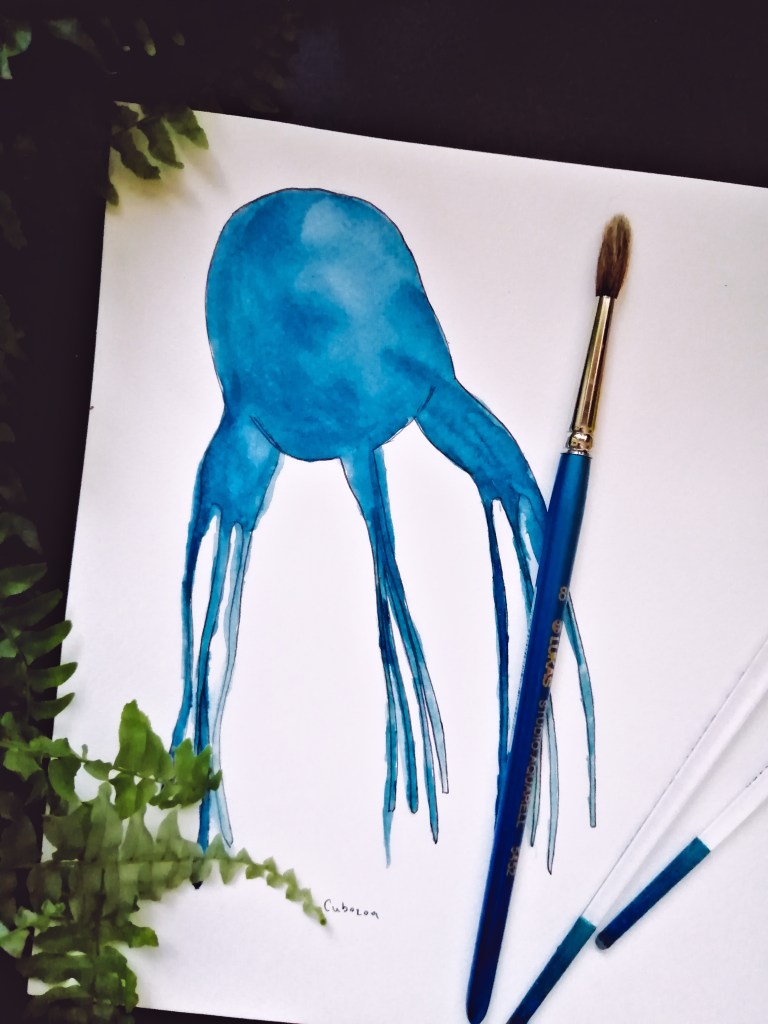
Cubozoa, or box jellyfish, are another cnidarian class. Their name stems from their distinct cube-like shape. Cubozoa are also distinct from other cnidarian because their venom can be fatal to humans. As with all cnidarians, box jellyfish have two nerve nets and, like Scyphozoa, rophalia. However, box jellyfish also have a distinct nerve ring, as well as more developed eyes that consist of a lens, cornea, pupil, and a layer of retinal cells. Altogether, Cubozoa have 24 eyes, which makes them the most advanced cnidarian class in the sensory aspect.
Rophalia are mutually connected via the mentioned nerve ring. This ring is believed to be an integration center for the swimming, visual, and tentacle systems; it is comprised of oversized neurons, as well as some smaller neurites. The communication between the nerve net and jellyfish muscles is regulated by chemical synapses.
Most of the information relating to Cubozoa, I already mentioned in the previous post about Scyphozoa, so I only wanted to relay the main differences between the two. These two classes are so similar that, until recently, they were actually considered one class.
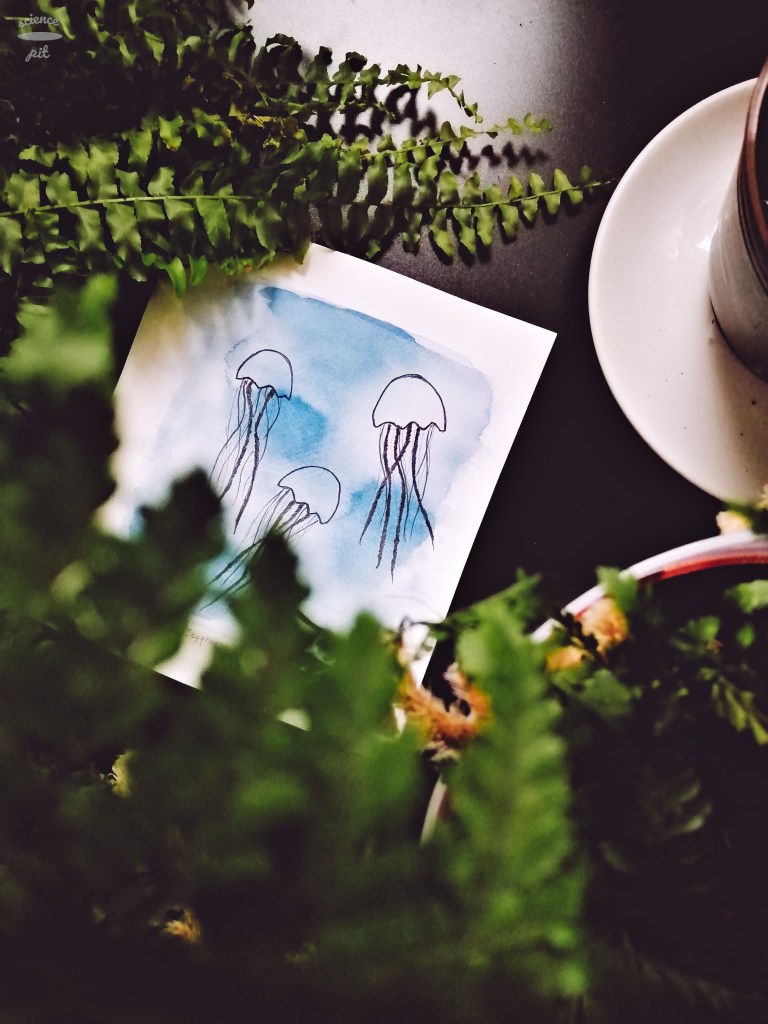
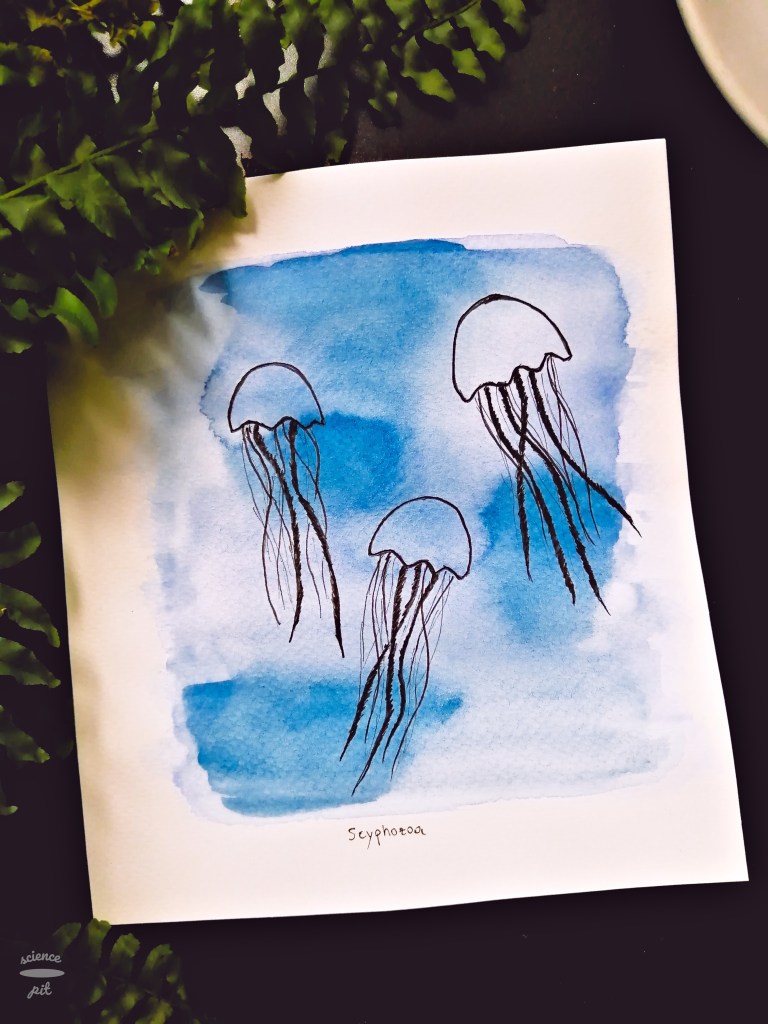
Scyphozoa (true jellyfish) are much more interesting (in a neurobiological way) than previously described corals. One major difference is that Scyphozoa are pelagic animals, which means they are not fixed to the ground. They also have two diffuse nerve nets (subepidermal and subgastrodermal) that consist of bipolar and multipolar neurons – the impulse conduction has been measured at 0,15 m/s. Both nets coordinate the movements of an animal towards the food. Some scientists, however, differentiate one diffuse and one motor nerve net. The motor net is in charge of the activation of muscle contractions after receiving signals from the so-called pacemaker organs (which are in charge of the swimming rhythm). The diffuse net, in this case, is in charge of marginal tentacle contraction and it is also believed it communicates sensory information to jellyfish musculature. Neurons of the motor nerve net are connected by chemical synapses, while neurons of diffuse nerve net are connected by peptidergic synapses that were noted in Anthozoa as well.
Sycphozoa also have much more developed sensory organs than any of the animals previously mentioned. These sensory structures are called rhopalia and they are located on the edges of the jellyfish bell – there are usually four of them (or a number that’s a multiple of four). Rhopalia contain multiple sensory receptors – statocyst (balance receptor), ocelli (light sensitivity), a mechanoreceptor, a chemoreceptor, and aforementioned pacemaker neurons.
I would also like to note here that some authors (I’m referring here to the article “Do jellyfish have central nervous systems?” by R. A. Satterlie) believe this kind of nerve net explanation is rather simplified and that there exist some evidence suggesting that jellyfish have a centralized nervous system, mainly that rophalia are in fact rudimentary ganglia and could be regarded as integrative centers. However, any communications between rhopalia themselves exist only through the nerve nets.
I don’t know about you, but I just love doing online courses, especially when they deal in subjects I don’t get to explore in my college courses. Over the years, I tried many different platforms, such as YouTube, Google Digital Garage, Khan Academy, Udemy, and, my favourite, Coursera. As a matter of fact, I discovered Coursera back when they started in 2012; most of the courses I took were on topics of Neuroscience and Molecular Biology. At first, courses and certificates were completely free, but with time, they started offering paid vs. free, as well as many specializations and even some college degree courses. However, many of the courses are still available to watch and do quizzes, just without the certification.
Disclaimer: this post is not sponsored by Coursera.
This course, offered by Hebrew University of Jerusalem, is actually the very first course I took, and at the time was one of the rare Neuroscience courses. I have only good memories about this one – it is a good introductory course into the field and the professor explained the curriculum very well. Also, the course mentions real projects that deal with neural networks and brain reconstructions, such as Blue Brain Project. I didn’t mention this previously, but every course also comes with subtitles (in English at least) and transcripts, so you can follow along easier.
The Addicted Brain (by Emory University) is another course appropriate for beginners in this topic – I was initially interested not only because of the topic of addiction, but also because various mechanisms of how drugs interact with the brain were presented. The course also covers the topic of drugs in society, although this part mainly concerns United States of America. Also, I don’t know if this is something that’s important to you, but I followed professor’s narration easily – his voice is calming and he speaks very understandably.
Medical Neuroscience (by Duke University) is not only the most advanced course of the ones mentioned here, but the most advanced course I ever took. Actually, I started it once or twice before, but dropped out because it required a lot of time and dedication that, at times, I just didn’t have due to my University obligations. This course is really extensive and requires some before-knowledge, but is also very satisfactory when you finish it. The only problem I had with this one is that sometimes I felt that questions in quizzes were asking for details that to me seemed almost overlooked in the videos. However, I felt like this course was quite important for my studies, since I have a strong interest in Neuroscience, but lacked the medicinal perspective.
All quizzes are multiple choice answers, with usually one correct answer (sometimes more correct answers). I vaguely remember some questions where you had to connect some phrases (like 1-d, 2-c, etc) as well, but haven’t came across those recently. Also, the quizzes I did were never timed and you can take one quiz 3 times every eight hours (they keep your highest score).
Coursera also offers financial aid – you can fill out an application where you explain why is the course you’re applying for important to you and why you can’t afford it. So far, I’ve heard of many positive experiences where they gave grants.
There are also two Neuroscience related courses I am planning to take – Human Neuroanatomy (to revise a bit) and Computational Neuroscience, which deals with using Python in Neuroscience research. I would very happily review those for you, in a greater detail, if this is something you’d like to read about!
***
What is your opinion on online courses – do you think they’re useful or a waste of time? Did you perhaps take some of the ones I mentioned? If yes, I would love to hear from your!