Old-school Master’s thesis

A while ago, while roaming through the halls of my University building, I stumbled upon some old Master’s thesis (theses?).  They are all dated from mid 60’s to late 80’s, and are written on a typing machine. What really drew my attention were illustrations –  they are all drawn by hand, using ink. I honestly don’t know if the authors did them themselves, or hired someone to do it for them (I believe it’s the former), but these are just gorgeous!


All three of these theses are in Croatian, but I translated the titles:

  1. Chromosomal structure of salivary glands of Chironomidae larvae and its importance in the determination of species by Vladimira Tavčar (1964)
  2. Gene segregation study of HLA, AB0 and Rh systems by Gordana Puškadija (1980)
  3. Effect of adriamycin and epirubicin on DNA cell synthesis in culture by Dijana Abramić (1987)

Also, these are all on the topic of Molecular biology – I will visit libraries at other departments of my University (Zoology, Botany, Microbiology, Animal Physiology) to try and find similar ones! Which one would you like to see first?

Inside of the Master's thesis (no. 2)
Inside of the Master’s thesis (no. 2)

I am honestly so fascinated by these illustrations, they are wonderful! So detailed and neat… However, the oldest one is my favourite, because the author not only had to do her research in the lab, but also did the fieldwork, which is precisly something I would like to do one day – combine field Biology with Molecular biology.

As you can see, the photographs were also used, but they were glued in the thesis.

DSC_0260
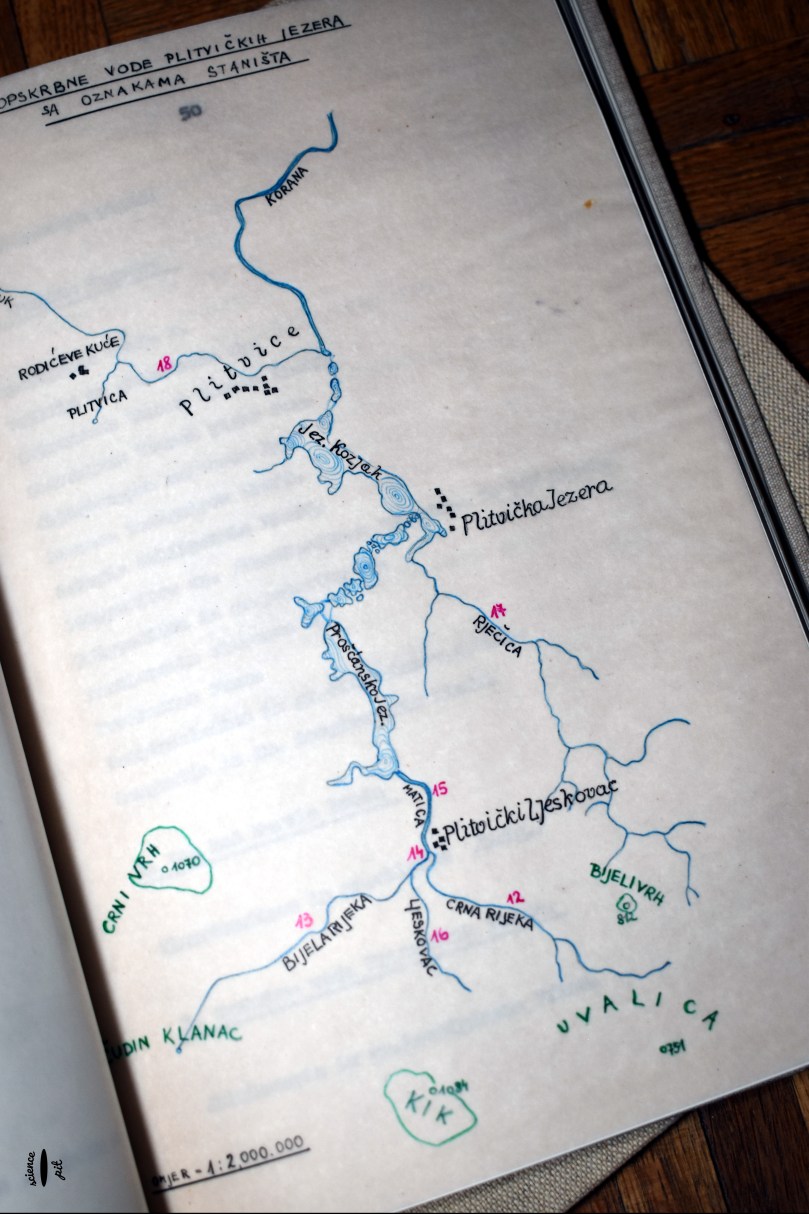
Inside of the Master’s thesis (no. 1)

This aspects is fascinating to me as well – the hand-drawn map!


That’s it for now, I hope you enjoyed these beautiful drawings as much as I did! I have a few more photos, so if you’re interested into seeing more, please let me know!


Biology & informatics &… olms?

Last Friday (8th of November) I was fortunate enough to hold a workshop (with Bruno) called “Little workshop of Bioinformatics” – the title is a bit wild, but we purposefully chose an “exotic” name in order to arouse curiosity.
This workshop, held in House of Velebit in Krasno, is actually a continuation of a two workshops we already held (one in a City Museum Samobor and another one at my old primary school) and which we designed to introduce school children of all ages to primary concepts of molecular biology & genetics. Of course, kids in 7th and 8th grade were already familiar with it.

We first designed the workshops, with the help of our mentor Dalibor Paar, associate professor at Department of Physics, Faculty of Science, and were nominated for Rector’s Awards in 2019.

Where is the informatics part, you ask? In the using of micro:bits, cute and small mini computers that are easily programmable in Python or JavaScript (we chose Python). Bruno wrote a very elegant code and I designed the rest of the workshop: ciphers to de-code, phenotypes, core of the workshop… In terms of design, my BFF Ivana generously lend her drawing skills and we were all set.

fbt


How the workshop works?
First, I introduce students to basic concepts of the molecular biology: what is DNA, what is a protein, and that DNA codes for proteins. This part, depending on the ages (and attention) of children can last up to 15 minutes, then the fun begins. Every kid gets a cipher, which consists of four or five lines, each of those consists of nine differently coloured arrows that can point in one of four directions: up, down, left or right. micro:bits have motion sensors that pick up in which directions they are pointed and display one of the four letters: A, C, T or G. We also coded for a second program, in which kids enter those letters (DNA bases) and they show three letters that represent a very short amino-acid sequence (in this example, a protein). When they are finished with this part, we give them another paper, where they are supposed to find what is encoded by their protein (blue or green eyes, blonde or red hair…).
For the workshop in Krasno, we switched things up a bit, and our “proteins” encoded for different characteristics of two different olm subspecies: a pink one and a black one.
This might seem a bit complicated in theory, but in practice, children picked up everything really fast 🙂

Olms & micro:bits!
Olms & micro:bits!

So, how many of you have heard of olms, or proteus? And how many of you knew there is a black subspecies? 🙂
Olms (Proteus anguinus) are amphibians (like frogs), they are completely aquatic and live in dinaric caves. Noted sightings include Italy, Slovenia, Croatia, and Bosnia and Herzegovina. They have elongated bodies, external branchiae, and no eyes. The black subspecies (Proteus anguinus parkelj) is, well, black, and has eyes. The other notable difference is that pink olm lives in colder waters (up to 11° C). Another interesting fact is its name in Croatian: “čovječja ribica”, which roughly translates to “human fish”.

I think the name is appropriate, and you?

Neuro & speleo

As promised (to my two and a half readers and myself), I’m diligently writing another post, and this one combines my two greatest scientific loves – neuroscience and biospeleology!

Last weekend, I attended two very important conferences – 3rd Rijeka forum on neurodgenerative diseases – diagnosis and treatment in early stage of disease and 2nd Dinaric symposium on subterreanean Biology. There was one day overlap between the two, so I chose to spend my Friday in Rijeka, but more about that later on. Since this trip included a lot of walking and transport, for the simplicity I packed only the bare necessities, which included only one pair of booties (this comes in play later on).

The topic of neurodegenerative diseases is something I would really like to do all my future research in, and it’s also a subject of my master thesis (precisely, neurofibrillary tangles in rat brains). Also, there was no attending fee, which is pretty much amazing for the students. We (Bruno and me) arrived in Rijeka (from Zagreb) very early in the Thursday morning by bus and set to find the University campus where forum was taking place. This wasn’t my first time in Rijeka, so we didn’t have any problems with finding the venue. The forum consisted of plenary lectures held by renowned professors from all over the Europe (Sweden, Italy, Slovenia, England) and Croatia of course, and it was roughly divided into two parts, basic neuroscience and clinical research. As a biologist, I didn’t pay too much attention to clinical part, and instead was dutifully solving my programming homework. However, it was amazing to be there for both days, and just listening what was new in the world of neurodegenerative diseases. I didn’t find courage to ask questions (during the Q&A time, or even after), but I hope that one day I will. We didn’t “touristly” roam around Rijeka, but we stayed overnight in the most gorgeous apartment in the centre, I was seriously impressed!

On Friday, after lecture, I stayed in the venue for a little while (internet access!) and then we went to the train station. I love travelling by trains, and I try to do it as much as possible. Luckily, this train to Ljubljana (yes, Slovenia again!) also went through our next stop, Postojna. If that name rings a bell, that’s surely because of the Postojna Cave, one of the most famous caves open to tourists in the area. It is also special because there are many blind cave salamanders, which are part of the vivarium as well. Our plan was to visit this cave at Sunday, while Saturday was reserved for the Dinaric symposium. The symposium was held in Karst museum in Slovenia, and we caught the last plenary session and some posters. There was a short break (we went to the town centre to stock-pile some food) and then, the excursion!

Blonde haired woman sitting in a train (with a green background and glass reflection on the right).
It’s just me in a Croatian railroads train.

We were driven by car by our hosts, Teo and Ester (who we met during this summer – I will write about that in the next post!) to Rakov Škocjan. I would like to use this opportunity to say that Slovenia is really beautiful, full of intact nature and small roads. In Rakov Škocjan, we set for a quite a long walk to visit two natural bridges and caves near them. I had my shiny new camera with them, so I was taking as much photos and videos as possible, and honestly, I also used this as an excuse to stay behind, because I had a hard time keeping up with the rest of the group (I’m chronically out of shape). The trails itself is beautiful, a part of it also goes near the river Rak. Soon we came to the first natural bridge, which is completely made of stone. The only thing human hand built were protective barriers, so people don’t fall down. The story behind both bridges is that they used to be huge caves, but they collapsed, leaving only the bridges. Parts of the caves still remain, so most of the group went down to enjoy the cave and river that goes through it. I stayed behind, because I assumed it would take me too long to climb down and back up, and I didn’t want to hold back the whole group.

A stone natural bridge, infused with forest; green and grey colours are dominant.
Little Natural Bridge of Rakov Škocjan

After the first bridge, we went back to the meeting point, which was the hotel where we had lunch. Next, the second bridge, which is 5-minute-long car ride away, and about 20 minutes by foot from there. Usually, the passage under this large natural bridge is almost completely under water, but we were lucky, as it was completely dry. We carefully walked in the river canyon, up the entrance of the second cave. Since Bruno and I didn’t bring any headlamps, one of the organizers kindly borrowed us spare helmets with the lamp on. Which lamp, you may ask? Scurion, the best of the best! I was so excited to wear it that I made Bruno take countless pictures of me!


Then, we naturally went to explore the cave, which wasn’t as dry as the canyon. Sometimes, it was really hard to see how deep the water level is, and that’s how I ended up with a very wet right foot. Like, full on water in my boot, because the water level was just a bit too high then I anticipated. This didn’t stop me to try out my camera, and I was very satisfied with the photos, since they are a big step forward from the ones I took this summer (again, this will my next post!). The light from the Scurion was on occasion so strong, that some of the photos look almost burned, I couldn’t believe it.

speleo
Biospeleologists in a cave

Some folks went through the whole cave, but I wanted to go back the same way, to take more pictures of the bridge and cave entrance, since I didn’t have enough time to do it the first time we went through. Honestly, at moments, I felt like everything is a bit too fast, especially for someone who wanted to take a quick break and just enjoy the nature or take a few snaps for the photo album. The whole time however, I was thinking only how wet my sock is, and couldn’t wait to go back to our apartment and change. However, the group had other plans and first we went to the small café close to the big lake, which I honestly didn’t see. We did say to Teo that we would like to go back and would skip dinner (programming!), so he organized a transport back for us, which we were quite grateful for.


The next day, the big day! Postojna cave, or at least we thought so. After waking up, we realized we should walk two kilometers up to the cave, with both of our backpacks and I also had a bag full of photography equipment. There were some taxi companies, but no one answered, and we also didn’t have almost any cash, since I’m used to paying with a bank card. This was actually a problem in Postojna – apart from big chain stores, everything was to be paid in cash, and all ATM-s were located in the city centre. All of this, combined with our train schedule and my sill wet boot, contributed to us giving up on Postojna cave, and heading for a train station… Where we realized that the ticket office is closed, and we can’t pay with bank card in the train. So, Bruno quickly headed back to the centre, and came back with some pastries as well. Our way back went smoothly – first train to Ljubljana, trying out new burgers at McDonalds, and then train to Zagreb. During that time, we decided to come back to Postojna during the winter, and explore that cave, as well as going back to Rakov Škocjan on our own, setting our own pace and excursion plan. However, apart from finishing my homework assignment, the most important thing, excluding pretty photos, is the fact that I finally finished reading Dracula, the book I struggled with for almost two years, for the reasons I still don’t understand.

A view from inside to outside of the cave; framed arch with the blackness of the cave forming an outside frame, and sky and forest being the picture in the centre.
The cave near the Big Natural Bridge; a view from the inside.


A short adventure in Pula

Pula is a small town located in Istrian peninsula (Croatia), famous for it’s film festival, beautiful sea, and rich history. As such, it’s also a great choice for many symposiums, meetings, and congresses – I have visited it twice this year only!

My Pula adventure lasted for four days, during Croatian Neurological Academy, a medical congress dedicated to neurology (and neuroscience). The Academy was held in Histria hotel, on Verudela beach – this setting is wonderful, we were surrounded by sea for miles. Also, the food was superb; many choices for main dishes and desserts (sea food, vege options, pasta, various meats, pastries…).

Now, this blog is called Science Pit, because you know, science; however I also like to travel a lot, and I am a self-proclaimed history buff. So, this particular trip was a bit less neuroscience, and a bit more “look at that historic statue!” (Don’t worry, I went to a gorgeous science museum as well!)

When thinking about Pula, most of people immediately think about Pula Arena, an amphitheater distinct by being the only one that has all four towers still preserved. It was built between 27 BC and 68 AD. This was my first time visiting the Arena, and honestly, it’s impressive. Walking inside something so old, imagining what have taken place in this structure, which famous Romans were part of the fights… It’s a breath-taking experience, and words don’t do it justice.

Huge stone arches of Amphitheater in Pula; with sky seen through the arches.
Amphitheater in Pula; 2000 years old.

After Arena, I visited Temple of Augustus, a temple dedicated to Augustus (formerly known as gaiusu Octavius), first Roman emperor. The Temple has been standing in its place for 2000 years (give or take a few years). When you are in front of it,  the Temple seems as it was built couple of years, and not two millennia ago. The third historical landmark I saw was an arch – not Arch of the Sergii, but Porta Gemina (rough translation = Double door).


After all this, I headed back to the direction of the hotel, with a twist – Aquarium Pula is just 15 minutes by foot from my hotel. At first, I was a bit taken aback by the ticket price (student ticket is 90HRK =12€), but my mom encouraged me to go with her anyway. And honestly, it was worth it. I was a visitor once before, as a part of my obligatory Field Trip during my Bachelor’s. Surprisingly, I was as fascinated this time, as I was the first time – the abundance of sea life in Croatia is staggering, and it always reminds me how little we know about our oceans. The aquarium also has reptile and butterflies sections, but those include species not found in Croatia (such as caiman). I would absolutely recommend visiting, and take your time while you’re inside – photography is allowed!
This photo is just a small glimpse of photos and videos I’ve taken – they deserve their own post, or even a video. P. s. Of course I’ve found a cave!


NeuRi – Student Congress of Neuroscience

Hii everyone, and welcome back to my blog!

For this week’s post, I have decided to write about NeuRi – Student Congress of Neuroscience. I write about this particular meeting because I have been part of it since 2015. However, I believe any kind of involvement with this kind of events is extremely important to students, and I would like to encourage all my friends and colleagues who might read this piece to get involved!

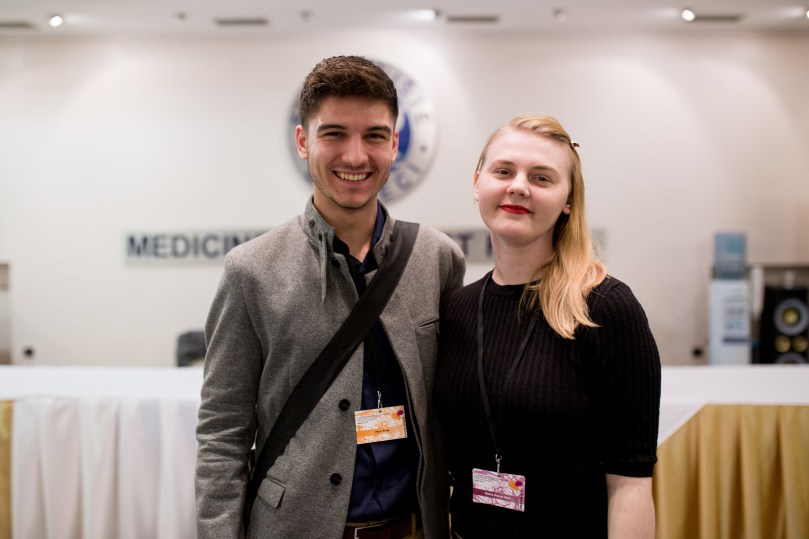
NEURI-2019-67
Day 1 of NeuRi 2019 – many happy reunions; Petar&me, we presented together in 2017!

NeuRi is a congress aimed at students who have interest in neuroscience; neurobiology, neuropharmacology, molecular neuroscience, neurology, neurosurgery, neuroinformatics, psychiatry, neurolinguistics… For nine years, it has been held in Rijeka, a city in the middle of Kvarner. It also includes an excursion to island Rab and visit to Psychiatric Hospital Rab. At NeuRi, students have an opportunity to present their work, form new friendships, and participate in the biggest gathering of young neuroscientists in the region. The congress lasts for three days; it consists of plenary lectures and workshops held by professors in their respective fields (from neurology to psychiatry and neurobiology), and oral and poster presentations by students. Student presentations include scientific investigations, case reports, and reviews. And there is a lot of free food 😊
Organisation of such event starts one year before, with writing projects for grants, brainstorming, inviting plenary lecturers, and of course, registration for passive and active participation, which is my job. I personally process and answer to all registrations and organize them in special tables, which are later used for logistics and accreditations. This might not seem like a demanding work, but at times, there are more than 80 registered participants in one day, and I have to process all of them. Which, again, might not be so demanding, if people could remember to input their contact details correctly 😉

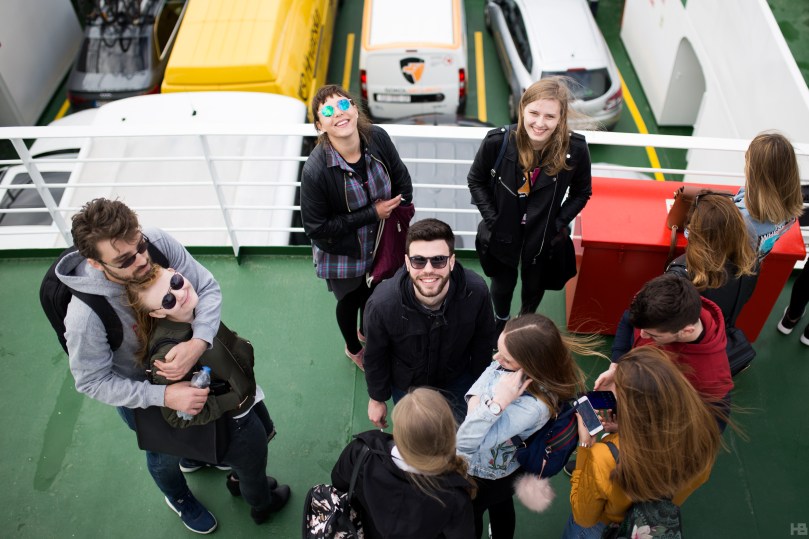
NEURI-2019-97
Day 2 of NeuRi 2019 – on a ferry to island Rab!

Apart from being part of Organising Committee, I was also an active presenter for the last four years, because I believe this is a unique opportunity to practice my presenting and gain input from my peers. First year, I submitted a review about different mechanisms of neurotoxins; in 2017, together with my colleague from Zagreb School of Medicine, we talked about levels of N-cadherin expression in human meningioma; last year I had a review presentation about possible role beta-Methylamino-L-alanine (BMAA) plays in neurodegenerative diseases, and this year, I, together with my lab partner from Department of Biology, presented about various bioinformatics tools used to manipulate proteins in silico. As an example, we investigated tau, showed how to find the gene in NCBI database, how to choose the right protein file from Protein Data Base, and how to run that same file through multiple simulations. In the end we compared healthy tau protein with mutated version and also got the audience award for the best presentation!

NEURI-2019-213
Day 3 of NeuRi 2019 – we are presenting!

I’m interested about your experiences with student science manifestations? Do you like to go to a congress or a symposium? How did you prepare for your first active presentation? 😊 Let me know in the comments!

For more details, visit NeuRi official web-site

All photos by Helena Balaž

A weekend in nature, with a sprinkle of cave!

Speleology adventure continues, if just for a little bit! Last weekend in March, as a part of this year’s speleology school, I visited a cave in Tounj, that is actually part of a quarry. And yes, for all of you wondering, my curse did strike again, and I fell. Again. And I hurt myself. Again. I guess this is the time where I realize this is some kind of a message from the Universe?

I would like to specially thank to two amazing women in science, that are still attending university, but are amazing scientists already! They helped me with the determination of the wildlife photos I took – Iva studies Environmental Sciences, is an expert spider lover and extremely talented artist! Petra Vizec determined all the plant species; she studies Botany and can determine every plant in Croatia and surrounding area 😊


Anyway, in the Saturday morning, we started our excursion, from Zagreb to Tounj. The car ride lasted for around two hours, and after a communal breakfast, we put up the bivouac, for five people. During the school, tents are now allowed, as I already mentioned, so we are basically improvising one with two tarpaulins. The Saturday was really interesting for students, because they were learning the basics of using rope. It was interesting for me as well, because I decided to try out my phone lenses and shoot wildlife. Honestly, the results were better than expected! Many plants, many spiders, some insects, and even a lizard. I honestly wasn’t sure it was warm enough for reptiles, but even snakes have been spotted in the area. This part of the day is not really interesting to write about, so I will let the pictures do the talking 😊


During the evening, we lit a nice fire for dinner, and socialized a bit, and then of course, went to sleep. I can say I had a really cozy night, since just before the excursion, I bought new sleeping bag (more about this in another post AND YouTube video!). In the Sunday morning, students had some additional lectures, and around noon we finally set for the Tounj quarry cave. Part of the cave is also underwater, and during this particular excursion, one of the speleo-divers from my association dived down and proved that two caves, Tounj and Tounjčica are in fact, connected. I have to admit I had quite a big problem with walking to the cave entrance – we went at the noon, with the Sun high up, and the light reflected so hard from the rocks around us, I could barely see. However, my attitude changed the moment I entered the cave. This one was just “walking”, without any ropes or anything similar. Of course, when I use verb walking, I don’t mean old fashioned walking on the streets – this involved a bit of light uphill climbing, crawling, wriggling… And a lot of strength and flexibility and rolling a bit in the mud. At least my new overalls proved quite water-resistant! Tounj cave is, at least to me, very similar to Veternica – if someone put me there in the middle of the night (or day, really), I wouldn’t be able to distinguish between two, just that Tounj seemed to be a tad more spacious, at least when compared to the part of Veternica I visited. We saw only one ne bat and a lot of stalactites – I even brought some that have broken off back with me. Almost end of the story, right? Doesn’t seem too impressive, not even with the anecdote of me somehow slipping and hitting my right arm so hard I stopped feeling my fingers for couple of minutes.


The thing is, to experience the cave, you should visit the cave. More experienced speleologists could probably describe the visit much better, but for me, entering the cave is something so profoundly special I lose all my words. All of a sudden, I enter a part of this world that always exist in total darkness, where moisture seems to mean almost the opposite thing, where water drops are as loud as my heart beats, and after I turn on my head-light, everything is in calming, monochrome beige colour. Everything stops, it’s just me and the cave, absorbing my surrounding and focusing intensely on walking forward, until I see the sunlight again.

Left picture: exhausted, after trying to actually catch some lizards
Right picture: exhausted, after spending half my day in the cave; also sunburned!


Would you like to know more about plant and animal species I found? If yes, please let me know in the comments!


DSC_1337
Pisaura sp; nursery web spider

Down the pit, I go…

About a month after I successfully completed my speleology training it was time for my first big excursion! And so, in May of 2018, with about 15 of my colleagues from SO Velebit, I went to a Norvežanka (Norvegian woman) pit, located near Risnjak mountain. Later it turned out that this was to be my only excursion that year, and in retrospect, I can say I’m really happy it was precisely this speleological object! I was very excited, and also a bit scared – the whole dynamic seemed different to me and I had a bunch of questions on my mind… What if I freeze? I have never been that deep down, 150 meters! How exactly does it look like? Is it just straight the way down? How narrow it is?  Will the harness I borrowed suit me? Well, after 2-hour car ride and quick camp set-up, I got all of my answers… I didn’t freeze, not mentally or physically. The pit is just amazing, it’s a combination of climbing down and walking straight through some parts, and it’s also quite spacious for a cave. The harness wasn’t the best fit, when I was walking in it, it seemed too tight, when I was on the rope, it seemed a bit too loose… And end of the today’s post, right? 😊 Wrong.

Picture 1. Me trying to conceal my excitement and the area around the camp.


I wouldn’t be me without something happening, so due to my inexperience, I slipped on the entryway (already on the rope), and got swung into the wall, hard. I hit it with my back, the point of impact was just few centimeters right of my spine. Yes, again the ribs, and again the right side! Honestly, it didn’t hurt that much, but I had a feeling like the air was completely gone from my lungs, and when I tried to say something, there was this very weird sound coming out. Five minutes later, I was already navigating a narrow part of the pit, very determined to get all the way down, without further injuries. I can readily admit I was probably more nervous than I realized, a bit insecure, and completely in awe of the place where I was. Entering such object is to me, like entering a different dimension, a world where you can be completely yourself and not at all at the same time. Of course, I wasn’t actually alone, there was many people ahead and as many behind me, and I was almost constantly talking to one of my speleology school colleagues, who is an experienced diver and wants to be a speleology-diver as well!

Picture 2. My and my colleagues entering the Norvežanka; that’s me just before starting the descend


Down on the bottom, it was cold, even more as I was sweaty. The way back up wasn’t available (we had to wait for everyone to climb down, before starting the ascend) and most people were, admittedly or not, tired (I was, because I’m chronically out of shape). And on the way back, well… I had a situation that scared me so much – at one part, the rope was very wet and very muddy, so muddy actually that my croll, the device that’s supposed to hold me tight on the said rope, didn’t “bite.” Or perhaps, it just slipped open, I didn’t really notice what happened, I just started falling down. However, I reacted without thinking and stood up in my blocker, which was biting just as it should. I continued, but cautiously, and kept checking that croll – it never opened again, but I was feeling a bit uneasy. Two-thirds out of the pit, I was tired and slow. Walking across the traverse (not even the real one) seemed like the hardest thing I ever did in my life. When I got out, it was night-time, and awfully dark. I didn’t have a watch with me, but waiting for 2 cavers, alone in the middle of the wood, with snow still in front, was so surreal. There are so many sounds coming from all directions, I was trying to guess the species, but I can surely say I heard an owl. After that, the regular, going back to the camp, getting lost, finding our way, eating around the fire, talking, laughing, and going to sleep at the bivouac. Then, day two!

On the second day, I’ve decided I want to try reconnaissance and finding new perspective caves and objects. I didn’t have an opportunity to do that during the school, and it sounded quite interesting – maybe I discover something new! I didn’t think that really, and my true intention was to spend up all the film (yes, film!) I had on my single-use camera. Apparently, everyone else thought this was a boring thing to do, so it ended up being just me and one older instructor. He explained what we are doing, where are going to look around (deeper in the forest), how to use GPS, what word to yell when we get separated (helop), and how to check for caves. We didn’t find any. I tired to catch some lizards and hoped so hard I will see a snake sunbathing, but I was unlucky. When I was alone, however, I finally comprehended how easy is to get disoriented and lost – things are not how you remembered them to be, the sun is high up, cacophony, trees cracking loudly, and no cell-phone signal… Let’s just say, if there were an Old (Man) Willow in that forest, I would make sure to be far away from it! 😉

Picture 3. Photos of the forest I took with my single-use camera

Picture 4. More photos; does anyone know what’s that on the right picture?


We returned home that same day, talking about different experiences in the car, planning our exams and next excursions… Hopefully, this year I will be able to explore more caves and pits, and gain more experience while doing it. I would also like to be able to film both inside and outside of pits and explore the wildlife a bit (mainly arthropods). There is so much to see and discover, and I’m looking forward to it so much 😊

Who’s going caving with me? Is there something more you would like to know about Norvežanka pit?

Speleology school

I don’t know how many of you are familiar with this concept, but in Croatia, many Mountaineering and Caving Associations organize Speleology schools. Ever since I’ve enrolled into my Bachelor’s degree in Biology, it was my dream to explore caves. I often talked about with my friend Mia – we tried to imagine how would it be deep in a cave, talked it all over numerous times with our colleagues, and, most important of it all – debated which school to choose?! In that, we had a help of my very dear then-friend who recommended the Association he was a part of – Mountaineering Association Velebit. If that name rings a bell, it’s is because Velebit is the largest mountain range in Croatia, and tourists often get lost on it during summer hikes. Velebit is also a home to two Croatian National Parks (Paklenica and Northern Velebit) and one Strict Reserve (Hajdučki i Rožanski kukovi). The yellow colour flowered plant, Degenia velebitica, is endemic species in the region, which is blossoming with flora and fauna. Also, largest and deepest caves in Croatia are located on (in) Velebit, so the name is more than appropriate.

Honestly, it’s a bit difficult to write this, because during those two months, I’ve experienced extreme difficulties and changes in my personal and professional life, and when I look back, I still get very emotional about certain aspects of my life. Also, I’ve written twice about it already (both articles in Croatian) – for In Vivo, student journal I’m editor-in-chief of, and for Velebiten, official magazine of Mountaineering Association Velebit.

The duration of the school was something less than two months, due to Easter holidays break. Our excursion happened over 5 weekends, apart from the first one, which one only Saturday. One very special rule of our school is that we don’t sleep in tents – we are improvising them using tarpaulins 😊 School consists of 20 students, and approximately the same number of instructors, both seasoned speleologists and the ones who finished the school previous year. First excursion, I was so excited and couldn’t wait to get in the cave, but almost gave up the whole school, because I had difficulties walking a steep hiking trail. However, thanks to support to one of my friends, I successfully made it and entered Veternica, a famous cave in Zagreb. Veternica is part of Medvednica (Bear mountain), with its highest peak at 1035 meters being Sljeme. Despite its name, there are no bears here! Veternica is a very long and highly complex cave – it is more than 7000 meters long. Tourists can view around 400 meters of this, while the rest is reserved for cavers and explorers. Geologically, Veternica is made of limestones, and harbours large evolutionary heritage. Remains of Neanderthals have been found in the cave, which have been worshippers of the cult of a bear. Cave bear, to be precise (Ursus speleus), and a fossil of a large lower-jaw was found in the cave as well. Today’s most famous cave dwellers are, naturally, bats, and more than 10 species call Veternica their home.

The whole experience was simply breath-taking and overwhelming – figuratively and literally, because I managed to break and bruise somewhere around five ribs. The event is probably more dramatic in my head – during the way back from a small “room” called The Beach, I was feeling a bit tired, after walking around 2 kilometres through mud, cave rivers, climbing all around, and trying not to fall. Veternica (and most of the caves) are not as you seen them in movies, huge and vast. This cave is wide enough for people to walk almost without squeezing through, but it requires using all four of your limbs, sometimes jumping from one side to another, no-gear climbing, and one particular part, called “Ramses’ passage” required us to walk on all fours, almost in a push-up position. At that time of the year (March), Veternica was full of water, so we were quite wet, and the rocks were slippery. Anyway, the part where I slipped is a bit difficult to describe, but I had to walk over a small canyon, one foot in front of other. To the right, fall down the canyon, but through the crack. When I slipped I hit the opposite wall and leaned on it hard, still standing on the initial path. I started slipping down; heard some soft bone cracking in the middle of loud water hums. I wasn’t scared, just in a sudden pain that didn’t leave me enough time to think, when a voice said, “I got you!” from below, paired with the feeling of someone supporting me. It was one of the experienced instructors, Luka, whom I didn’t even notice was close to me. He checked on me immediately, and asked if I wanted to take a break, which I immediately refused, explaining that since I’m in an adrenaline rush, and stopped feeling any kind of pain, I’d love to continue. Luka was with me for half the way, with one of my friends (also a highly experienced caver) taking over.
le me (1).JPG
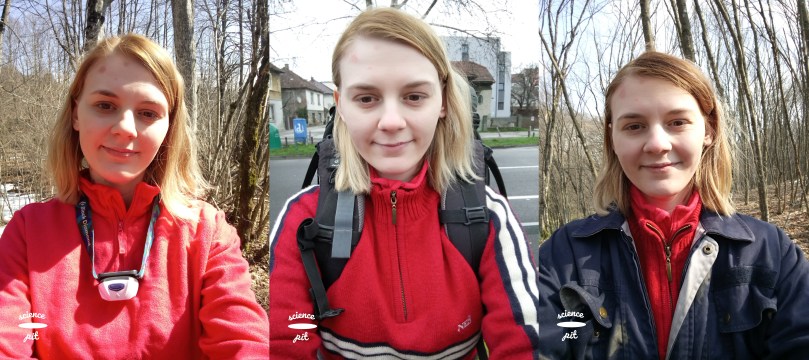
Picture 1. Me, during various stages of school


Somehow, this accident only motivated me even more for my next task – to climb up and down 30 meters tall rock. There are no words to precisely describe the descend, when you are experiencing this for the first time. It’s scary how small people look like, even from that height! This particular rock is called Gorsko zrcalo (“Mountain mirror”) and is also part of Medvednica, but on the opposite end of it. It can be found in the middle of the forest, along the popular hiking trailer, and, on the first look, it doesn’t seem scary. At least when you don’t look down! This was my first time using the gear outside the training area (which we visited a day earlier), and I didn’t really trust it. I feared that I will fall out of my harness or that I will fail to properly secure my stop-descender. However, I climbed with one of the calmest instructors, so I forgot all about this – my only problem was un-securing the aforementioned stop-descender.

Picture 2. A view of Gorsko zrcalo; climbing up; my instructor calming me down before descend (Photo 2: Marko Rakovac, Photo 3: Darko Jeras)
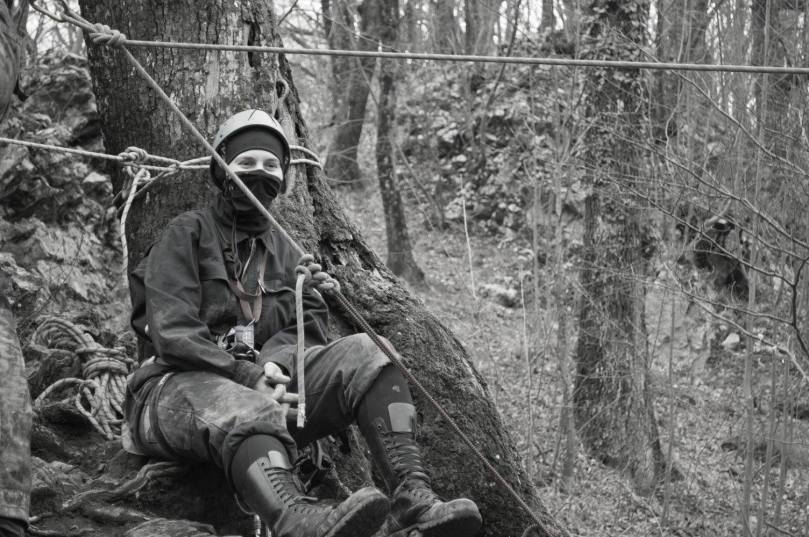
zrcalo (2)Picture 3. Happy that I climbed up, trying not to scream in a slight rib-pain (Photo: Darko Jeras)


All three other weekends were proper excursions to Gorski Kotar, where we would stay overnight, eating dinner around camp fire, the only warm place miles around. We were always tired, but happy and satisfied, because we managed to move our boundaries, get to know something new, meet new people and develop acquaintances.

Getting to know each other isn’t just a pleasantry – it could be life-saving. It’s crucial to know on whom you can rely when things go wrong and your life depends on someone. This might sound a bit grim, but it’s quite realistic (just remember my broken ribs – if one of the instructors wasn’t there to catch me, I would probably end up with punctured lung, 2 kilometres deep in a cave). Panic is also common, and it’s rewarding to know person well enough to calm them down when climbing back up 150-meter-deep pit.

During those three weekends, we visited four different caves, although to me, a novice caver, most of those experiences merged into one. However, I’m not implying those caves are that similar, but I was rather focused on successful descends and ascends, using my equipment correctly, and passing some tricky passages. Also, there is no a simple “rope down the pit” way – the rope is “broken” to anchorages, and there is a particular set of procedures to pass it. What I really love about caving, is that you don’t think of anything else. There are no worries, or planning (apart maybe what to eat when you get out); you are present in the given moment, focusing only on task at hand. And by that, I mean rope. You are focusing on the rope.

Picture 4. In the cave, in the pit… (All photos: Dalibor Paar)


There is not much life in the caves, most what you hear are voices of your colleagues, and water dripping, sometimes slowly, sometimes in a waterfall. Lamps are a necessity (with the rest of the gear!). But the cave walls are stunning, all the number of shapes and how they sparkle under the head-lamp, it’s mesmerizing. Exiting the pit is almost an experience on its own – there is that almost euphoric feeling of being truly overwhelmed, by the mixture of outside light, colours and sounds, with the scent of nature intertwining with the moisture of inside…

bocina (1)Picture 5.  A misty morning


The whole of speleology is actually rewarding. It’s not just the school and people you meet, it’s more than simple climbing down and up. Caves are a new world, full of new situations and experiences. And it’s all worth it, if for nothing more, to push yourselves a bit more. I would recommend speleology school to everyone, even if you might not want to repeat this kind of event ever again.

Longest climb: 80 meters down and up
Degree of freezing in my sleeping bag during the nights: 6/10
Best experience: first real climb (30 meters, Gorsko zrcalo), with broken ribs
Favourite memory: climbing out of “Devil’s pit” (70 meters deep) with almost no assistance
Special thanks: Mia, Irena, Luka, Zvonimir (cavers); Bruno, my mom, Rudolf, Sara (outside support)

Do you think caving is a bit scary? Are you going to try speleology? Are you perhaps a caver already? Feel free to comment and let me know!

National Park – Plitvice Lakes

Since it is winter and exam season is closing in, I am not spending a lot of time in the lab (or anywhere interesting). Because of that, I wanted to write a short throwback post about last time I visited one Croatian National Park. Despite being a very small country, Croatia is rich in intact nature and preserved areas. The most famous of those areas are National Parks, and Croatia has eight! I also must mention, that in spite of popular belief, there are two areas more protected than National Parks – “strict reserves.”

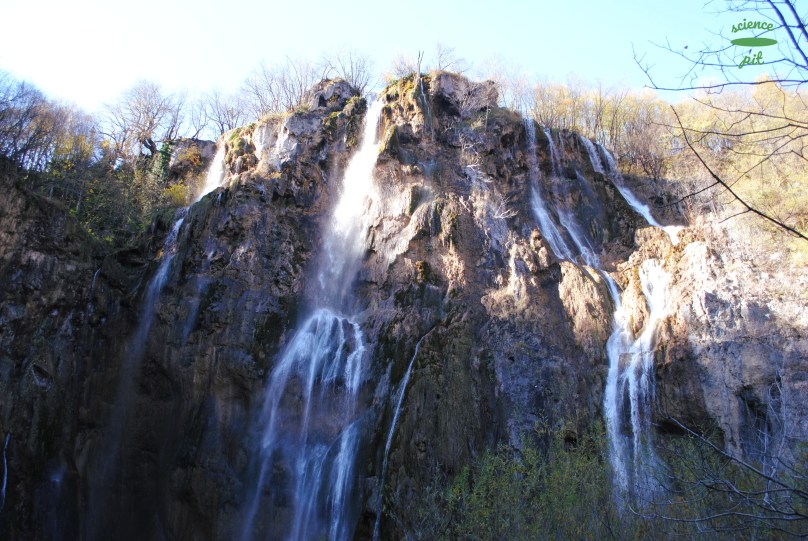
The National Park I’ve paid a visit more than a year ago (November 2017) is called Plitvice Lakes, or simply Plitvice. The area is a National Park since 1949 and it’s Croatia’s biggest and oldest Park. It consists of 16 lakes that are connected by many waterfalls and cascades. The specificity of the Park is tufa – yes, I checked, that’s the word! 🙂 Tufa is a calcareous rock (meaning it is mostly made of calcium carbonate) and is porous. It is generated by precipitation of carbonate minerals out of water, and generally this type of rock is very sensitive to changes in pH. Why is it so special? Tufa forms barriers between the lakes! Those barriers are the reason why Plitvice are also part of the UNESCO World Heritage List.

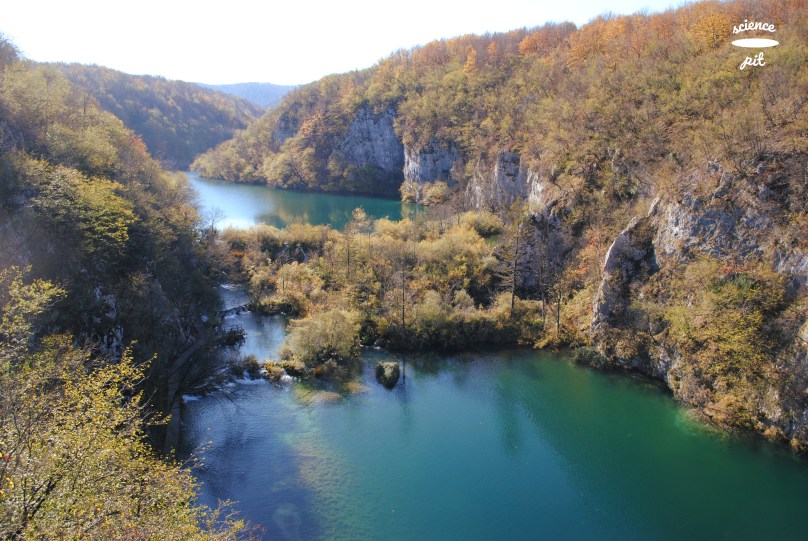
dsc_0011_
Picture 1. A famous view on Plitvice Lakes

dsc_0040_Picture 2. Amazing waterfall in Plitvice

For the Chemistry lovers, here is a chemical formula of tufa formation:

Ca2+ +2HCO3 ↔CO2 + H2O + CaCO3

Apart from environmental factors, small organisms play very important role in the formation as well. There are bacteria, small multi-cellular organisms, blue-green algae (not algae at all) and diatoms (actual algae). Mosses are part of this ecosystem as well, together with many other smaller organisms, both animals and plants.

As I already mentioned, there are several factors important for the formation of tufa rocks, and pH of the water is the one you have probably heard about. The reason why is it almost exclusively mentioned is pollution that changes pH of the lakes. One of the main problems? Tourism. Yes, tourism. I won’t get in the detail about not-so-well-made sewer system in the whole area, but Plitvice are one of the most famous places in Croatia, and as such, receptible to huge numbers of visitors every summer. And sometimes, that people don’t follow basic rules of spending their time in nature, so a lot of littering and wild-life disturbance occurs. Don’t get me wrong, this National Park is open to the public and meant to be enjoyed, but sometimes it seems more emphasis is put on money, rather on educations. Because of that, I would sincerely like to ask all of you, to take care of our environment, especially when visiting a foreign country.

dsc_0068_Picture 3. Calm lake and some rocks. And trees.
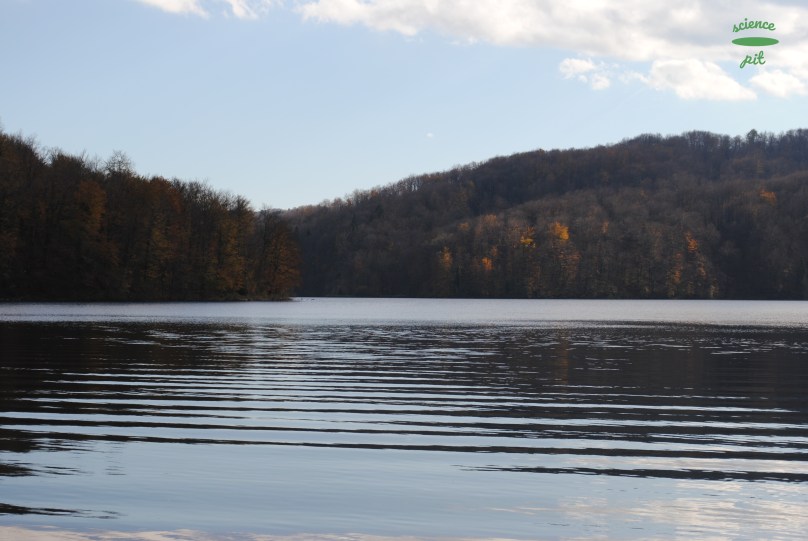
dsc_0109_Picture 4.  View of a lake, before the boat drive
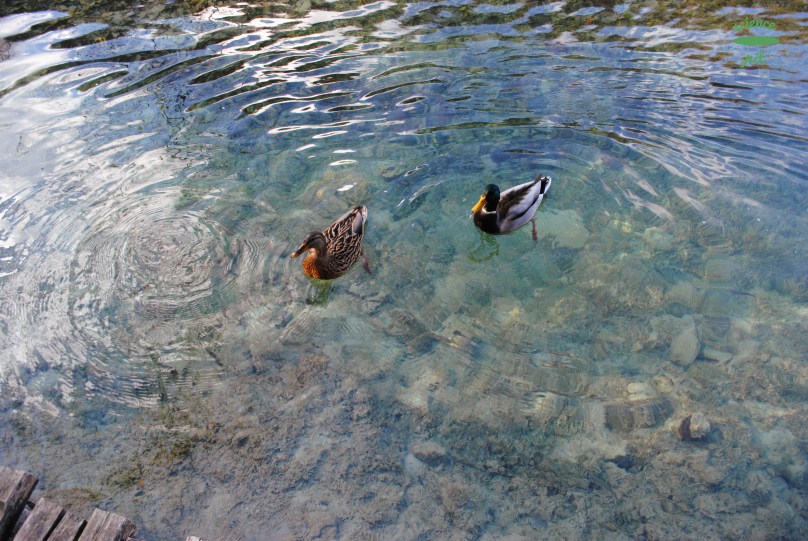
Anyway, back to my excursion! I was part of the group from my Department, as a part of the field trip for subject “National Parks.” It was a one-day trip, and we walked approximately 10 km around the lakes. The biggest lake is called Kozjak, and it is also a deepest lake. All lakes are beautiful blue-green colour and surrounded with walking paths and breath-taking views. The weather was a bit cold-ish, since it was November, but enough to walk around in a jacket and winter hat. And a camera of course! I tried to picture most of the nature and wildlife around me, but we didn’t see as much (again, because it was almost winter). However, Plitvice are rich in both flora and fauna – its symbol is a brown bear! Grey wolves and lynxes are also natural to the habitat, as well as many bird species – I’ve seen robins (Erithacus rubecula), some sparrows (Passer domesticus), and mallards (Anas platyrhynchos), but falcons (Falco peregrinus) and pygmy owls (Glaucidium passerinum) are regularly sighted. From other flying creatures, the Parks is full of butterflies (Phengaris alcon), bees (Apis mellifera), and similar (Calopteryx virgo), as well as bats (Barbastella barbastellus; there are also many caves in the Park!). There are many salamanders (Salamandra atra), otters (Lutra lutra; that I very sadly haven’t spotted), and fish. A lot of fish. I would also like to mention, that an endemic species was found in this area, in one of the caves – a small bug, Machaerites udrzali, which belongs in order Coleoptera. Forest(s) around the Lakes are full of common beech (Fagus sylvatica), but there are also firs (Abies alba), pines (Pinus sylvestris), and Ostryas. In fact, when it comes to flora, there are more than one thousand registered plant species, including dead-nettles and orchids. Mushrooms also have an important presence in Croatian forests, and Plitvice forest is famous for being a home to another rare species – saprophytic fungi Camarops tubulina.

dsc_0080_Picture 5. Mallards humbly asking for bread

So, what do you think? Did you know that this National Park is so full of life? Because I honestly didn’t, despite living in Croatia, well, my whole life. Of course, we were taught about some general facts during our schooling, but I was really surprised to learn how many different species live here.
Apart from such an important biological aspect, Plitvice Lakes are important in Croatian history as well, but I might talk about that next time!

Did you visit Plitvice, what were your experiences? How about some other Croatian National Park? Which one should I visit&write about next? 🙂

P.s. Yes, the header picture of my blog was also taken during this trip!