RTŠB 2019 – biospeleology field trip – PART 1

Finally, I write about this astonishing field trip which has taken part from 17th to 27th July this year in Ivančna Gorica, a small town south of Ljubljana, Slovenia. Me and Bruno were part of biospeleology group, and my friend Paula, who was the only other participant from Croatia, was a part of reptile group. Paula has a nice Instagram page about biology as well.
This camp, organized by student’s biology group from Ljubljana is very popular with students from the ex-YU countries, and this year there were also colleagues from France. Also, being a biology student is not a must, we had humanities student as well.
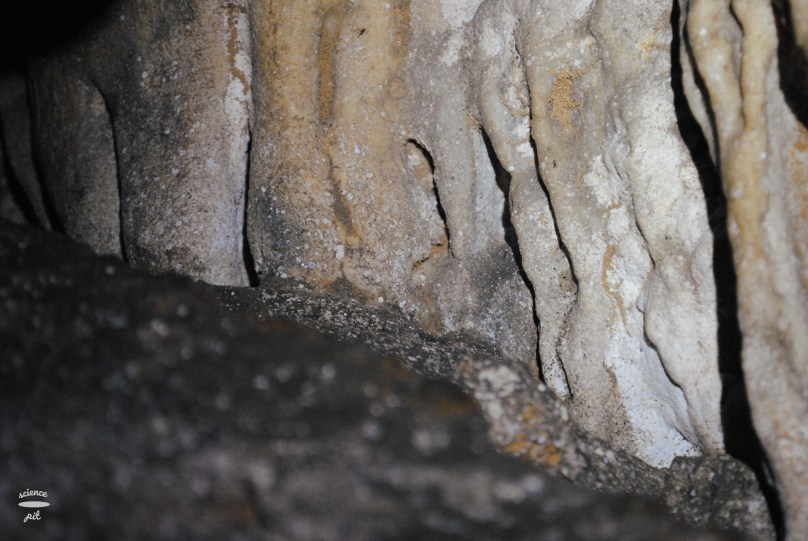
cave
A detail from one of the caves

How does the camp work?

First, you have to apply; you can choose between three groups (my choices: biospeleology, reptiles, botany) and with the application you pay the 93€ fee that includes breakfast and dinner every day and driving around during the camp. When there, we sleep in our sleeping bag in the gym of the nearby school. Breakfast is every day 7-8.30am, and dinner was usually 4pm+. There was also one rest day (during which us three went to Ljubljana) and one day when couple of us were on duty – we were cleaning and cooking for that day.
One group usually consisted of 5 members, and every day we went out to field, trying to find caves or catch some cave dwelling insect.

gym
Our place in the school gym

We travelled, you guessed it, by train. I have already mentioned 9€ one-way-ticket from Zagreb to Ljubljana, and then we went to Ivančna Gorica, that ticket was around 3€. The way back was almost the same, with the difference we went by bus to Ljubljana, since there were no trains at that part of the day.

How was my experience?

Honestly, I would really like to go again next year, but honestly I don’t know how I made it. I was not in a shape I should have been, I had migraines, I got stuck, I had very suspicious bruises and I strongly disliked walking around under sun.

How many caves I visited?

Number of caves: 9
Total number of cave visits: 11
Number of water springs visited: 4
I also spent one evening with bat group & one day with amphibians group.

ich
Me, before first cave visit, unaware what was waiting for me

A short summary of my days in Slovenia

Day 1

We  met other members of the group: Ester, group leader, Tjaša and Eva. Anja was also part of our group, but she joined us couple of days later. Apart from going to the field, every evening we were supposed to try and determine our specimens we collected in caves, label them, and fill out special documents about our visit (who, when, why, where, what was collected and how).
We also prepared live traps for small insects. The traps we made consisted of putting tuna fish with gorgonzola in small tubes and closing them off with cotton pads.  The insect we were trying to catch was Leptodirus hochenwartii, member of Coleoptera, the only beetle that lives in the caves. This species is endemic to Slovenian, Croatian, and Italian caves. For other creatures we had prepared small tubes filled with 70% ethanol which we held in the pockets of our overalls, together with pincers.

live-trap
One live trap, buried in the ground – it also needs to be covered with a big rock.
Day 2

Frist cave we visited was Velka jama nad Trebnjem. The way up to the cave was steep and exhausting; it was very hot & moist in the forest. However, I took my camera with me, and took many pictures. I was surprised how many invertebrates live there, since Croatian caves I visited were almost completely empty. However, these animals are not usually found in the caves, here they are living kind of opportunistically, since the cave was also filled with garbage. We set up the traps for Leptodirus, and went back. We had a small lunch next to our car, and then went to the cave number two, called Rojska jama 2. We had GPS coordinates, but Ester was sure they are wrong (they were), so we asked a local villager for help. He kindly led us to the cave entrance, where we suited up, and in we went. The cave was quite interesting, we spent an hour or so inside. After we returned, mr. villager welcomed us back with home-baked strudels and soda. It was honestly, very nice. We also visited two water springs, and went back to the school. After dinner, Ester taught us how to fill out the papers I mentioned, and we tried to the best of our ability, determine all the specimens. The most important we had to discern were small freshwater crabs called Niphargus and Gammarus. The main difference is that Gammarus have eyes, and we really wanted to collect the other one.

skakavac
Caves were usually full of these grasshoppers, and they were scary huge!
Day 3

During day three, we visited one cave, Pekel pri Kopanju. We did find some cool animals, like Colembolas, but our trip was short, since main channel was full of tree branches and garbage. We tried visited the cave number two, but soon realized that we would need a 40m rope to climb down, so we gave up on that. We also visited two water springs, and headed back earlier, since one of the mentors had a lecture about global warming. After that, back to determination. We found some Niphargus (yay!), Gammarus (fine), and rat-tailed maggots. What are those, you wonder? Those are the larvae of certain species of hoverflies. What are hoverflies, you wonder? Those are flies that pretend to be wasps.
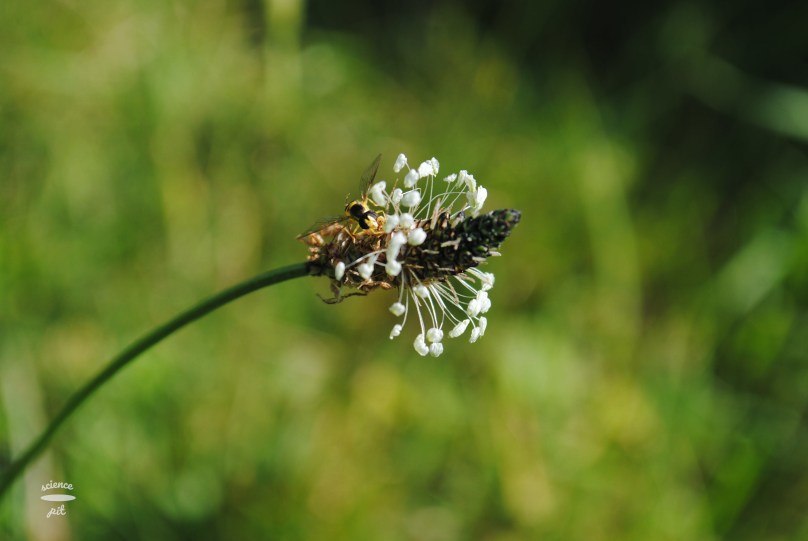
fly
The great pretender
Day 4

This day was tough for me, we walked 5-6km on the trails and through the woods, but we also visited three caves! First two (Dolnja vodena jama & Antokov skedenj) were close one to another and extremely spacious inside. I roamed around with my action cam (results were so-so, not enough light) and Bruno and me found a bunch of Niphargus in one puddle. I also saw some fox bones, and Ester was kind enough to fetch them for me! The third cave (Rivčja jama) was the one we visited three times all together and was really interesting. The walk towards it is around 1km on the forest trail, next to beautiful river Krka. The entrance to the cave is enormous – I would use the phrase “you need to be blind not to see it”, but that’s incorrect – even from the trail you can feel temperature drop and the specific smell of cave air.And this cave had bats. Bunch of bats (Myotis myotis), and they were loud, much louder than people would expect. We climbed up, on mountains of their poop, in order to take pictures, and the temperature soared at least 10 degrees there. Afterwards, we went through a narrow passage (here I took neat footage) and tried to catch some Proteus anguinus, the olm (I wrote about them here!). These traps were different, since they live in the water. We also tried to lure them with pet cookies (can’t remember if it was cat or dog food, sorry!).
After all this, we went swimming in Krka, water was around 15 degrees, but it was so nice and relaxing. The river is truly beautiful, and I would like for everyone to experience this kind of nature at least once in their life.

ich
The only not-blurry photo of me in the cave

End of part 1

I hope you liked this not-so-short overview of my time in this summer camp, part two will be up soon. Please tell me what you liked the most and about what would you like me to write more! I would like to thank all of you who read this, thank you for time and attention!

us
All of us; photo by Ester Premate

Neuro & speleo

As promised (to my two and a half readers and myself), I’m diligently writing another post, and this one combines my two greatest scientific loves – neuroscience and biospeleology!

Last weekend, I attended two very important conferences – 3rd Rijeka forum on neurodgenerative diseases – diagnosis and treatment in early stage of disease and 2nd Dinaric symposium on subterreanean Biology. There was one day overlap between the two, so I chose to spend my Friday in Rijeka, but more about that later on. Since this trip included a lot of walking and transport, for the simplicity I packed only the bare necessities, which included only one pair of booties (this comes in play later on).

The topic of neurodegenerative diseases is something I would really like to do all my future research in, and it’s also a subject of my master thesis (precisely, neurofibrillary tangles in rat brains). Also, there was no attending fee, which is pretty much amazing for the students. We (Bruno and me) arrived in Rijeka (from Zagreb) very early in the Thursday morning by bus and set to find the University campus where forum was taking place. This wasn’t my first time in Rijeka, so we didn’t have any problems with finding the venue. The forum consisted of plenary lectures held by renowned professors from all over the Europe (Sweden, Italy, Slovenia, England) and Croatia of course, and it was roughly divided into two parts, basic neuroscience and clinical research. As a biologist, I didn’t pay too much attention to clinical part, and instead was dutifully solving my programming homework. However, it was amazing to be there for both days, and just listening what was new in the world of neurodegenerative diseases. I didn’t find courage to ask questions (during the Q&A time, or even after), but I hope that one day I will. We didn’t “touristly” roam around Rijeka, but we stayed overnight in the most gorgeous apartment in the centre, I was seriously impressed!

On Friday, after lecture, I stayed in the venue for a little while (internet access!) and then we went to the train station. I love travelling by trains, and I try to do it as much as possible. Luckily, this train to Ljubljana (yes, Slovenia again!) also went through our next stop, Postojna. If that name rings a bell, that’s surely because of the Postojna Cave, one of the most famous caves open to tourists in the area. It is also special because there are many blind cave salamanders, which are part of the vivarium as well. Our plan was to visit this cave at Sunday, while Saturday was reserved for the Dinaric symposium. The symposium was held in Karst museum in Slovenia, and we caught the last plenary session and some posters. There was a short break (we went to the town centre to stock-pile some food) and then, the excursion!

Blonde haired woman sitting in a train (with a green background and glass reflection on the right).
It’s just me in a Croatian railroads train.

We were driven by car by our hosts, Teo and Ester (who we met during this summer – I will write about that in the next post!) to Rakov Škocjan. I would like to use this opportunity to say that Slovenia is really beautiful, full of intact nature and small roads. In Rakov Škocjan, we set for a quite a long walk to visit two natural bridges and caves near them. I had my shiny new camera with them, so I was taking as much photos and videos as possible, and honestly, I also used this as an excuse to stay behind, because I had a hard time keeping up with the rest of the group (I’m chronically out of shape). The trails itself is beautiful, a part of it also goes near the river Rak. Soon we came to the first natural bridge, which is completely made of stone. The only thing human hand built were protective barriers, so people don’t fall down. The story behind both bridges is that they used to be huge caves, but they collapsed, leaving only the bridges. Parts of the caves still remain, so most of the group went down to enjoy the cave and river that goes through it. I stayed behind, because I assumed it would take me too long to climb down and back up, and I didn’t want to hold back the whole group.

A stone natural bridge, infused with forest; green and grey colours are dominant.
Little Natural Bridge of Rakov Škocjan

After the first bridge, we went back to the meeting point, which was the hotel where we had lunch. Next, the second bridge, which is 5-minute-long car ride away, and about 20 minutes by foot from there. Usually, the passage under this large natural bridge is almost completely under water, but we were lucky, as it was completely dry. We carefully walked in the river canyon, up the entrance of the second cave. Since Bruno and I didn’t bring any headlamps, one of the organizers kindly borrowed us spare helmets with the lamp on. Which lamp, you may ask? Scurion, the best of the best! I was so excited to wear it that I made Bruno take countless pictures of me!


Then, we naturally went to explore the cave, which wasn’t as dry as the canyon. Sometimes, it was really hard to see how deep the water level is, and that’s how I ended up with a very wet right foot. Like, full on water in my boot, because the water level was just a bit too high then I anticipated. This didn’t stop me to try out my camera, and I was very satisfied with the photos, since they are a big step forward from the ones I took this summer (again, this will my next post!). The light from the Scurion was on occasion so strong, that some of the photos look almost burned, I couldn’t believe it.

speleo
Biospeleologists in a cave

Some folks went through the whole cave, but I wanted to go back the same way, to take more pictures of the bridge and cave entrance, since I didn’t have enough time to do it the first time we went through. Honestly, at moments, I felt like everything is a bit too fast, especially for someone who wanted to take a quick break and just enjoy the nature or take a few snaps for the photo album. The whole time however, I was thinking only how wet my sock is, and couldn’t wait to go back to our apartment and change. However, the group had other plans and first we went to the small café close to the big lake, which I honestly didn’t see. We did say to Teo that we would like to go back and would skip dinner (programming!), so he organized a transport back for us, which we were quite grateful for.


The next day, the big day! Postojna cave, or at least we thought so. After waking up, we realized we should walk two kilometers up to the cave, with both of our backpacks and I also had a bag full of photography equipment. There were some taxi companies, but no one answered, and we also didn’t have almost any cash, since I’m used to paying with a bank card. This was actually a problem in Postojna – apart from big chain stores, everything was to be paid in cash, and all ATM-s were located in the city centre. All of this, combined with our train schedule and my sill wet boot, contributed to us giving up on Postojna cave, and heading for a train station… Where we realized that the ticket office is closed, and we can’t pay with bank card in the train. So, Bruno quickly headed back to the centre, and came back with some pastries as well. Our way back went smoothly – first train to Ljubljana, trying out new burgers at McDonalds, and then train to Zagreb. During that time, we decided to come back to Postojna during the winter, and explore that cave, as well as going back to Rakov Škocjan on our own, setting our own pace and excursion plan. However, apart from finishing my homework assignment, the most important thing, excluding pretty photos, is the fact that I finally finished reading Dracula, the book I struggled with for almost two years, for the reasons I still don’t understand.

A view from inside to outside of the cave; framed arch with the blackness of the cave forming an outside frame, and sky and forest being the picture in the centre.
The cave near the Big Natural Bridge; a view from the inside.