Biology in popular culture – HEAVY METAL

Many of you might not know this, but I was (and still am) a big fan of metal music. I included word “heavy” in the title, but I actually prefer doom, melodic death, death, some black metal and also gothic/love metal. What does this have to do with biology? Well, many bands use animal imagery in their music videos or album art, with some of them being really interesting.
Of course, there are many that are obvious (Powerwolf, anyone?), and some animals are used more than others (crows, snakes). However, I wanted to see which animals dominate the heavy metal world, and which bands, that are usually not connected to such artwork, would use it.

Now, I would very much like to include these album covers in this post, but they are copyrighted and I’m not 100% sure I can do that, so if you’re not already familiar with the covers, I would kindly ask you to use a search engine, or links I’ll provide to each cover.

Paradise Lost

A doom/gothic/synth-pop band from the United Kingdom, Paradise Lost often uses biological motifs in their album art (Medusa, 2017; Tragic Illusion 25, 2013; Tragic Idol, 2012), but I would like to focus on the art that dominates the picture – in this case, we have Symbol of Life (released in 2002), its single Erased, and Believe in Nothing (2001).

Link to the official Paradise Lost web-page.

Symbol of Life and Erased are, at least to me, very interesting album covers. Yes, the animal in question is a snake, but it’s an x-ray of a snake. Now, I don’t know which species, or even a family, but I’m pretty sure it’s a snake. I don’t know how these photos were made, but are really special and distinct. For a better view, you can visit this blog. Erased is done in a very similar way, only with different coloring scheme. The animal theme is also presen in the music video for the single – there are scenes of a cougar and something that I believe is Thompson gazelle (I might be wrong on this one). I don’t know in which ecosystem could these two ever meet, outside of Paradise Lost video.

A gazelle
Nick Holmes in his apparent natural state

(Photo by Tobias Adam on Unsplash)

Believe in Nothing cover is simply straightforward: it’s a picture of bees. To be more precise, it’s a picture of a honey queen bee surrounded with bee workers. I will go out on the limb and say the species is probably Apis mellifera, Western honey bee.

Katatonia

Another one of my favourites, Katatonia and their dark melodies have adopted a bird from the Corvus genus as a motif that often appears on their album artworks (Dead End Kings, 2012; Tonight’s Decision, 1999). They were also the main focus of one of the earliest Katatonia’s albums, Brave Murder Day (1996), and latest, The Fall of Hearts (2016). Just by looking at these, I honestly can’t tell if it’s a crow, raven, or something in-between, but it does compliment Katatonia’s music perfectly.
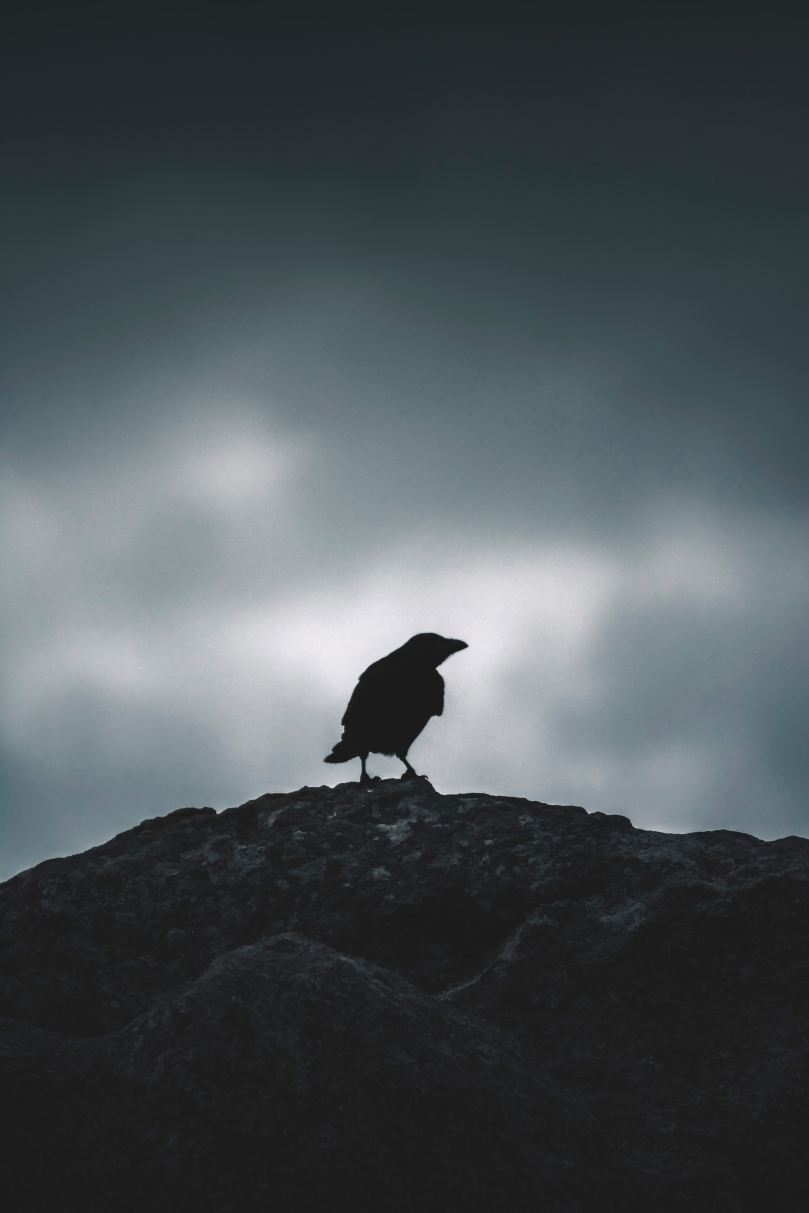
A crow
Insert random lyric about crows, ravens, or E. A. Poe

(Photo by Sergio Ibanez on Unsplash)

Opeth

To me, Opeth always had interesting, dark album covers, but two caught my attention – art for their debut album Orchid (1995) and Sorceress (2016). For Orchid, the artwork is, you guess it, orchids; apparently the pink flowers on the cover were ordered from the Netherlands.
Sorceress is a different story – it shows a peacock with blood dripping out of his beak. This might seem odd, since most people, including me, always picture birds as eating seeds, but peafowls (name that includes male and female individuals, and three species) are actually omnivores, and their diet can include insects and even small reptiles.

Satyricon

Satyricon is a black metal band, with different sounds, and with that, different artwork. Some animal species, however, still remain!
On the cover of Nemesis Divina (1996) is a bird of prey, which one, I honestly can say. It could be a falcon, or a hawk, I have to admit that my bird knowledge is weak. Volcano (2002) album cover is kind of simplistic – in the main view, we have a head of a snake. At first, it looked to me like a python, but I actually believe it’s a boa, Boa constrictor even. For their 7th album, The Age of Nero (2008) they went back to their raptor roots and choose… Some kind of eagle?
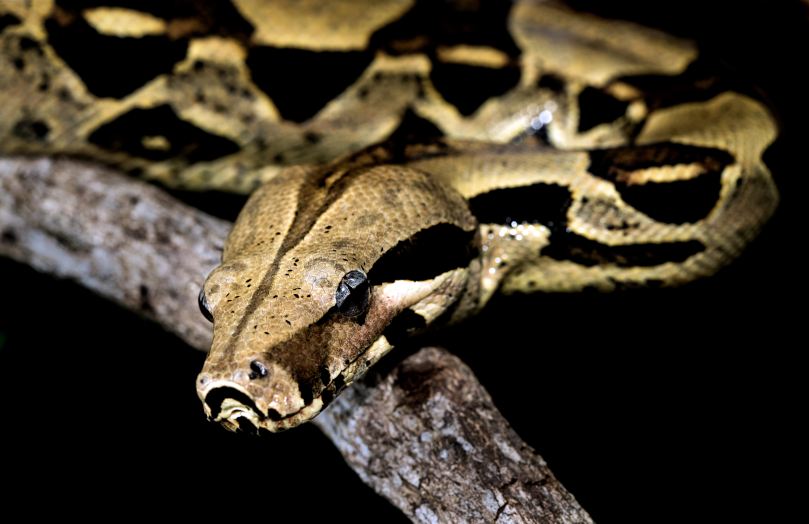
Brown and black snake on a tree branch; black bacground.
Metal’s next top model

(Photo by David Clode on Unsplash)

Gojira

Gojira is a death/progressive metal band famous for often including environmental themes in their songs. Their album From Mars to Sirius (2005) is completely dedicated to these issues, and as such, has a very nice album art, with the drawing of a blue whale (Balaenoptera musculus) being a centerpiece.

Slipknot

A heavy metal from Iowa, Slipknot chose a goat for the cover of the 2001 album titles Iowa. These kind of imagery is usually used by black metal bands (see honourable mentions, also Baphomet), but in this case, I think it works nicely.
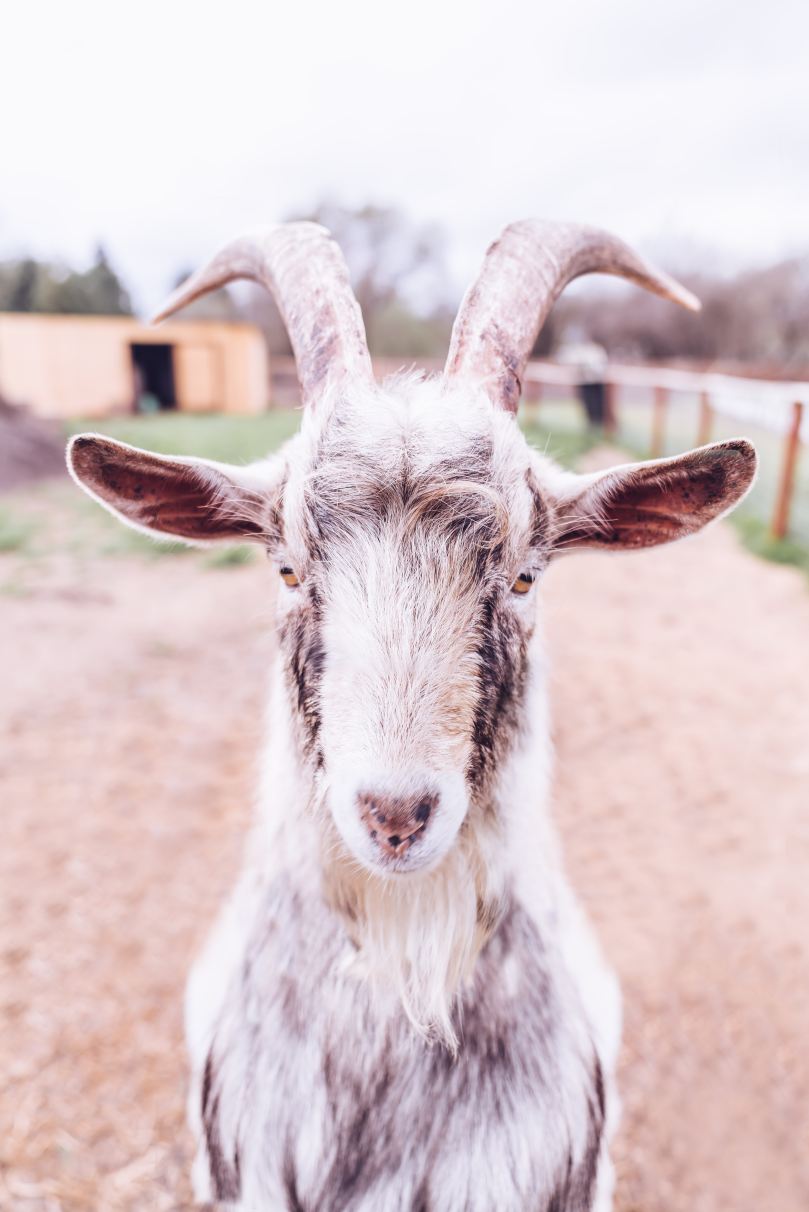
A goat
Felt cute, might grow human limbs later

(Photo by Edgar Chaparro on Unsplash)

Honourable mentions

Bathory – Bathory (1984) – goat
Behemoth – Zos Kia Cultus (2002) – baphomet
Dimmu Borgir – Stormblåst (1996) – goat
Immortal – All Shall Fall (2009) – ravens?
Mayhem – Grand Declaration of War (2000) – dove

Nile – In Their Darkened Shrines (2002) – snake

Rammstein – Herzeleid (1995) – flower (chrysanthemums?)

Bring Me the Horizon – Count Your Blessings (2006) – jellyfish, shark, fish

The Rasmus – Hide from the Sun (2005) – butterfly

Old-school Master’s thesis

A while ago, while roaming through the halls of my University building, I stumbled upon some old Master’s thesis (theses?).  They are all dated from mid 60’s to late 80’s, and are written on a typing machine. What really drew my attention were illustrations –  they are all drawn by hand, using ink. I honestly don’t know if the authors did them themselves, or hired someone to do it for them (I believe it’s the former), but these are just gorgeous!


All three of these theses are in Croatian, but I translated the titles:

  1. Chromosomal structure of salivary glands of Chironomidae larvae and its importance in the determination of species by Vladimira Tavčar (1964)
  2. Gene segregation study of HLA, AB0 and Rh systems by Gordana Puškadija (1980)
  3. Effect of adriamycin and epirubicin on DNA cell synthesis in culture by Dijana Abramić (1987)

Also, these are all on the topic of Molecular biology – I will visit libraries at other departments of my University (Zoology, Botany, Microbiology, Animal Physiology) to try and find similar ones! Which one would you like to see first?

Inside of the Master's thesis (no. 2)
Inside of the Master’s thesis (no. 2)

I am honestly so fascinated by these illustrations, they are wonderful! So detailed and neat… However, the oldest one is my favourite, because the author not only had to do her research in the lab, but also did the fieldwork, which is precisly something I would like to do one day – combine field Biology with Molecular biology.

As you can see, the photographs were also used, but they were glued in the thesis.

DSC_0260
Inside of the Master’s thesis (no. 1)

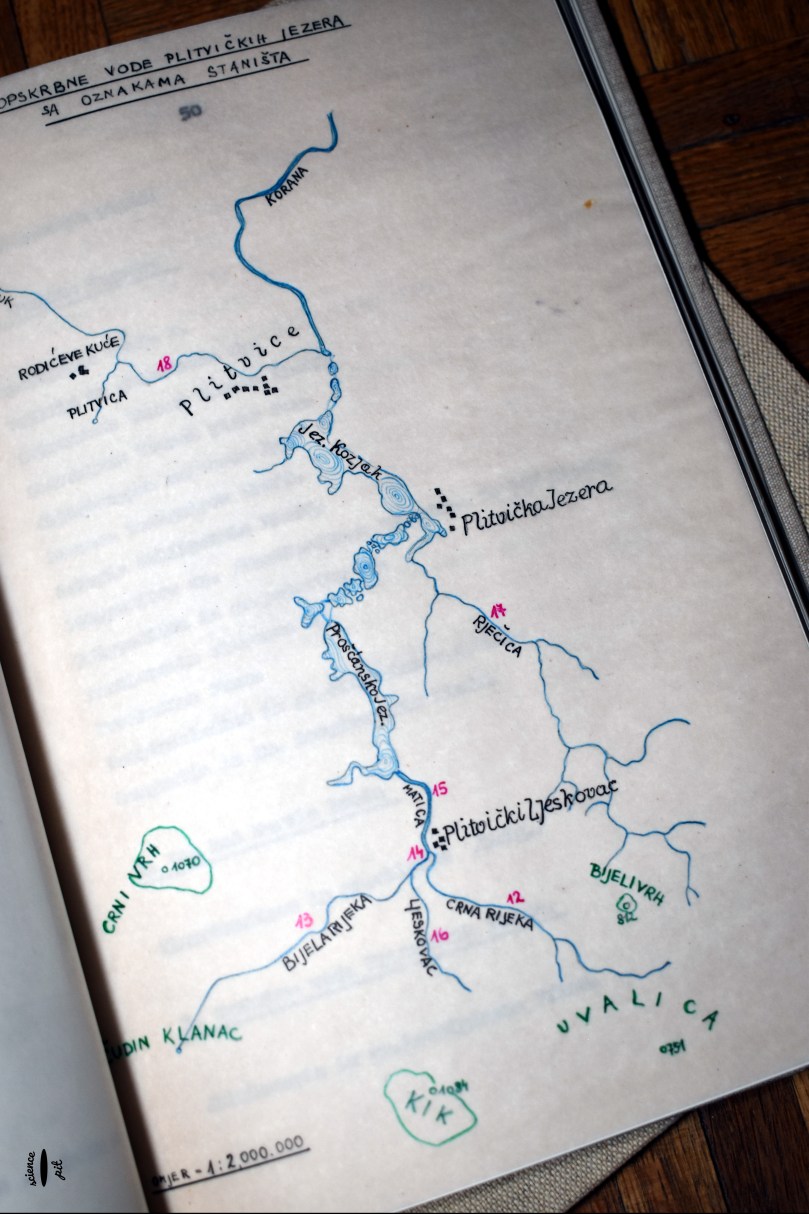
This aspects is fascinating to me as well – the hand-drawn map!


That’s it for now, I hope you enjoyed these beautiful drawings as much as I did! I have a few more photos, so if you’re interested into seeing more, please let me know!


Biology & informatics &… olms?

Last Friday (8th of November) I was fortunate enough to hold a workshop (with Bruno) called “Little workshop of Bioinformatics” – the title is a bit wild, but we purposefully chose an “exotic” name in order to arouse curiosity.
This workshop, held in House of Velebit in Krasno, is actually a continuation of a two workshops we already held (one in a City Museum Samobor and another one at my old primary school) and which we designed to introduce school children of all ages to primary concepts of molecular biology & genetics. Of course, kids in 7th and 8th grade were already familiar with it.

We first designed the workshops, with the help of our mentor Dalibor Paar, associate professor at Department of Physics, Faculty of Science, and were nominated for Rector’s Awards in 2019.

Where is the informatics part, you ask? In the using of micro:bits, cute and small mini computers that are easily programmable in Python or JavaScript (we chose Python). Bruno wrote a very elegant code and I designed the rest of the workshop: ciphers to de-code, phenotypes, core of the workshop… In terms of design, my BFF Ivana generously lend her drawing skills and we were all set.

fbt


How the workshop works?
First, I introduce students to basic concepts of the molecular biology: what is DNA, what is a protein, and that DNA codes for proteins. This part, depending on the ages (and attention) of children can last up to 15 minutes, then the fun begins. Every kid gets a cipher, which consists of four or five lines, each of those consists of nine differently coloured arrows that can point in one of four directions: up, down, left or right. micro:bits have motion sensors that pick up in which directions they are pointed and display one of the four letters: A, C, T or G. We also coded for a second program, in which kids enter those letters (DNA bases) and they show three letters that represent a very short amino-acid sequence (in this example, a protein). When they are finished with this part, we give them another paper, where they are supposed to find what is encoded by their protein (blue or green eyes, blonde or red hair…).
For the workshop in Krasno, we switched things up a bit, and our “proteins” encoded for different characteristics of two different olm subspecies: a pink one and a black one.
This might seem a bit complicated in theory, but in practice, children picked up everything really fast 🙂

Olms & micro:bits!
Olms & micro:bits!

So, how many of you have heard of olms, or proteus? And how many of you knew there is a black subspecies? 🙂
Olms (Proteus anguinus) are amphibians (like frogs), they are completely aquatic and live in dinaric caves. Noted sightings include Italy, Slovenia, Croatia, and Bosnia and Herzegovina. They have elongated bodies, external branchiae, and no eyes. The black subspecies (Proteus anguinus parkelj) is, well, black, and has eyes. The other notable difference is that pink olm lives in colder waters (up to 11° C). Another interesting fact is its name in Croatian: “čovječja ribica”, which roughly translates to “human fish”.

I think the name is appropriate, and you?

A short adventure in Pula

Pula is a small town located in Istrian peninsula (Croatia), famous for it’s film festival, beautiful sea, and rich history. As such, it’s also a great choice for many symposiums, meetings, and congresses – I have visited it twice this year only!

My Pula adventure lasted for four days, during Croatian Neurological Academy, a medical congress dedicated to neurology (and neuroscience). The Academy was held in Histria hotel, on Verudela beach – this setting is wonderful, we were surrounded by sea for miles. Also, the food was superb; many choices for main dishes and desserts (sea food, vege options, pasta, various meats, pastries…).

Now, this blog is called Science Pit, because you know, science; however I also like to travel a lot, and I am a self-proclaimed history buff. So, this particular trip was a bit less neuroscience, and a bit more “look at that historic statue!” (Don’t worry, I went to a gorgeous science museum as well!)

When thinking about Pula, most of people immediately think about Pula Arena, an amphitheater distinct by being the only one that has all four towers still preserved. It was built between 27 BC and 68 AD. This was my first time visiting the Arena, and honestly, it’s impressive. Walking inside something so old, imagining what have taken place in this structure, which famous Romans were part of the fights… It’s a breath-taking experience, and words don’t do it justice.

Huge stone arches of Amphitheater in Pula; with sky seen through the arches.
Amphitheater in Pula; 2000 years old.

After Arena, I visited Temple of Augustus, a temple dedicated to Augustus (formerly known as gaiusu Octavius), first Roman emperor. The Temple has been standing in its place for 2000 years (give or take a few years). When you are in front of it,  the Temple seems as it was built couple of years, and not two millennia ago. The third historical landmark I saw was an arch – not Arch of the Sergii, but Porta Gemina (rough translation = Double door).


After all this, I headed back to the direction of the hotel, with a twist – Aquarium Pula is just 15 minutes by foot from my hotel. At first, I was a bit taken aback by the ticket price (student ticket is 90HRK =12€), but my mom encouraged me to go with her anyway. And honestly, it was worth it. I was a visitor once before, as a part of my obligatory Field Trip during my Bachelor’s. Surprisingly, I was as fascinated this time, as I was the first time – the abundance of sea life in Croatia is staggering, and it always reminds me how little we know about our oceans. The aquarium also has reptile and butterflies sections, but those include species not found in Croatia (such as caiman). I would absolutely recommend visiting, and take your time while you’re inside – photography is allowed!
This photo is just a small glimpse of photos and videos I’ve taken – they deserve their own post, or even a video. P. s. Of course I’ve found a cave!


A weekend in nature, with a sprinkle of cave!

Speleology adventure continues, if just for a little bit! Last weekend in March, as a part of this year’s speleology school, I visited a cave in Tounj, that is actually part of a quarry. And yes, for all of you wondering, my curse did strike again, and I fell. Again. And I hurt myself. Again. I guess this is the time where I realize this is some kind of a message from the Universe?

I would like to specially thank to two amazing women in science, that are still attending university, but are amazing scientists already! They helped me with the determination of the wildlife photos I took – Iva studies Environmental Sciences, is an expert spider lover and extremely talented artist! Petra Vizec determined all the plant species; she studies Botany and can determine every plant in Croatia and surrounding area 😊


Anyway, in the Saturday morning, we started our excursion, from Zagreb to Tounj. The car ride lasted for around two hours, and after a communal breakfast, we put up the bivouac, for five people. During the school, tents are now allowed, as I already mentioned, so we are basically improvising one with two tarpaulins. The Saturday was really interesting for students, because they were learning the basics of using rope. It was interesting for me as well, because I decided to try out my phone lenses and shoot wildlife. Honestly, the results were better than expected! Many plants, many spiders, some insects, and even a lizard. I honestly wasn’t sure it was warm enough for reptiles, but even snakes have been spotted in the area. This part of the day is not really interesting to write about, so I will let the pictures do the talking 😊


During the evening, we lit a nice fire for dinner, and socialized a bit, and then of course, went to sleep. I can say I had a really cozy night, since just before the excursion, I bought new sleeping bag (more about this in another post AND YouTube video!). In the Sunday morning, students had some additional lectures, and around noon we finally set for the Tounj quarry cave. Part of the cave is also underwater, and during this particular excursion, one of the speleo-divers from my association dived down and proved that two caves, Tounj and Tounjčica are in fact, connected. I have to admit I had quite a big problem with walking to the cave entrance – we went at the noon, with the Sun high up, and the light reflected so hard from the rocks around us, I could barely see. However, my attitude changed the moment I entered the cave. This one was just “walking”, without any ropes or anything similar. Of course, when I use verb walking, I don’t mean old fashioned walking on the streets – this involved a bit of light uphill climbing, crawling, wriggling… And a lot of strength and flexibility and rolling a bit in the mud. At least my new overalls proved quite water-resistant! Tounj cave is, at least to me, very similar to Veternica – if someone put me there in the middle of the night (or day, really), I wouldn’t be able to distinguish between two, just that Tounj seemed to be a tad more spacious, at least when compared to the part of Veternica I visited. We saw only one ne bat and a lot of stalactites – I even brought some that have broken off back with me. Almost end of the story, right? Doesn’t seem too impressive, not even with the anecdote of me somehow slipping and hitting my right arm so hard I stopped feeling my fingers for couple of minutes.


The thing is, to experience the cave, you should visit the cave. More experienced speleologists could probably describe the visit much better, but for me, entering the cave is something so profoundly special I lose all my words. All of a sudden, I enter a part of this world that always exist in total darkness, where moisture seems to mean almost the opposite thing, where water drops are as loud as my heart beats, and after I turn on my head-light, everything is in calming, monochrome beige colour. Everything stops, it’s just me and the cave, absorbing my surrounding and focusing intensely on walking forward, until I see the sunlight again.

Left picture: exhausted, after trying to actually catch some lizards
Right picture: exhausted, after spending half my day in the cave; also sunburned!


Would you like to know more about plant and animal species I found? If yes, please let me know in the comments!


DSC_1337
Pisaura sp; nursery web spider

Down the pit, I go…

About a month after I successfully completed my speleology training it was time for my first big excursion! And so, in May of 2018, with about 15 of my colleagues from SO Velebit, I went to a Norvežanka (Norvegian woman) pit, located near Risnjak mountain. Later it turned out that this was to be my only excursion that year, and in retrospect, I can say I’m really happy it was precisely this speleological object! I was very excited, and also a bit scared – the whole dynamic seemed different to me and I had a bunch of questions on my mind… What if I freeze? I have never been that deep down, 150 meters! How exactly does it look like? Is it just straight the way down? How narrow it is?  Will the harness I borrowed suit me? Well, after 2-hour car ride and quick camp set-up, I got all of my answers… I didn’t freeze, not mentally or physically. The pit is just amazing, it’s a combination of climbing down and walking straight through some parts, and it’s also quite spacious for a cave. The harness wasn’t the best fit, when I was walking in it, it seemed too tight, when I was on the rope, it seemed a bit too loose… And end of the today’s post, right? 😊 Wrong.

Picture 1. Me trying to conceal my excitement and the area around the camp.


I wouldn’t be me without something happening, so due to my inexperience, I slipped on the entryway (already on the rope), and got swung into the wall, hard. I hit it with my back, the point of impact was just few centimeters right of my spine. Yes, again the ribs, and again the right side! Honestly, it didn’t hurt that much, but I had a feeling like the air was completely gone from my lungs, and when I tried to say something, there was this very weird sound coming out. Five minutes later, I was already navigating a narrow part of the pit, very determined to get all the way down, without further injuries. I can readily admit I was probably more nervous than I realized, a bit insecure, and completely in awe of the place where I was. Entering such object is to me, like entering a different dimension, a world where you can be completely yourself and not at all at the same time. Of course, I wasn’t actually alone, there was many people ahead and as many behind me, and I was almost constantly talking to one of my speleology school colleagues, who is an experienced diver and wants to be a speleology-diver as well!

Picture 2. My and my colleagues entering the Norvežanka; that’s me just before starting the descend


Down on the bottom, it was cold, even more as I was sweaty. The way back up wasn’t available (we had to wait for everyone to climb down, before starting the ascend) and most people were, admittedly or not, tired (I was, because I’m chronically out of shape). And on the way back, well… I had a situation that scared me so much – at one part, the rope was very wet and very muddy, so muddy actually that my croll, the device that’s supposed to hold me tight on the said rope, didn’t “bite.” Or perhaps, it just slipped open, I didn’t really notice what happened, I just started falling down. However, I reacted without thinking and stood up in my blocker, which was biting just as it should. I continued, but cautiously, and kept checking that croll – it never opened again, but I was feeling a bit uneasy. Two-thirds out of the pit, I was tired and slow. Walking across the traverse (not even the real one) seemed like the hardest thing I ever did in my life. When I got out, it was night-time, and awfully dark. I didn’t have a watch with me, but waiting for 2 cavers, alone in the middle of the wood, with snow still in front, was so surreal. There are so many sounds coming from all directions, I was trying to guess the species, but I can surely say I heard an owl. After that, the regular, going back to the camp, getting lost, finding our way, eating around the fire, talking, laughing, and going to sleep at the bivouac. Then, day two!

On the second day, I’ve decided I want to try reconnaissance and finding new perspective caves and objects. I didn’t have an opportunity to do that during the school, and it sounded quite interesting – maybe I discover something new! I didn’t think that really, and my true intention was to spend up all the film (yes, film!) I had on my single-use camera. Apparently, everyone else thought this was a boring thing to do, so it ended up being just me and one older instructor. He explained what we are doing, where are going to look around (deeper in the forest), how to use GPS, what word to yell when we get separated (helop), and how to check for caves. We didn’t find any. I tired to catch some lizards and hoped so hard I will see a snake sunbathing, but I was unlucky. When I was alone, however, I finally comprehended how easy is to get disoriented and lost – things are not how you remembered them to be, the sun is high up, cacophony, trees cracking loudly, and no cell-phone signal… Let’s just say, if there were an Old (Man) Willow in that forest, I would make sure to be far away from it! 😉

Picture 3. Photos of the forest I took with my single-use camera

Picture 4. More photos; does anyone know what’s that on the right picture?


We returned home that same day, talking about different experiences in the car, planning our exams and next excursions… Hopefully, this year I will be able to explore more caves and pits, and gain more experience while doing it. I would also like to be able to film both inside and outside of pits and explore the wildlife a bit (mainly arthropods). There is so much to see and discover, and I’m looking forward to it so much 😊

Who’s going caving with me? Is there something more you would like to know about Norvežanka pit?

National Park – Plitvice Lakes

Since it is winter and exam season is closing in, I am not spending a lot of time in the lab (or anywhere interesting). Because of that, I wanted to write a short throwback post about last time I visited one Croatian National Park. Despite being a very small country, Croatia is rich in intact nature and preserved areas. The most famous of those areas are National Parks, and Croatia has eight! I also must mention, that in spite of popular belief, there are two areas more protected than National Parks – “strict reserves.”

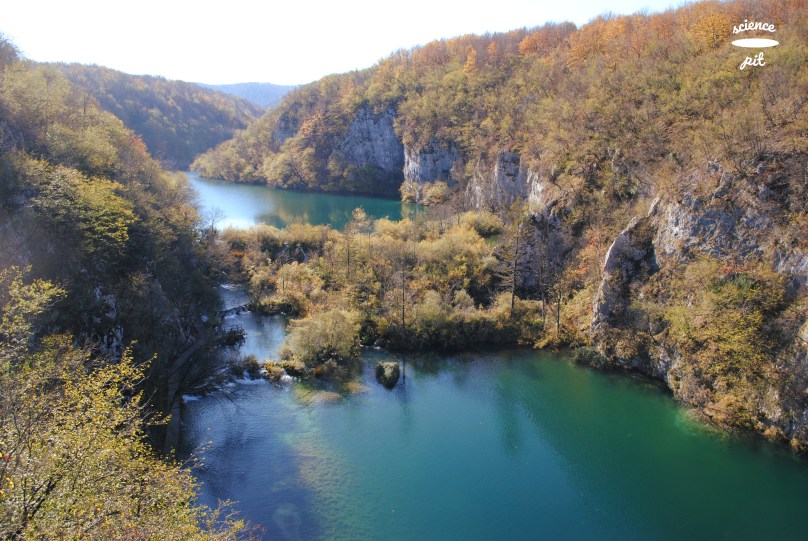
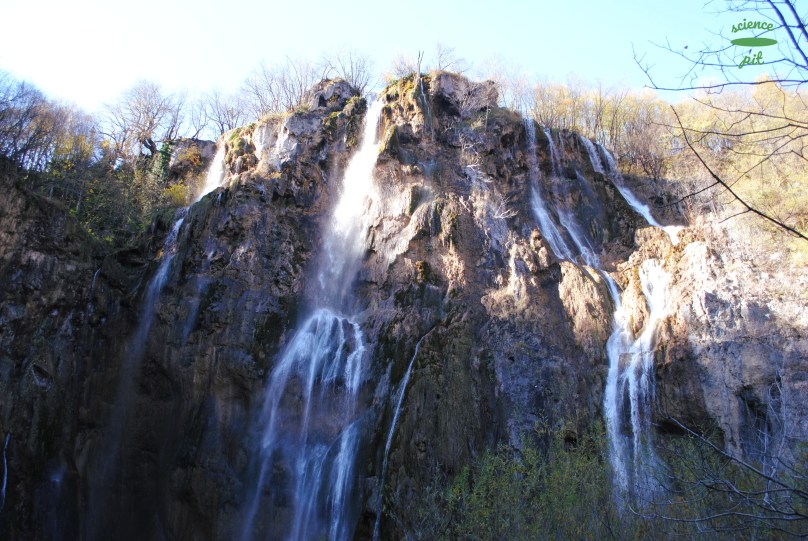
The National Park I’ve paid a visit more than a year ago (November 2017) is called Plitvice Lakes, or simply Plitvice. The area is a National Park since 1949 and it’s Croatia’s biggest and oldest Park. It consists of 16 lakes that are connected by many waterfalls and cascades. The specificity of the Park is tufa – yes, I checked, that’s the word! 🙂 Tufa is a calcareous rock (meaning it is mostly made of calcium carbonate) and is porous. It is generated by precipitation of carbonate minerals out of water, and generally this type of rock is very sensitive to changes in pH. Why is it so special? Tufa forms barriers between the lakes! Those barriers are the reason why Plitvice are also part of the UNESCO World Heritage List.

dsc_0011_
Picture 1. A famous view on Plitvice Lakes

dsc_0040_Picture 2. Amazing waterfall in Plitvice

For the Chemistry lovers, here is a chemical formula of tufa formation:

Ca2+ +2HCO3 ↔CO2 + H2O + CaCO3

Apart from environmental factors, small organisms play very important role in the formation as well. There are bacteria, small multi-cellular organisms, blue-green algae (not algae at all) and diatoms (actual algae). Mosses are part of this ecosystem as well, together with many other smaller organisms, both animals and plants.

As I already mentioned, there are several factors important for the formation of tufa rocks, and pH of the water is the one you have probably heard about. The reason why is it almost exclusively mentioned is pollution that changes pH of the lakes. One of the main problems? Tourism. Yes, tourism. I won’t get in the detail about not-so-well-made sewer system in the whole area, but Plitvice are one of the most famous places in Croatia, and as such, receptible to huge numbers of visitors every summer. And sometimes, that people don’t follow basic rules of spending their time in nature, so a lot of littering and wild-life disturbance occurs. Don’t get me wrong, this National Park is open to the public and meant to be enjoyed, but sometimes it seems more emphasis is put on money, rather on educations. Because of that, I would sincerely like to ask all of you, to take care of our environment, especially when visiting a foreign country.

dsc_0068_Picture 3. Calm lake and some rocks. And trees.
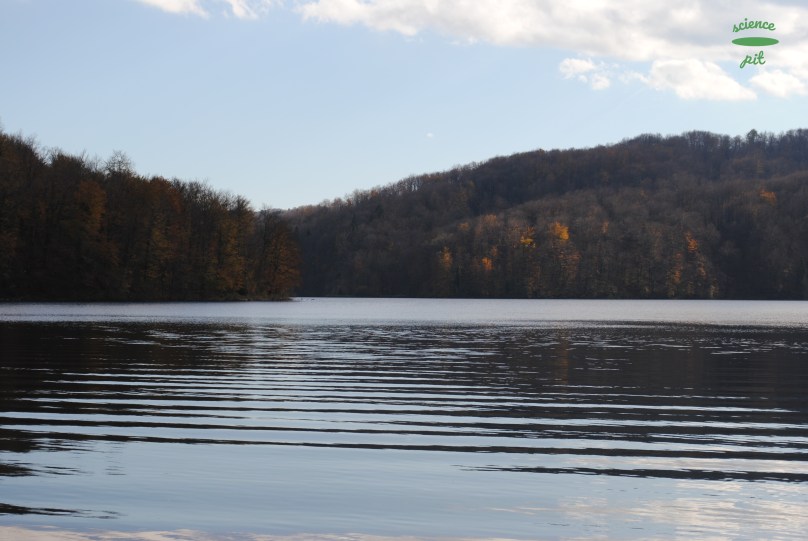
dsc_0109_Picture 4.  View of a lake, before the boat drive
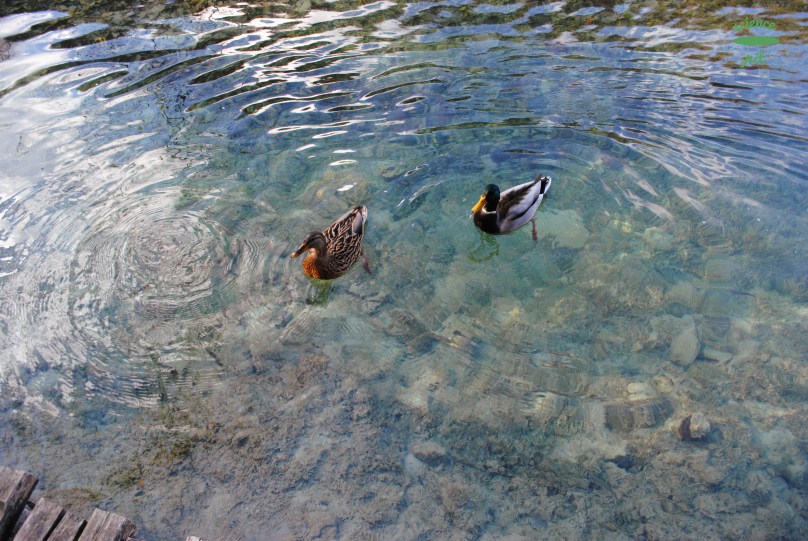
Anyway, back to my excursion! I was part of the group from my Department, as a part of the field trip for subject “National Parks.” It was a one-day trip, and we walked approximately 10 km around the lakes. The biggest lake is called Kozjak, and it is also a deepest lake. All lakes are beautiful blue-green colour and surrounded with walking paths and breath-taking views. The weather was a bit cold-ish, since it was November, but enough to walk around in a jacket and winter hat. And a camera of course! I tried to picture most of the nature and wildlife around me, but we didn’t see as much (again, because it was almost winter). However, Plitvice are rich in both flora and fauna – its symbol is a brown bear! Grey wolves and lynxes are also natural to the habitat, as well as many bird species – I’ve seen robins (Erithacus rubecula), some sparrows (Passer domesticus), and mallards (Anas platyrhynchos), but falcons (Falco peregrinus) and pygmy owls (Glaucidium passerinum) are regularly sighted. From other flying creatures, the Parks is full of butterflies (Phengaris alcon), bees (Apis mellifera), and similar (Calopteryx virgo), as well as bats (Barbastella barbastellus; there are also many caves in the Park!). There are many salamanders (Salamandra atra), otters (Lutra lutra; that I very sadly haven’t spotted), and fish. A lot of fish. I would also like to mention, that an endemic species was found in this area, in one of the caves – a small bug, Machaerites udrzali, which belongs in order Coleoptera. Forest(s) around the Lakes are full of common beech (Fagus sylvatica), but there are also firs (Abies alba), pines (Pinus sylvestris), and Ostryas. In fact, when it comes to flora, there are more than one thousand registered plant species, including dead-nettles and orchids. Mushrooms also have an important presence in Croatian forests, and Plitvice forest is famous for being a home to another rare species – saprophytic fungi Camarops tubulina.

dsc_0080_Picture 5. Mallards humbly asking for bread

So, what do you think? Did you know that this National Park is so full of life? Because I honestly didn’t, despite living in Croatia, well, my whole life. Of course, we were taught about some general facts during our schooling, but I was really surprised to learn how many different species live here.
Apart from such an important biological aspect, Plitvice Lakes are important in Croatian history as well, but I might talk about that next time!

Did you visit Plitvice, what were your experiences? How about some other Croatian National Park? Which one should I visit&write about next? 🙂

P.s. Yes, the header picture of my blog was also taken during this trip!