Short science posts | Hydrozoa

Hydrozoa are the last cnidarian class I’m going to write about. They can exist in two distinct shapes, as hydromedusa and hydropolyp (same as Scyphozoa and Cubozoa). Despite perhaps expecting hydrozoans to be the most advanced in both nervous and sensory systems, they don’t actually have any rophalium. Furthermore, some hydromedusae don’t even have nerve nets. However, they have two nerve rings (outer and inner) on the margins of their bells which are regarded as ganglia by some scientists.
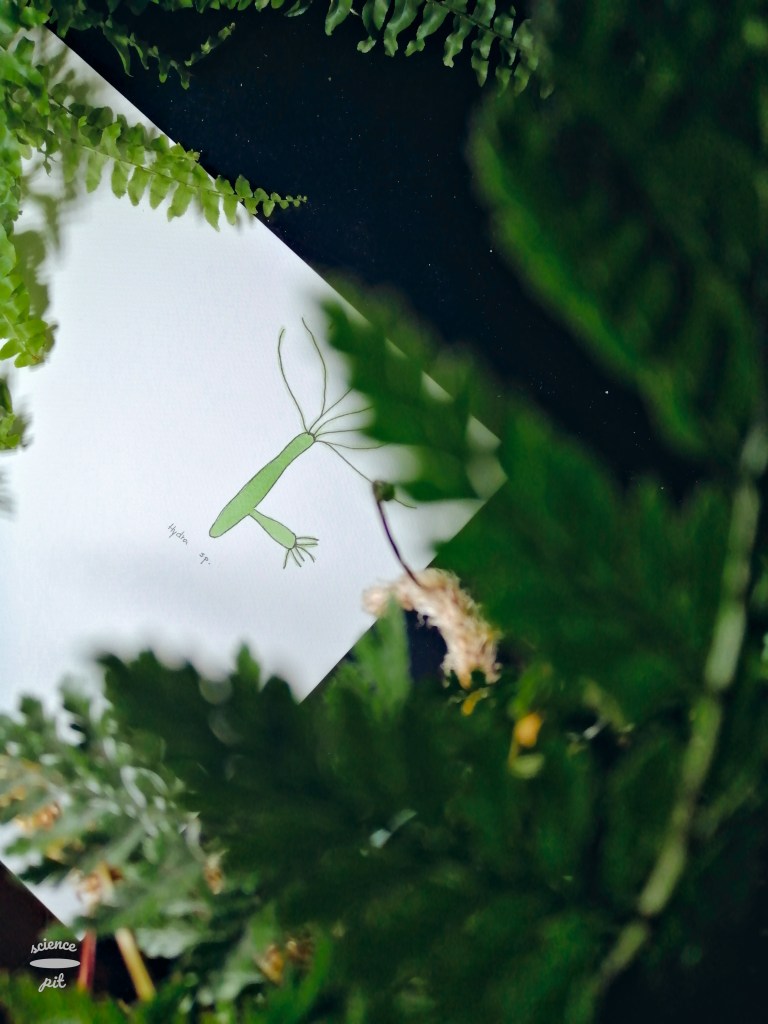
These rings consist of neural pathways which process different sensory inputs (such as light and gravity). Aglantha digitale, a hydrozoan species, has been reported to have as much as 14 distinct neural pathways. A. digitale is also distinct from the other species in the class by having two swimming “modes” – slow (which is a characteristic for all hydrozoan) and escape mode. Transmission through giant ring neurons is responsible for both modes, but the escape mode requires a stronger contraction. The slow swim mode is activated by the input from the pacemaker, which triggers slow calcium spikes. Direct mechanical nerve ring stimulation by tentacles triggers fast sodium spikes. In short, giant ring neurons are capable of generating two different kinds of action potentials.

bsh

Gap junctions are also present in (and only in) Hydrozoa, and they transfer electrical signals through the musculature. Furthermore, I would like to emphasize that despite some hydromedusae not having a nerve net, some in fact do, and so do hydropolyps. In polyps, however, some groupings of the neurons could be found around their mouth.

Literature & more information:
Habdija et al: Protista-Protozoa, Metazoa-Invertebrata, Alfa, 2011, Zagreb
Do jellyfish have central nervous systems?
Jellyfish nervous systems
Short science posts | Cubozoa (most advanced cnidarian nerve system)

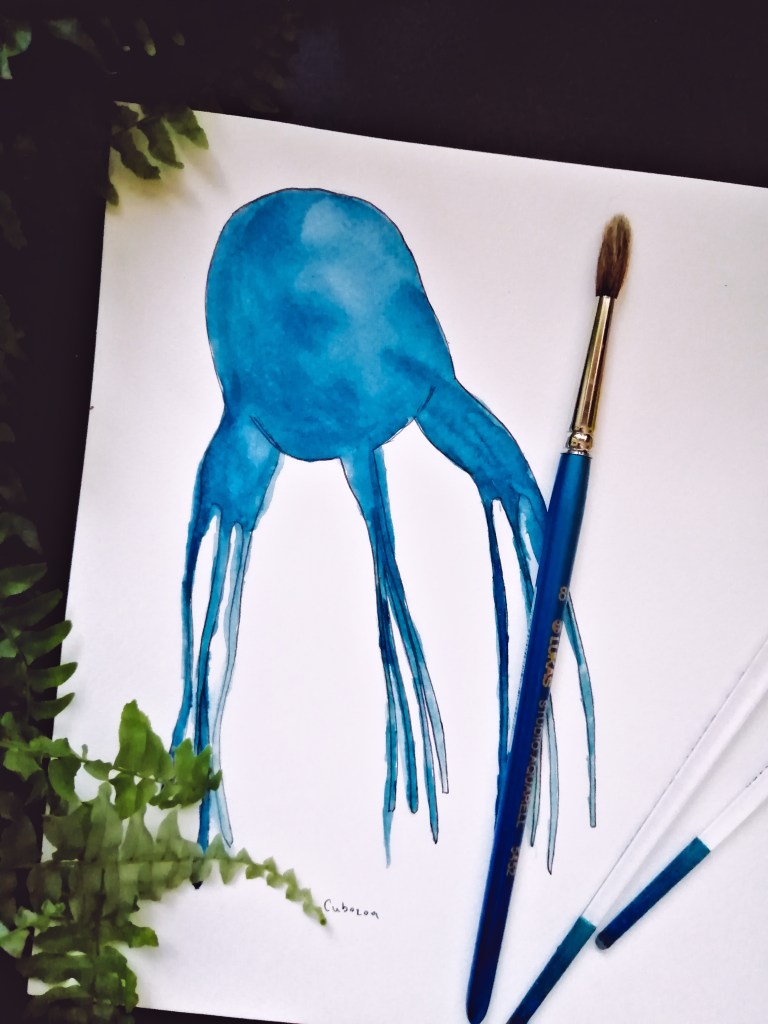
Cubozoa, or box jellyfish, are another cnidarian class. Their name stems from their distinct cube-like shape. Cubozoa are also distinct from other cnidarian because their venom can be fatal to humans. As with all cnidarians, box jellyfish have two nerve nets and, like Scyphozoa, rophalia. However, box jellyfish also have a distinct nerve ring, as well as more developed eyes that consist of a lens, cornea, pupil, and a layer of retinal cells. Altogether, Cubozoa have 24 eyes, which makes them the most advanced cnidarian class in the sensory aspect.

Rophalia are mutually connected via the mentioned nerve ring. This ring is believed to be an integration center for the swimming, visual, and tentacle systems; it is comprised of oversized neurons, as well as some smaller neurites.
The communication between the nerve net and jellyfish muscles is regulated by chemical synapses.

Most of the information relating to Cubozoa, I already mentioned in the previous post about Scyphozoa, so I only wanted to relay the main differences between the two. These two classes are so similar that, until recently, they were actually considered one class.

Literature & more information:
Habdija et al: Protista-Protozoa, Metazoa-Invertebrata, Alfa, 2011, Zagreb
The ring nerve of the box jellyfish Tripedalia cystophora
Do jellyfish have central nervous systems?
Jellyfish nervous systems


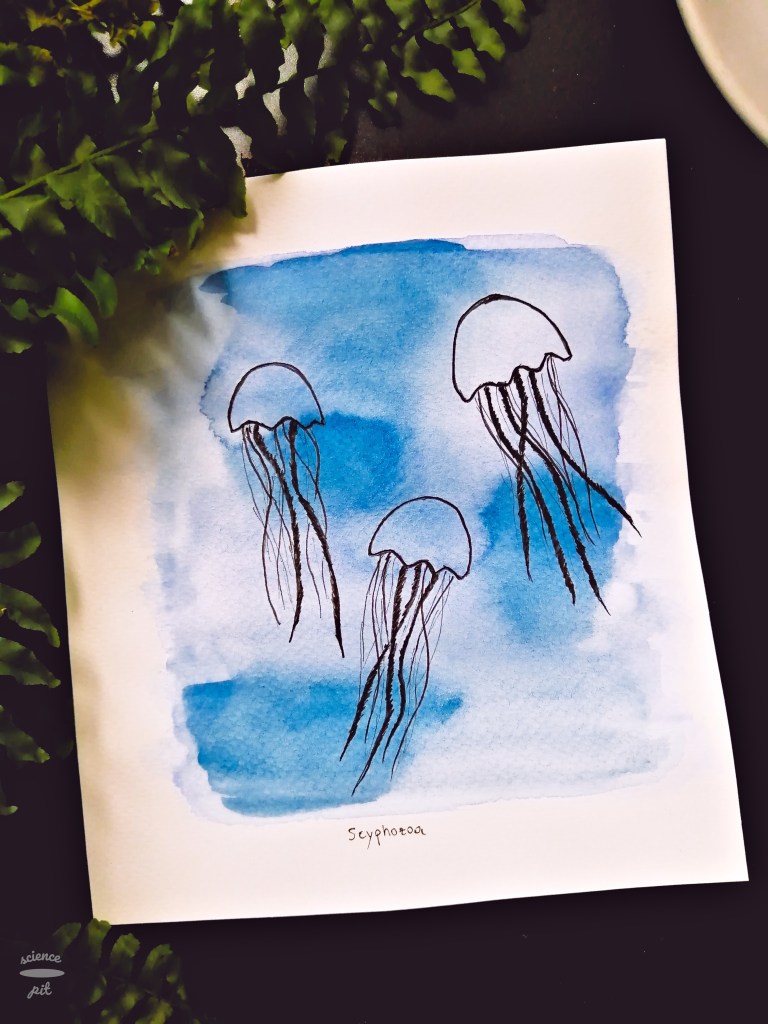
Short science posts | Scyphozoa – more advanced nervous system

Scyphozoa (true jellyfish) are much more interesting (in a neurobiological way) than previously described corals. One major difference is that Scyphozoa are pelagic animals, which means they are not fixed to the ground. They also have two diffuse nerve nets (subepidermal and subgastrodermal) that consist of bipolar and multipolar neurons – the impulse conduction has been measured at 0,15 m/s. Both nets coordinate the movements of an animal towards the food. Some scientists, however, differentiate one diffuse and one motor nerve net. The motor net is in charge of the activation of muscle contractions after receiving signals from the so-called pacemaker organs (which are in charge of the swimming rhythm). The diffuse net, in this case, is in charge of marginal tentacle contraction and it is also believed it communicates sensory information to jellyfish musculature. Neurons of the motor nerve net are connected by chemical synapses, while neurons of diffuse nerve net are connected by peptidergic synapses that were noted in Anthozoa as well.

Sycphozoa also have much more developed sensory organs than any of the animals previously mentioned. These sensory structures are called rhopalia and they are located on the edges of the jellyfish bell – there are usually four of them (or a number that’s a multiple of four). Rhopalia contain multiple sensory receptors – statocyst (balance receptor), ocelli (light sensitivity), a mechanoreceptor, a chemoreceptor, and aforementioned pacemaker neurons.

I would also like to note here that some authors (I’m referring here to the article “Do jellyfish have central nervous systems?” by R. A. Satterlie) believe this kind of nerve net explanation is rather simplified and that there exist some evidence suggesting that jellyfish have a centralized nervous system, mainly that rophalia are in fact rudimentary ganglia and could be regarded as integrative centers. However, any communications between rhopalia themselves exist only through the nerve nets.

Literature & more information:
Habdija et al: Protista-Protozoa, Metazoa-Invertebrata, Alfa, 2011, Zagreb
Do jellyfish have central nervous systems?
Jellyfish nervous systems

Short science posts | What is a nerve net?

A nerve net is a type of nervous system that consists of many neurons but there is no brain or cephalization. Nerve nets are found in animals with radial symmetry (Cnidaria) and biradial symmetry (Ctenophora). Despite being called a net, there sometimes exist some groupings of neural cells in some Cnidaria classes, which I will write more about during the next couple of weeks.
Cnidaria are specific due to their specialized organelles, cnidocytes, which they utilize to hunt for food or use for securing itself to a surface. Some cnidocytes contain toxins that can paralyze their prey (the burning sensation you may have felt when touching a sea anemone 😉).
As a rule, Cnidaria have two diffuse nerve nets, one in the epidermal layer and a second one in the gastrodermal layer. In between these two layers is the mesoglea, a layer that functions as sort of a skeleton. The epidermal net consists of bipolar and multipolar nerve cells, while the gastrodermal net is made up of only multipolar cells.

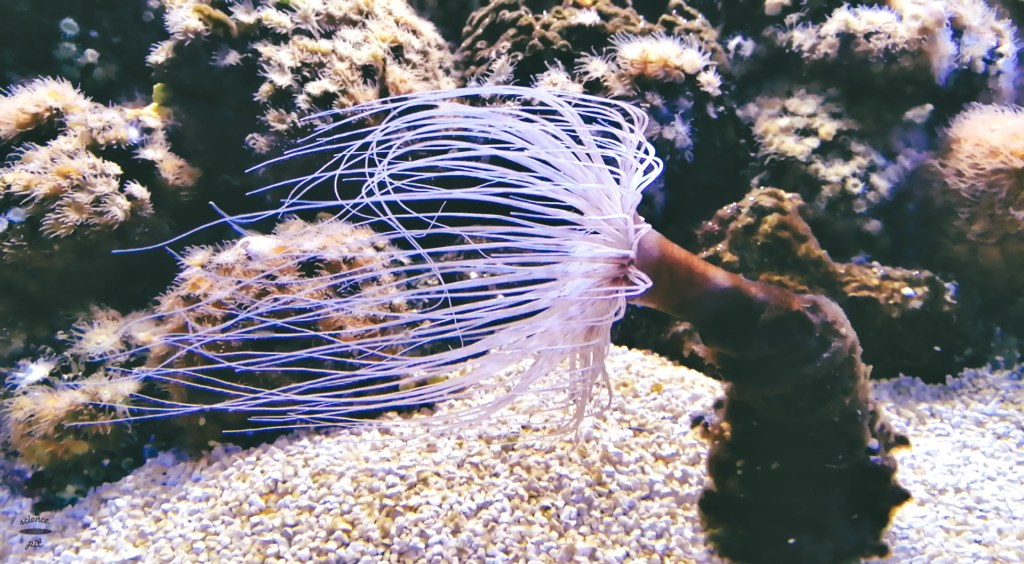
Cerianthus membranaecus (known as cylinder anemone or coloured tube anemone)

Cnidarian nerve systems are fascinating but also quite unexplored. What is known is that nerve cells consist of two types of neurons, sensory neurons that respond to stimuli and motor neurons which ultimately trigger a response. Chemical synapses exist and provide the communication between the neurons. Hormones have also been reported in some cnidarians (steroids, neuropeptides) but it is still not known how exactly these signalling molecules work.

***

In the next couple of weeks, I will write a post about every cnidarian class and also ctenophores, focusing on their nervous and sensory systems. If you have any questions or would like me to focus on something, please let me know!

Literature & more information:
Habdija et al: Protista-Protozoa, Metazoa-Invertebrata, Alfa, 2011, Zagreb
Endocrine-like Signaling in Cnidarians: Current Understanding and Implications for Ecophysiology
Evolution of sensory structures in basal metazoa