Why I quit Duolingo.

Many of you, especially if you follow me on social media, are aware of my long devotion to Duolingo and its streak. I’ve been using it as a refresher for vocabulary, a guide on how to write certain letters outside of the Latin alphabet, and I’ve also attempted to use it to learn a new language, in this case Norwegian Bokmål. At one point, I was relying on the annoying green bird so much that I even bought a premium for two years, before completely abandoning the platform.
Too cool for school, or whatever the youth is saying today

I like the idea of Duolingo, just as I like the idea of any other free, educational platform that is well-researched and well-supported. I think Spanish was the first language I tried to learn on Duolingo, a good decade ago, when, in addition to tasks, you also had written grammar lessons you could read. It was a promising platform with a quirky mascot, not plagued by too many ads and shrouded in a carefree sentiment of learning the language easily and differently.

I stayed loyal to Duolingo through multiple changes and additions, some for better, some for worse, until I started to notice that, as a complement to a language whose basics I was already familiar with, it functioned great. But as a platform to set you up with a new language, for me, it was failing, and it was failing hard.
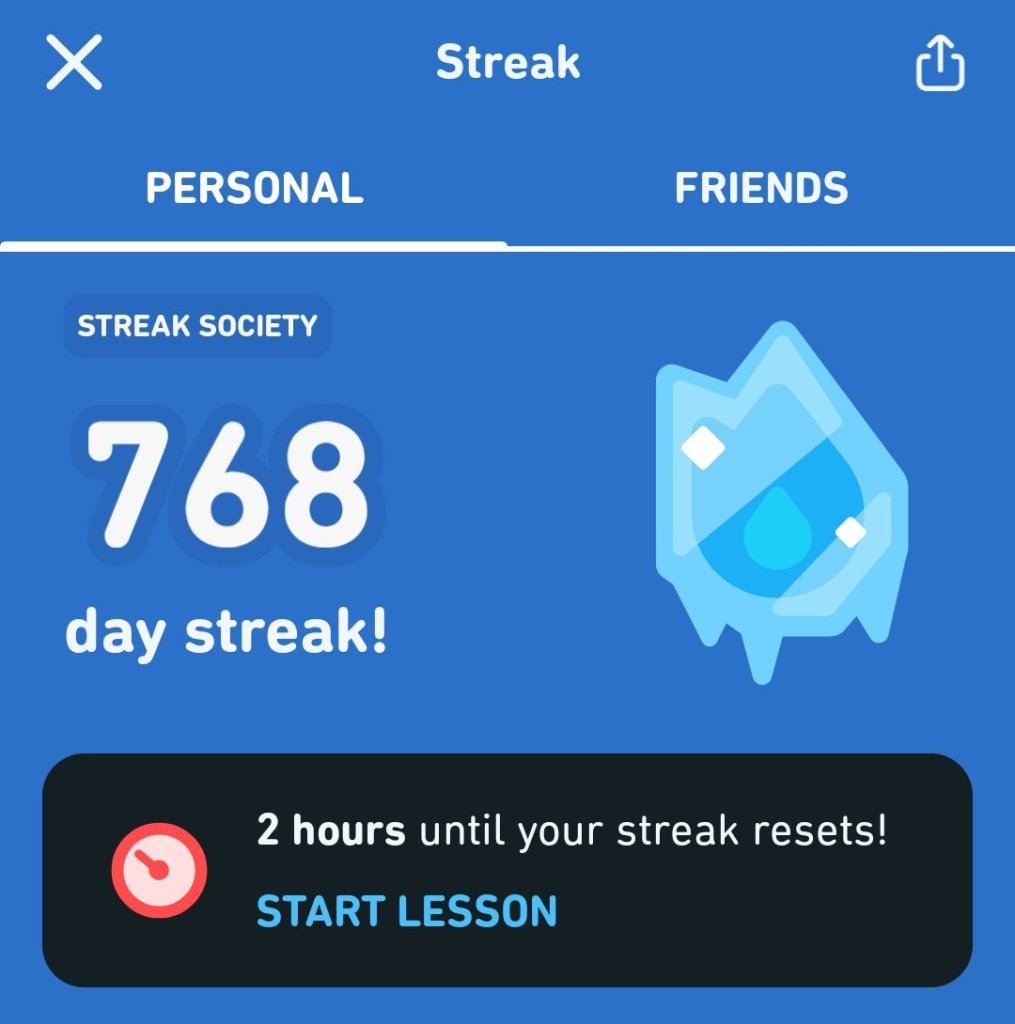
My streak on the day when I deleted the Duolingo app from my phone

Initially, I thought that if I put more time into it, it would work out, but in the end, I had to admit my defeat. When I was still toying with the thought of abandoning the platform completely, news came out about Duolingo’s move to replace many of the manual, human content creation with AI.

“One of the best decisions we made recently was replacing a slow, manual content creation process with one powered by AI,” co-founder and CEO Luis von Ahn said in the letter, shared on LinkedIn. “We’d rather move with urgency and take occasional small hits on quality than move slowly and miss the moment.”

Words cannot describe how much I hate every aspect of this, and although I wasn’t quite surprised (we live in the “golden” age of AI, after all), I was disappointed enough to abandon the platform and redirect my focus to other self-learning resources, which, luckily for me, are abundant on the World Wide Web.

I found specialised courses for all the languages I strive to learn, and now focus more on smaller creators as well, both on social media and YouTube. I try to think back when I was initially learning English, what was most helpful to me, and it always comes back to writing on my own and becoming obsessed with film culture. In the end, it also boils down to my time as well, as I prefer to do everything at my own pace, not on the beating drum of an overgrown green monster.

If Duolingo works for you, I applaud you, but I judge you just a smidge as well (I am from Balkan, after all, it’s my cultural heritage). And if you found other platforms that align more with the sentiments I expressed here, please let me know which ones you are using and how they are working out for you.

Until next week,

With my last brain cell,

xoxo Mina

Another Vienna adventure!

Hi everyone, if you follow me on Twitter and/or Instagram, you have probably already seen my pictures from Vienna this last weekend. However, I would like to share a bit more, and write about it too!

At Saturday at 3.30 in the morning, my sister & me boarded the bus in Varaždin, and started our one-day adventure. Our destination? Vienna, capital of Austria! With the trip we booked through Galileo Travel came scenic sightseeing of the city, and a visit to Schönnbrun castle, but we skipped that and with U4 headed directly to city centre, Schwedenplatz more correctly. After short breakfast in McDonald’s (I know, I know), we headed to Natural History Museum. On the way there, we took some typical tourist pictures, in front of Stephan’s Cathedral, at Hofburg… And then we finally reached NHM.


I’ve visited the museum two times before, but my enthusiasm was still through the roof. Firstly, the museum is huge. Permanent exhibition spans two floors and numerous specimens. Roughly divided, first floor is mineralogy and second floor is dedicated to zoology. I took some pictures, which I will share with you, but I didn’t take my camera; everything is taken with my Huawei mobile phone.

Student’s entrance fee is only 7€ (~8$), and taking photographs is allowed. The whole museum is, honestly, overwhelming. I have never before seen so many specimens at once place. My sister, who visited it for the first time, often commented that a building itself could be a museum, due to it’s rich, ornate walls. First floor is, like I already mentioned, full of minerals. I don’t have much interest for them, but I made me think about how old our planet is, and what makes it. Also, one of the rooms is completely dedicated to jewellery, both modern and historic.

The floor dedicated to zoology was full of models and real specimens of animals around us, as well as evolutionary artifacts. As is common, first rooms were dedicated to invertebrates, building it’s way up to vertebrate groups. I was particulary amazed by the size of dinosaur bones – no matter how many times I see it on the TV, or visit this museum, I stand in awe in front of them.


Unfortunately, due to morning sun, I wasn’t able to capture nice photographs of invertebrate collections, but trust me when I say those are so beautiful. Everything is o neat and organized that, since then, I’ve been toying with idea of collecting my own specimens. There are also rooms dedicated to fish, amphibians, reptiles, birds… Those are usually held in special containers or stuffed. There are also many skeletons on display on the walls. With dinosaurs, there were also animatronic models, which both excited and frightened children in the museum.

Latimeria
Latimeria chalumnae, a living fossil!


There is also a separate room dedicated to evolution of human. I already posted that interesting picture where an app transformed me into an early human, but in this part of the museum, you can see many different skulls belonging to Homo sapiens, Homo neanderthalensis, Homo habilis… I consider this part of the exhibition very important, especially in today’s time, when so much misinformation is present on the Internet.
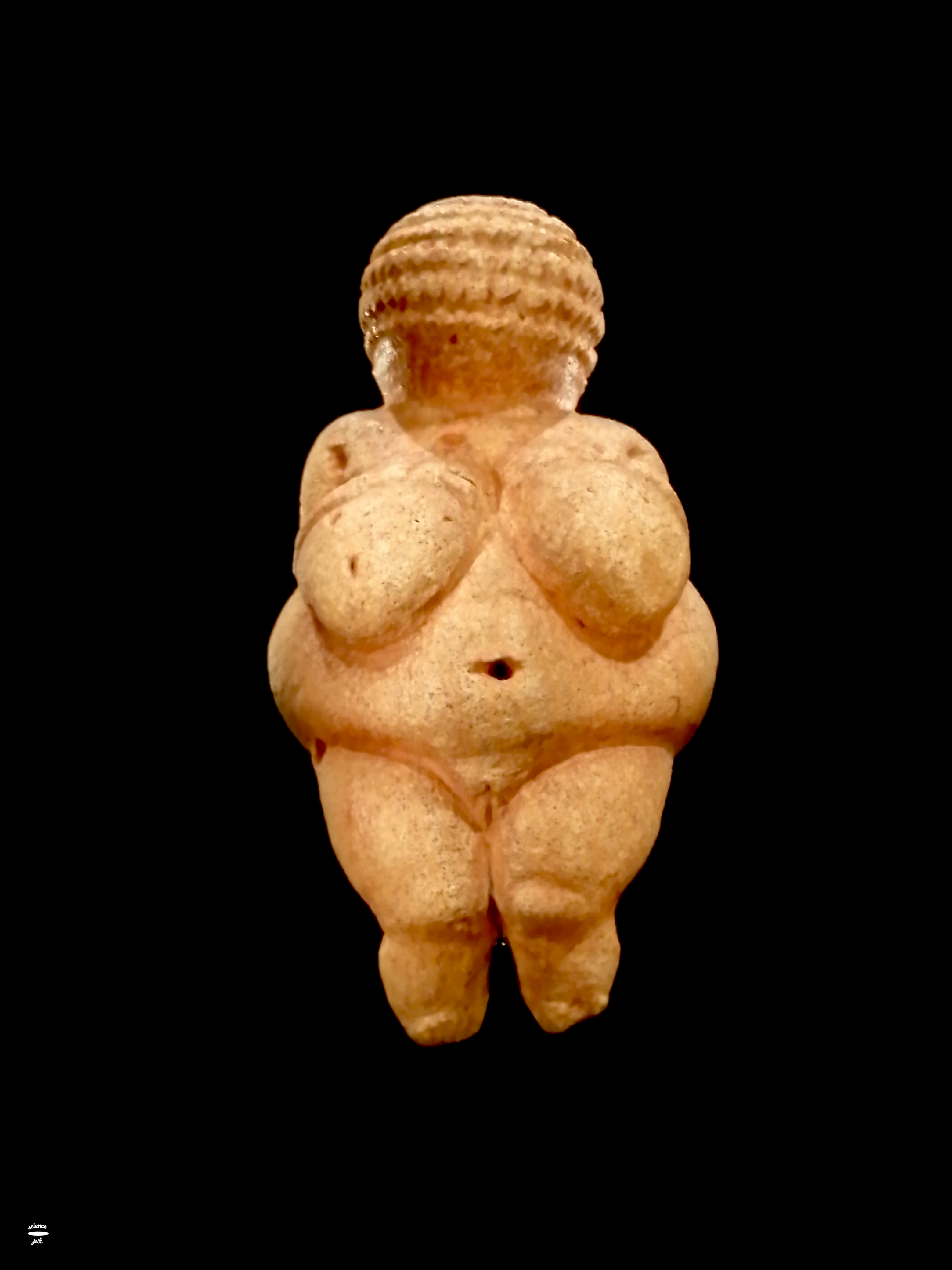
Another important historic specimen is Venus of Willendorf figurine, which is dated to 30 000 years BC.

Venus
Venus of Willendorf


What would you like to see, if you could go to Natural History Museum in Vienna? Would you like me to write about something in more details?
Please let me know in the comments 🙂

Biology & informatics &… olms?

Last Friday (8th of November) I was fortunate enough to hold a workshop (with Bruno) called “Little workshop of Bioinformatics” – the title is a bit wild, but we purposefully chose an “exotic” name in order to arouse curiosity.
This workshop, held in House of Velebit in Krasno, is actually a continuation of a two workshops we already held (one in a City Museum Samobor and another one at my old primary school) and which we designed to introduce school children of all ages to primary concepts of molecular biology & genetics. Of course, kids in 7th and 8th grade were already familiar with it.

We first designed the workshops, with the help of our mentor Dalibor Paar, associate professor at Department of Physics, Faculty of Science, and were nominated for Rector’s Awards in 2019.

Where is the informatics part, you ask? In the using of micro:bits, cute and small mini computers that are easily programmable in Python or JavaScript (we chose Python). Bruno wrote a very elegant code and I designed the rest of the workshop: ciphers to de-code, phenotypes, core of the workshop… In terms of design, my BFF Ivana generously lend her drawing skills and we were all set.

fbt


How the workshop works?
First, I introduce students to basic concepts of the molecular biology: what is DNA, what is a protein, and that DNA codes for proteins. This part, depending on the ages (and attention) of children can last up to 15 minutes, then the fun begins. Every kid gets a cipher, which consists of four or five lines, each of those consists of nine differently coloured arrows that can point in one of four directions: up, down, left or right. micro:bits have motion sensors that pick up in which directions they are pointed and display one of the four letters: A, C, T or G. We also coded for a second program, in which kids enter those letters (DNA bases) and they show three letters that represent a very short amino-acid sequence (in this example, a protein). When they are finished with this part, we give them another paper, where they are supposed to find what is encoded by their protein (blue or green eyes, blonde or red hair…).
For the workshop in Krasno, we switched things up a bit, and our “proteins” encoded for different characteristics of two different olm subspecies: a pink one and a black one.
This might seem a bit complicated in theory, but in practice, children picked up everything really fast 🙂

Olms & micro:bits!
Olms & micro:bits!


So, how many of you have heard of olms, or proteus? And how many of you knew there is a black subspecies? 🙂
Olms (Proteus anguinus) are amphibians (like frogs), they are completely aquatic and live in dinaric caves. Noted sightings include Italy, Slovenia, Croatia, and Bosnia and Herzegovina. They have elongated bodies, external branchiae, and no eyes. The black subspecies (Proteus anguinus parkelj) is, well, black, and has eyes. The other notable difference is that pink olm lives in colder waters (up to 11° C). Another interesting fact is its name in Croatian: “čovječja ribica”, which roughly translates to “human fish”.

I think the name is appropriate, and you?