Short science posts | Eluding Ctenophora

Ctenophora, commonly known as comb jellies, are a rather perplexing phylum of beautiful pelagic creatures. Their evolutionary position has been debated for many years as is the origin of their nervous system (some scientists believe they are older than sponges and that sponges lost their nervous system, while others advocate the theory about the nervous system forming independently twice, once in cnidarians and once in ctenophores).
Ctenophora have two nerve nets: subepidermal and less organized subgastrodermal, which recent research identifies as a mesogleal nerve net. Nerve cells from this layer communicate with muscles by synapses and affect the locomotion of the body. The subepidermal net is denser around the mouth, the pharynx, and under the comb rows (comb rows are strips that run the length of the ctenophore body and contain cilia called “ctenes”). Ctenophore neurons can be iso- and multipolar.
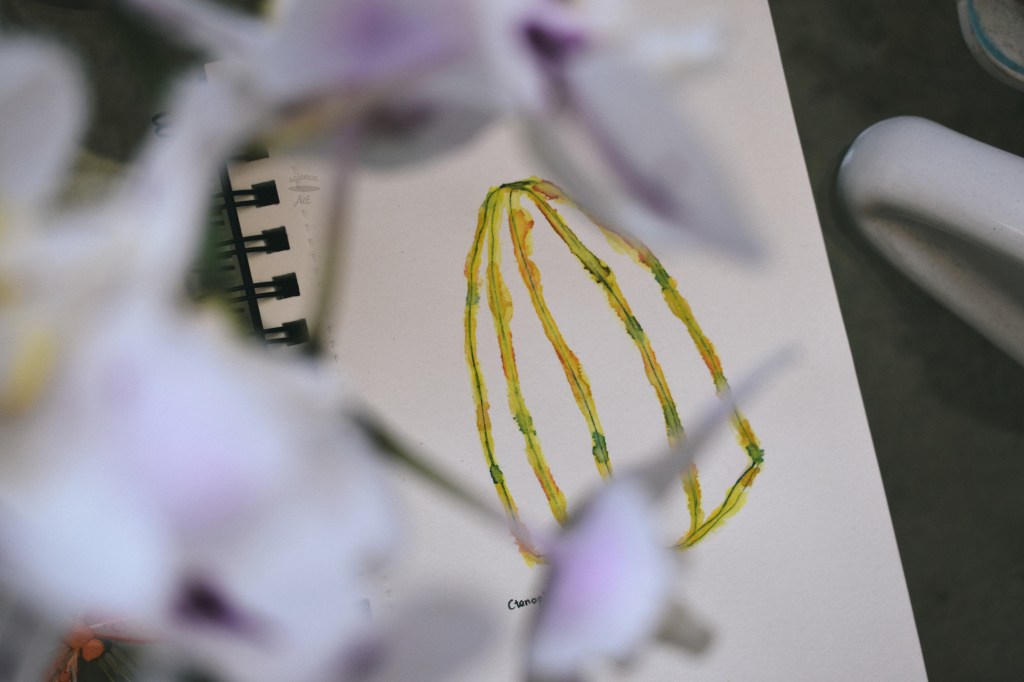

They have sensory cells on the whole surface of the body and those correspond to vibrations and thermal and chemical stimuli: more receptors are located around the mouth and pharynx. Ctenophora also have an apical and aboral sensory organ. Such sensory organ consists of a statocyst, a sensor that contains a statolith that balances on four groups of long cilia connected to the comb rows. These organs help the orientation of the ctenophore body.
What’s extremely interesting is that ctenophores use different chemical signalling system than the ones described in the previous posts, mainly because these animals simply lack the neurotransmitters (and genes), such as serotonin, dopamine, noradrenaline, and acetylcholine; glutamate is the only neurotransmitter currently known to be present.


I gathered all this information from different resources, and some are sometimes contradictory or are generalizing conclusions about the whole phylum from the data of only one ctenophora species. This is the best overview I could manage, to show both the similarities and the differences of the ctenophora nervous system, when compared to the Cnidarian system. These lovely animals are not very well researched and I’m sure many wonderful breakthroughs about their anatomy, physiology, and their place in the evolutionary tree are to come.

Literature & more information:
Habdija et al: Protista-Protozoa, Metazoa-Invertebrata, Alfa, 2011, Zagreb
Norekian & Moroz Neural system and receptor diversity in the ctenophore Beroe abyssicola J Comp Neurol. 2019;1–23.
Ctenophores – quick guide
Did the ctenophore nervous system evolve independently?
Aliens in our midst
Short science posts | Cubozoa (most advanced cnidarian nerve system)

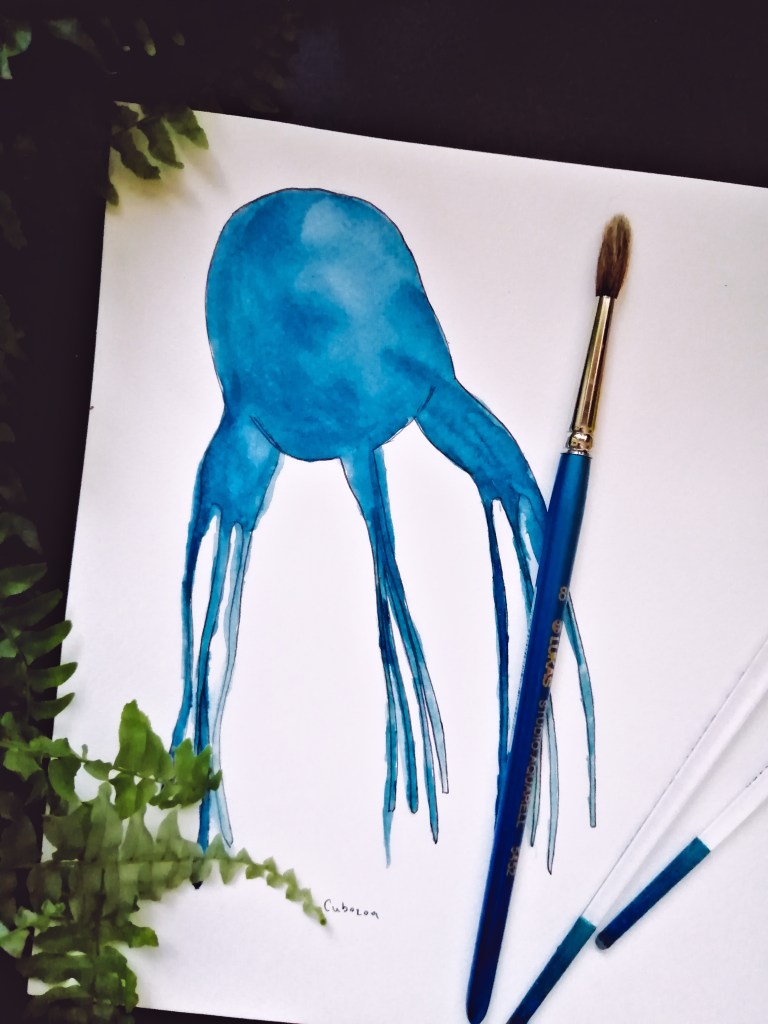
Cubozoa, or box jellyfish, are another cnidarian class. Their name stems from their distinct cube-like shape. Cubozoa are also distinct from other cnidarian because their venom can be fatal to humans. As with all cnidarians, box jellyfish have two nerve nets and, like Scyphozoa, rophalia. However, box jellyfish also have a distinct nerve ring, as well as more developed eyes that consist of a lens, cornea, pupil, and a layer of retinal cells. Altogether, Cubozoa have 24 eyes, which makes them the most advanced cnidarian class in the sensory aspect.

Rophalia are mutually connected via the mentioned nerve ring. This ring is believed to be an integration center for the swimming, visual, and tentacle systems; it is comprised of oversized neurons, as well as some smaller neurites.
The communication between the nerve net and jellyfish muscles is regulated by chemical synapses.

Most of the information relating to Cubozoa, I already mentioned in the previous post about Scyphozoa, so I only wanted to relay the main differences between the two. These two classes are so similar that, until recently, they were actually considered one class.

Literature & more information:
Habdija et al: Protista-Protozoa, Metazoa-Invertebrata, Alfa, 2011, Zagreb
The ring nerve of the box jellyfish Tripedalia cystophora
Do jellyfish have central nervous systems?
Jellyfish nervous systems


Short science posts | Do sponges have a nervous system?

Sponges (phylum Porifera) are sessile multicellular organisms that live predominantly in seas and oceans. They don’t have tissues or organs, and therefore, they don’t actually have a nervous system. However, they do have bipolar and multipolar cells that resemble nerve cells, which are found in the middle, “jelly-like”, layer.
Sequencing of some sponge species showed the presence of many genes associated with neural cells, such as genes that code enzymes for neurotransmitter synthesis and synaptic transmission. It is important to note that these genes have other functions in the organism. It has also been observed that some sponge larvae can respond to outer stimuli and show various “taxis” behaviour – phototaxis (response to light), geotaxis (response to gravity), rheotaxis (response to water current). Phototaxis has been closely studied in species Amphimedon queenslandica (class Demospongiae), a sponge native to Coral Sea.

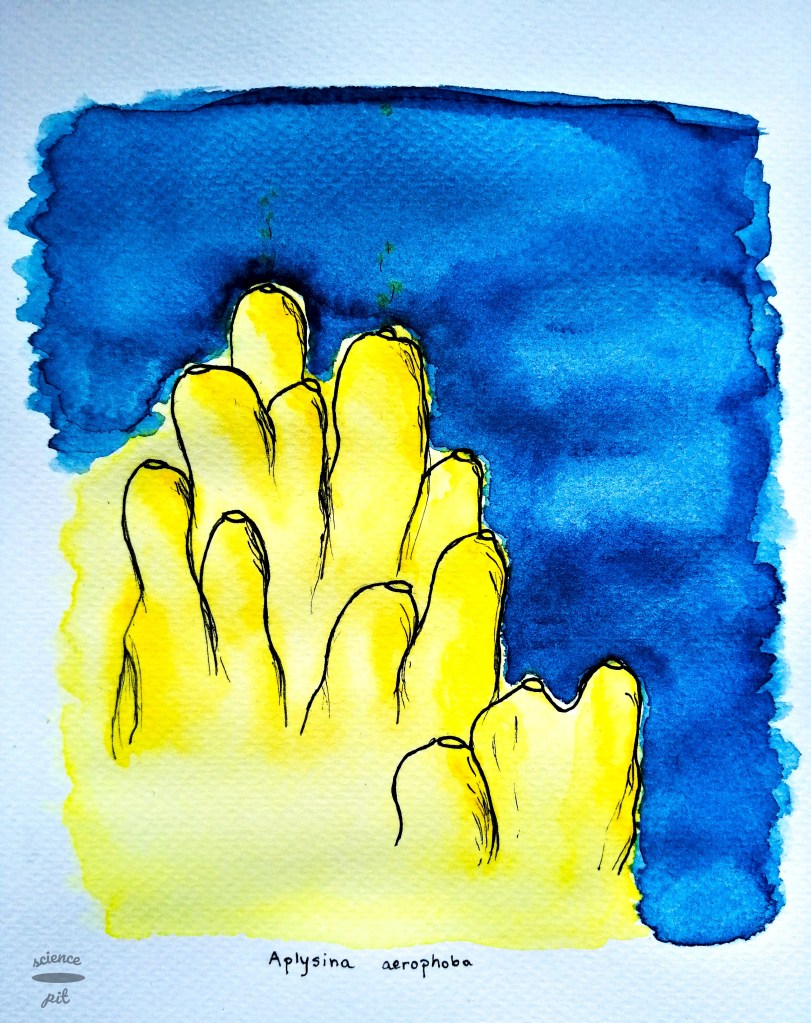
Aplysina aerophoba, also of class Demospongiae, which can be found in Adriatic Sea.

Potassium channels have been observed in that same species, as well as glutamate, GABA, and NO systems, which have been investigated in Ephydatia muelleri, another species of class Demospongiae. Electrical signalling has been noted in glass sponges (class Hexactinellida). These sponges have bodies comprised of a syncitial tissue and their skeleton is made of silicon dioxide. The scientists were able to measure the action potential (5s long, with 29s refractory period) and deduce this signal relies on potassium and calcium ions.
Some scientists even suggest that sponges used to have a nervous system, but lost it during evolution – they introduced several hypothetical scenarios for this event, proposing that sponges lost their nervous system in order to focus on filtering.

Literature & more information:
Habdija et al: Protista-Protozoa, Metazoa-Invertebrata, Alfa, 2011, Zagreb
Evidence for Glutamate, GABA and NO in Coordinating Behaviour in the Sponge, Ephydatia Muelleri (Demospongiae, Spongillidae)

The GABAergic-like System in the Marine Demosponge Chondrilla Nucula
Where is my mind? How sponges and placozoans may have lost neural cell types
Elements of a ‘nervous system’ in sponges

Short science posts | Nervous system evolution

For the next couple of weeks, I would like to write a bit about the evolution of the nervous system, from early nerve cells to the human nervous system and brain evolution. Alongside nervous I will also focus, to a lesser extent, on sensory systems. These posts will be published on my Instagram account, but I decided to publish them on the blog as well.

Mostly, these posts will be about various animals and the nerve systems they have – nerve nets, nerve cords, complete systems. The main process behind this is called cephalization, and it starts with the groupings of nerve cells and ganglia at one end of the body. After some (long) time, this process led to us having a head with sensory organs and a brain inside it.

But when did all of it start? It is kind of hard to say, for even single-celled organisms, such as bacteria, have voltage-gated channels and genes that support the theory of possible synaptic transmission. These channels are potassium (the oldest), calcium, and, rarely, sodium channels as well. Action potentials have been detected in some algae and diatoms, although their function is mostly unclear. In Chlamydomonas (unicellular green algae) on the other hand, potentials were detected in flagellums, which clearly suggest they play the part in the movement of the algae. Action potentials were also recorded in the cilia of some protists, such as Parmecium.

Of course, the exact evolutionary processes are unknown, and there is a possibility that these organisms acquired the mentioned features later than scientists now assume. It is also possible that some more evolved organisms, such as sponges, subsequently lost some of the features discussed here (more about this in the next week’s post).

Literature & more information:
Habdija et al: Protista-Protozoa, Metazoa-Invertebrata, Alfa, 2011, Zagreb
Bacterial voltage-gated sodium channels (BacNaVs) from the soil, sea, and salt lakes enlighten molecular mechanisms of electrical signaling and pharmacology in the brain and heart
Early evolution of neurons
Deep evolutionary origins of neurobiology
From damage response to action potentials: early evolution of neural and contractile modules in stem eukaryotes

Another Vienna adventure!

Hi everyone, if you follow me on Twitter and/or Instagram, you have probably already seen my pictures from Vienna this last weekend. However, I would like to share a bit more, and write about it too!

At Saturday at 3.30 in the morning, my sister & me boarded the bus in Varaždin, and started our one-day adventure. Our destination? Vienna, capital of Austria! With the trip we booked through Galileo Travel came scenic sightseeing of the city, and a visit to Schönnbrun castle, but we skipped that and with U4 headed directly to city centre, Schwedenplatz more correctly. After short breakfast in McDonald’s (I know, I know), we headed to Natural History Museum. On the way there, we took some typical tourist pictures, in front of Stephan’s Cathedral, at Hofburg… And then we finally reached NHM.


I’ve visited the museum two times before, but my enthusiasm was still through the roof. Firstly, the museum is huge. Permanent exhibition spans two floors and numerous specimens. Roughly divided, first floor is mineralogy and second floor is dedicated to zoology. I took some pictures, which I will share with you, but I didn’t take my camera; everything is taken with my Huawei mobile phone.

Student’s entrance fee is only 7€ (~8$), and taking photographs is allowed. The whole museum is, honestly, overwhelming. I have never before seen so many specimens at once place. My sister, who visited it for the first time, often commented that a building itself could be a museum, due to it’s rich, ornate walls. First floor is, like I already mentioned, full of minerals. I don’t have much interest for them, but I made me think about how old our planet is, and what makes it. Also, one of the rooms is completely dedicated to jewellery, both modern and historic.

The floor dedicated to zoology was full of models and real specimens of animals around us, as well as evolutionary artifacts. As is common, first rooms were dedicated to invertebrates, building it’s way up to vertebrate groups. I was particulary amazed by the size of dinosaur bones – no matter how many times I see it on the TV, or visit this museum, I stand in awe in front of them.


Unfortunately, due to morning sun, I wasn’t able to capture nice photographs of invertebrate collections, but trust me when I say those are so beautiful. Everything is o neat and organized that, since then, I’ve been toying with idea of collecting my own specimens. There are also rooms dedicated to fish, amphibians, reptiles, birds… Those are usually held in special containers or stuffed. There are also many skeletons on display on the walls. With dinosaurs, there were also animatronic models, which both excited and frightened children in the museum.

Latimeria
Latimeria chalumnae, a living fossil!


There is also a separate room dedicated to evolution of human. I already posted that interesting picture where an app transformed me into an early human, but in this part of the museum, you can see many different skulls belonging to Homo sapiens, Homo neanderthalensis, Homo habilis… I consider this part of the exhibition very important, especially in today’s time, when so much misinformation is present on the Internet.
Another important historic specimen is Venus of Willendorf figurine, which is dated to 30 000 years BC.

Venus
Venus of Willendorf


What would you like to see, if you could go to Natural History Museum in Vienna? Would you like me to write about something in more details?
Please let me know in the comments 🙂